A beautifully healed lip blush result begins well before pigment is placed. The purpose of a guide to lip blush colour correction is to explain one of the most important parts of treatment planning: understanding the natural tone of your lips and selecting a pigment approach that heals soft, balanced and flattering.
For some clients, the lips have a naturally deeper, cooler or uneven-looking tone. Others have areas of increased pigment around the lip border or throughout the lips. Colour correction, sometimes called lip neutralisation, is a carefully planned cosmetic tattoo technique that helps bring warmth and visual harmony to the lips before, or as part of, a lip blush enhancement. It is not about creating an opaque lipstick effect. When performed thoughtfully, the aim is refined definition and a healthy-looking wash of colour that still looks like you.
What lip blush colour correction is designed to do
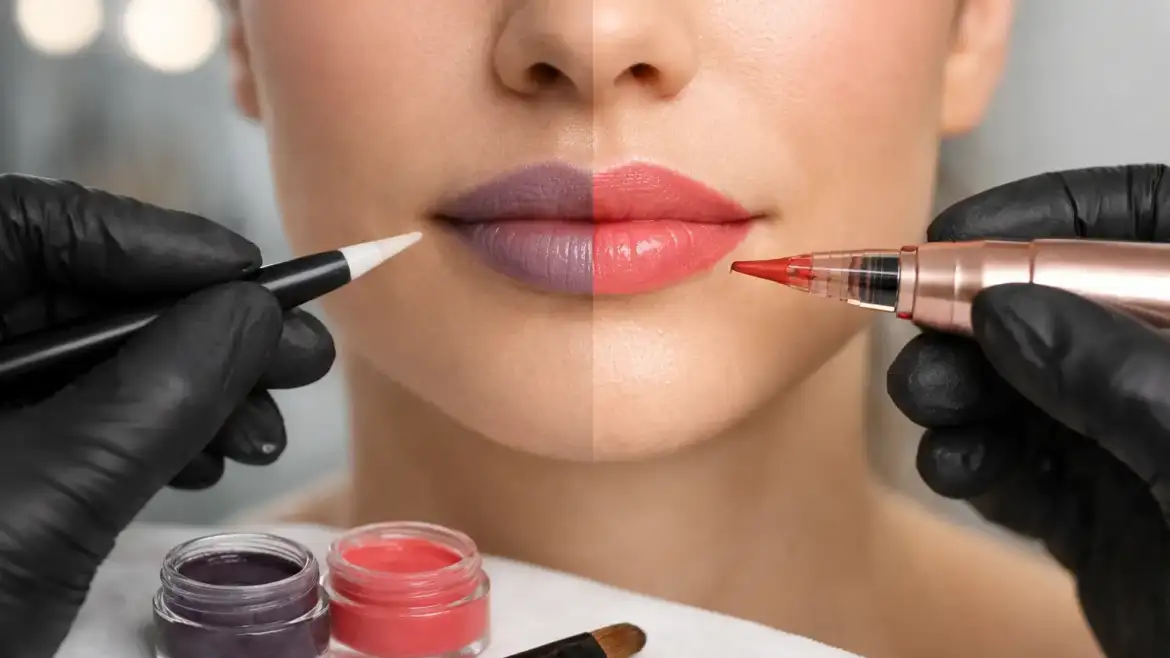
Natural lips are not one flat colour. They can contain pink, brown, mauve, violet, grey or blue-toned undertones, often with variation from one area to another. These undertones influence the way a cosmetic tattoo pigment will heal. Applying a fashionable pink or nude shade without considering the existing lip tone may produce a result that heals cooler, duller or less even than expected.
Lip blush colour correction begins with the undertone, not the colour trend. Your artist assesses whether warmth is needed to balance coolness or deeper pigmentation, then designs the pigment plan around your complexion, natural lip colour and desired finish. In some cases, a warming correction session is recommended first. In others, correction and the selected blush tone can be achieved gradually across the treatment and perfecting appointment.
The process is especially valuable for clients seeking a more consistent-looking lip tone without an overdone result. It can also be appropriate where previous lip tattoo pigment has faded unevenly, although this requires a careful assessment of the existing colour, depth and condition of the skin.
Why a customised approach matters
There is no universal corrective shade. A pigment that works beautifully on one person may not suit another, even when both clients describe their lips as dark or uneven. The starting tone, the way skin retains pigment, lifestyle factors and the desired level of visible colour all influence the plan.
A skilled artist works with colour theory, but artistry matters just as much. The treatment should complement your face rather than compete with it. For a client who wears little make-up and wants to look refreshed at the school run or in a morning meeting, the ideal result may be barely-there warmth and a gentle improvement in definition. Someone who enjoys a little more polish may prefer a rosier healed finish, provided it remains appropriate for their natural lip tone.
Mature lips also benefit from this individual approach. With time, the border of the lips can appear less defined and natural colour may look softer. A carefully chosen lip blush can restore a sense of balance without creating a harsh outline. The goal is always a result that looks elegant in everyday light, not simply immediately after treatment.
Your guide to lip blush colour correction: the consultation
A professional consultation should feel considered, not rushed. It is the time to discuss what you see in your lips, what you would like to improve and how subtle or noticeable you would like the healed colour to be. Clear photographs of healed results are useful because fresh cosmetic tattoo pigment can look more vivid than it will once the lips have settled.
Your artist will look at the overall distribution of colour, any cool or darker areas, the natural lip border and the existing symmetry of the lips. They will also discuss previous cosmetic tattoo work, if relevant, as older pigment can change the treatment approach. Honesty at this stage protects the quality of the long-term result. Occasionally, a very soft enhancement is realistic, while in other cases a staged plan offers the most natural outcome.
This is also the right time to share your everyday preferences. Bring reference images if they help communicate the feeling you like, but understand that your final pigment choice should be tailored rather than copied. A shade seen on another person has healed over different undertones and may not translate in the same way on your lips.
What happens during treatment
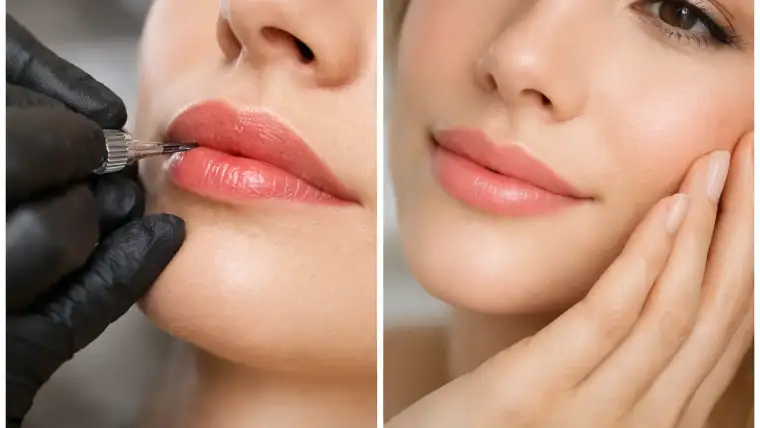
The appointment begins with mapping and planning. Rather than drawing a dramatically larger lip shape, the artist works respectfully with your natural lip line to create a balanced, polished appearance. Pigment is introduced in fine layers, allowing the colour to build gradually and consistently.
For corrective work, the first layer may look warmer than the final shade you imagine. This is intentional. Warmth can help balance certain underlying tones as the pigment heals. It does not mean your lips are intended to remain orange or overly bright. The chosen corrective pigments are part of a planned healing journey, and their role is assessed alongside your individual skin response.
Most lip blush treatments include a perfecting appointment after the initial healing period. This is not a sign that the first treatment has failed. Cosmetic tattooing is a process, and lips can retain pigment differently across areas. The follow-up allows the artist to refine colour distribution, build soft saturation where appropriate and make thoughtful adjustments based on the healed result.
Healing is part of the colour story
Fresh lip blush commonly appears stronger, warmer or more defined than the settled result. As the lips heal, colour softens and may look lighter or slightly uneven before it stabilises. This stage can test the patience of clients who are used to instant cosmetic results, but it is normal for a treatment designed to heal naturally.
Following your personalised aftercare instructions matters. The aim is to support clean, uncomplicated healing and avoid disturbing the treated area while it settles. Avoid picking, scrubbing or attempting to alter the colour at home. The way pigment heals is influenced by your skin and individual response, which is why experienced artists plan conservatively and assess the result over time rather than chasing intensity on the day.
It is also worth remembering that cosmetic tattoo colour does not heal exactly like traditional make-up. It becomes integrated with your natural lip tone. This is what creates softness, but it is also why a promised replica of a lipstick shade would not be an honest expectation.
Choosing the right level of correction
The best result is not necessarily the lightest, pinkest or most saturated one. It is the one that brings your lips into harmony with the rest of your features. A subtle correction may be all that is needed for lips with mild unevenness. More noticeable tonal variation may call for a gradual approach, with warmth introduced first and the desired blush shade refined later.
There are trade-offs to consider. A stronger colour can appear more visible initially, but may feel less natural for clients who usually wear minimal make-up. A very delicate result can be beautifully understated, although it may require realistic expectations about how much underlying pigment can be visually softened in one session. A premium treatment plan respects both your aesthetic preferences and what your lips can achieve gracefully.
Questions worth asking before you book
Before committing to lip blush colour correction, ask to see healed work on clients with a similar starting lip tone. Ask how the artist determines whether a correction stage is needed, how many appointments may be appropriate and what level of change is realistic for you. You should also feel comfortable asking how previous cosmetic tattoo pigment, if present, will affect the plan.
At ELKA Clinic in Perth, lip treatments are designed around the way colour will look once healed, not simply how it appears immediately after the appointment. This calm, tailored approach is particularly reassuring for first-time clients and anyone who has felt uncertain about choosing a lip colour that will still feel like their own.
The most flattering lip blush does not announce itself. It simply makes the lips look more balanced, softly defined and naturally alive, leaving you with the quiet confidence of looking polished without appearing overdone.