
Benign Skin Lesion Removal FAQs
Clear answers about removing skin tags, milia and selected benign lesions with plasma pen: what we will treat, what we will not, why diagnosis comes first, how healing works, and what it costs.
Grouped by stage of the decision. If you are still working out what the treatment involves, start with the benign skin lesion removal service page and come back here for the detail.
Information reviewed August 2026 · Treatment performed by Maryam, Senior Skin Therapist
Jump Straight To Your Question
About Benign Skin Lesion Removal
A cosmetic treatment for lesions that are already known to be harmless. The word doing the most work in that sentence is “known”.
What is benign skin lesion removal?
It is the cosmetic removal of small, superficial skin lesions that have been established as harmless. At ELKA CLINIC this is done with a plasma pen, which uses a tiny electrical arc to remove the lesion tissue precisely without cutting and without touching the skin.
The most common requests are skin tags, milia, and small raised benign growths in places where they catch, rub or simply bother the person who has them.
It is a cosmetic service, not a diagnostic one. That distinction shapes everything else on this page.
How does plasma pen remove a lesion?
A small plasma arc jumps from the device tip to the skin surface without contact. That arc removes the lesion tissue at a controlled, shallow depth.
A protective crust forms over the treated point almost immediately. Underneath it, the skin repairs and remodels. The crust then separates naturally as new skin forms beneath, which is why the instruction not to pick matters so much.
Because the energy is delivered as a precise point rather than as broad heat, surrounding skin is affected far less than with some other removal methods.
How does it compare with cryotherapy or surgical removal?
Cryotherapy freezes the lesion and the tissue around it. It is quick but less precise, and on pigmented or deeper skin it carries a real risk of leaving a pale mark where the freeze extended beyond the lesion.
Surgical removal cuts and, depending on size, may need stitches. It is the right choice when tissue needs to be sent for testing, or when a lesion is deep or large. It leaves a surgical scar.
Plasma pen sits between them for small, superficial, already-diagnosed lesions: no cutting, no stitches, high precision, and a crust rather than a wound. What it cannot do is provide a specimen for pathology, which is exactly why undiagnosed lesions are not treated this way.
Will it grow back?
A lesion that is fully removed does not usually return in the same spot. What does happen is that people who form skin tags or milia tend to keep forming them, so new ones can appear elsewhere over time.
That is a tendency rather than a treatment failure. Some clients return occasionally for new lesions and treat it as maintenance.
Is it painful?
Most clients find it very manageable. Topical numbing is applied first and the treatment of each individual lesion takes only moments.
The sensation is described as a brief hot pinprick. Areas with thinner skin, and anywhere close to the eyes or lips, are felt more than the neck or body.
What We Treat
Small, superficial and already established as benign. If a lesion meets those three conditions, it is usually something we can help with.
Do you remove skin tags?
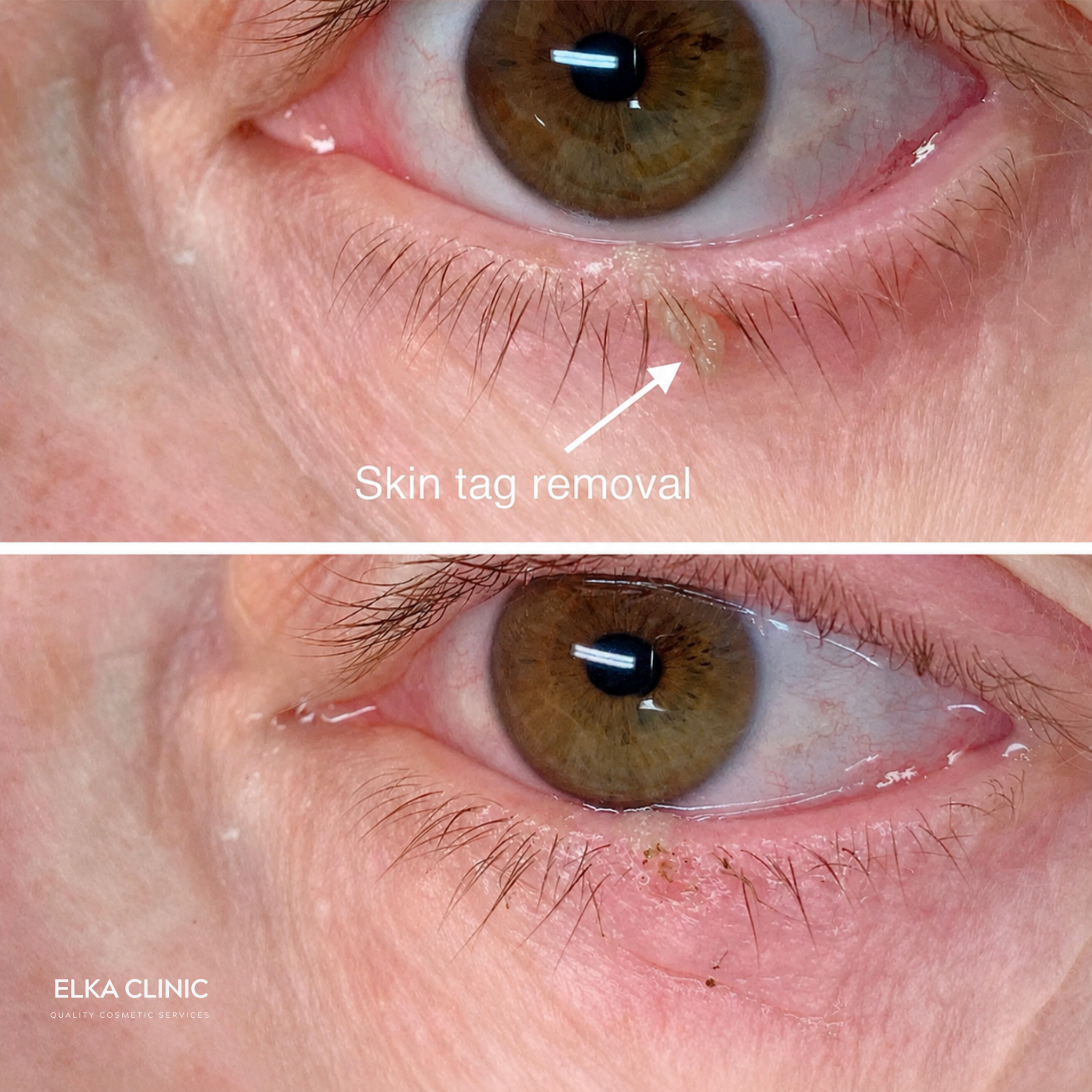
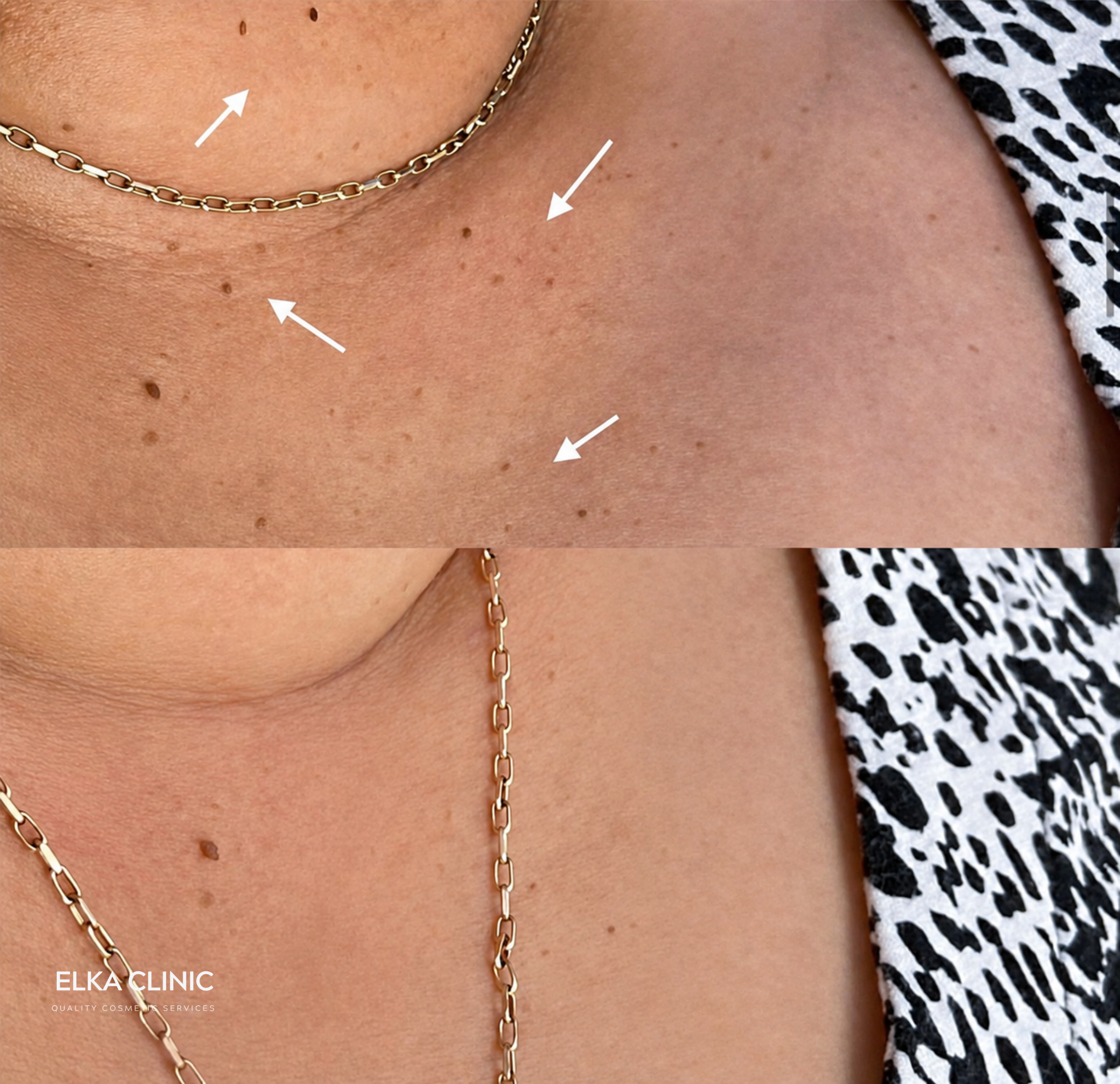
Yes, and they are the most common request. Skin tags are soft, benign growths that typically appear where skin rubs against skin or clothing: the neck, underarms, eyelids, chest and under the bust.
They respond well because they are superficial and clearly defined. Multiple tags can often be treated in a single appointment depending on number and location.
Do you remove milia?
Yes. Milia are small, firm white bumps caused by keratin trapped beneath the surface of the skin, most often around the eyes and on the cheeks.
They do not respond to squeezing, and attempting to squeeze them at home is a common cause of marking the surrounding skin. Plasma pen opens and clears them precisely.
Milia around the eyes are treated with particular care because of how close they sit to the lid margin.
What other lesions can you treat?
Selected small benign skin growths, selected sun spots and age spots, and selected superficial pigmented lesions, where each has been established as benign and sits shallowly enough to treat safely.
The word “selected” is deliberate. Suitability is decided lesion by lesion at assessment, not by category. Two lesions that look similar in a photograph can have very different answers.
Can you treat lesions around my eyes or on my lips?
Often, yes, and it is work we do regularly. These areas need more care, more conservative settings and a slower approach, but they are also where lesions bother people most.
Lesions sitting directly on the lid margin or on the wet part of the lip are assessed individually and may not be suitable.
Can several lesions be done in one appointment?
Usually yes. How many depends on their size, their location and how much healing you are comfortable managing at once.
Where someone has a large number, we often stage them. Treating twenty crusting points across a face at the same time is rarely the kindest plan.
What We Do Not Treat
The most important section on this page. Please read it before booking, because it will save you a wasted appointment and it exists to protect you.
What will you not remove?
We do not remove moles. We do not remove any lesion that has not been diagnosed. We do not remove anything that has changed in size, shape, colour or border, anything that itches, bleeds, crusts or will not heal, and anything that looks in any way suspicious.
We also do not treat lesions that are deeper than the surface, larger than plasma pen can address well, or in an area where treatment would risk a poor cosmetic outcome.
If you are unsure which category yours falls into, that is precisely the situation where you should see a doctor first rather than book with us.
Why will you not remove moles?
Because removing a mole cosmetically destroys the tissue. If that mole was ever going to need testing, the opportunity to test it is gone, and any future recurrence becomes far harder to interpret.
Moles are also frequently deeper than they appear, so cosmetic removal can leave pigment behind and give a false impression that the lesion is gone.
This is not a matter of capability or caution for its own sake. It is the correct standard of care, and any clinic offering to remove moles cosmetically without medical assessment is one to walk away from.
Do I need to see a doctor first?
For anything other than an obvious, unchanged skin tag or milia, yes, and we would rather you did.
The right sequence is: your GP or a dermatologist confirms the lesion is benign, and then we remove it cosmetically. That way you have a diagnosis on record and we are doing the part we are qualified to do.
If you have a skin check due, have it before your appointment rather than after. Perth is a high-UV environment and a full skin check is worth having regardless of this treatment.
What happens if you decide you cannot treat my lesion?
We will tell you clearly at assessment, explain why, and recommend that you see your GP or a dermatologist. We will not treat something else instead just to fill the appointment.
If you have travelled in for the appointment and we cannot proceed, we would still rather have that conversation than remove something we are not confident about.
Can you tell me whether my lesion is cancerous?
No, and we will never try. We are not a diagnostic service and we do not offer opinions on whether a lesion is malignant.
If anything about a lesion concerns us, we will say that we are not comfortable treating it and that you should have it looked at medically. That is the extent of it, and it should be treated as a prompt to see a doctor rather than as reassurance either way.
Suitability
Beyond the lesion itself, your skin and your medical history both matter.
Am I a suitable candidate?
The ideal candidate has a small number of small, superficial, clearly benign lesions, skin that heals well, no history of keloid scarring or marked post-inflammatory pigmentation, and the ability to leave a crust alone for a week or two.
Every client is assessed in person before treatment. We do not book removals from photographs alone.
Does it work on darker skin?
It can, but the conversation is more careful. Plasma pen creates a controlled thermal injury, and skin that produces melanin readily can respond to any injury with temporary darkening or, less commonly, lightening at the treated point.
That risk is managed with conservative settings, sometimes a test point first, and strict sun protection afterwards. In some cases the honest recommendation is to have the lesion removed medically instead.
Any clinic that tells you skin tone makes no difference here is not being straight with you.
When should treatment be delayed or avoided?
Delayed during pregnancy and breastfeeding, with active infection or cold sores near the area, with sunburn or a fresh tan, with active eczema or dermatitis in the area, and after recent laser, peels or injectables that have not settled.
Generally avoided or requiring medical clearance with a keloid or hypertrophic scarring history, a strong tendency to pigment after injury, uncontrolled diabetes, active autoimmune conditions, clotting disorders or blood-thinning medication, current or recent isotretinoin, chemotherapy or radiotherapy, pacemakers and certain implanted electrical devices, and epilepsy.
We never ask you to stop prescribed medication without your doctor’s direction.
Is there a minimum age?
We treat adults. For anyone under eighteen, the appropriate route is a GP or dermatologist rather than a cosmetic clinic.
The Procedure
Short, precise, and mostly spent on assessment and numbing.
What happens at the appointment?
Assessment first. Each lesion is looked at individually, your medical history is reviewed, and we confirm what we are and are not treating. Photographs are taken.
Then the area is cleansed and topical numbing is applied and left to work.
Then removal, lesion by lesion. You will see a small crust form over each treated point almost immediately.
Then aftercare: what to apply, what to avoid, and how long the crusts will take to separate. Written instructions go home with you.
How long does it take?
Allow around forty-five minutes to an hour and a half depending on how many lesions are being treated. A single skin tag is quick; a numbing period still applies.
Assessment and numbing account for most of the appointment. The removal itself is fast.
Will it bleed?
Generally very little, because the plasma arc seals as it removes. Some lesions, particularly larger skin tags, can produce a small amount of pinpoint bleeding.
This is one reason blood-thinning medication is discussed beforehand rather than discovered on the day.
Can I go straight back to work?
Yes, though you will have small visible crusts at each treated point, and makeup cannot go over them until they have separated.
If the lesions are on your face and you would rather not be seen with visible crusts, plan the timing the way you would for any short-downtime treatment.
Healing
A small crust forms over each treated point and separates on its own. Everything about the outcome depends on letting that happen naturally.
How long does healing take?
The crusts typically separate on their own within about seven to ten days on the face, and a few days longer on the neck and body.
Underneath each crust the skin is pink at first. That pinkness fades over the following weeks, and on some people it takes a couple of months to settle completely.
| Stage | What the skin does | What to do |
|---|---|---|
| Day of treatment | A small crust forms over each treated point. Mild redness and tenderness around it. | Keep clean and dry. Apply only what you were given. No makeup over the points. |
| Days 1–3 | Crusts darken and firm up. Some mild swelling, more noticeable near the eyes. | Do not pick. Avoid swimming, saunas, steam and heavy sweating. |
| Days 4–7 | Crusts dry further and begin lifting at the edges. Itching is common. | Leave them completely alone. Keep out of the sun. |
| Days 7–10 | Crusts separate on their own, leaving fresh pink skin. | Makeup can resume once the skin is intact. Sunscreen daily from here. |
| Weeks 2–8 | Pinkness gradually fades. Skin texture settles. | Keep using sunscreen. Be patient with residual pink. |
What if a crust comes off early?
If it comes away by itself, that is fine. If it is picked or scrubbed off early, the skin underneath had not finished healing, and that is the single most common cause of a mark that lasts, prolonged pigmentation, or a small scar.
Ten days of leaving it alone protects a result you keep permanently. It is genuinely the most important instruction we give.
What aftercare is needed?
Keep the area clean and dry, and apply only what you were given, exactly as directed.
Avoid until the crusts have separated naturally: makeup over the treated points, swimming pools, spas, saunas, steam, heavy sweating and the gym, facials, and active skincare such as retinoids, acids and vitamin C on the area.
Avoid sun on the area entirely while it heals, and use sunscreen daily for at least three months afterwards. Sun on freshly healed skin is the most reliable way to cause a lasting mark.
Will it leave a scar?
For small, superficial lesions treated conservatively and allowed to heal without interference, a visible scar is uncommon. A small pink mark that fades over weeks to months is the usual course.
The risk of a lasting mark rises with lesion size and depth, with picking, with sun exposure during healing, and in anyone who scars or pigments readily. All of that is discussed at assessment before you commit.
Can I use makeup to cover the crusts?
No, not until they have separated and the skin is intact. Makeup over a healing crust traps bacteria and encourages early removal of the crust, which is exactly what you are trying to avoid.
Once the skin has closed, mineral makeup is fine.
Results
Most lesions clear in one session. What varies is how long the skin takes to look completely even again.
Will one session be enough?
For most small skin tags and milia, yes. The lesion is removed in that session and the work afterwards is simply healing.
Larger or deeper lesions occasionally need a second, conservative pass once the first has fully healed. Going conservatively twice is safer than going aggressively once, especially on the face.
When will the area look normal again?
The crusts are gone within about ten days. The pink mark underneath is the part that takes longer, commonly a few weeks and occasionally a couple of months.
If you have an event coming up, plan around the pink stage rather than the crust stage. That is the one people underestimate.
Can new lesions appear later?
Yes. Removing a skin tag does not change the tendency to form them, so new ones can appear in the same general area or elsewhere over the years.
Treated lesions themselves do not usually return. Any lesion that does appear to return in exactly the same place should be looked at medically rather than simply retreated.
What if I am not happy with how it healed?
Tell us. Bring it in and we will look at it against your before photographs. Residual pink almost always continues to improve with time and sun protection.
If a small area has healed with a textural change or a pigment change, we will be honest about what can and cannot be improved and what the options are.
Risks
Small treatment, real risks. Worth reading properly.
What are the risks?
Common and expected: a crust at each treated point, mild redness, tenderness, slight swelling, itching during healing, and a pink mark afterwards.
Uncommon: prolonged pinkness, temporary darkening of the treated point, milia forming nearby, cold sore reactivation when treating near the mouth, and slower healing on the neck or body.
Rare: infection, lasting hyperpigmentation or hypopigmentation, a small permanent textural change or scar, and incomplete removal requiring a second session.
The most significant risk of all is not clinical, it is diagnostic: having a lesion removed cosmetically that should have been assessed medically. That is why our list of what we do not treat is as long as it is.
When should I contact the clinic?
Call 1300 216 456 or use the contact page if pain increases after the first couple of days, if redness spreads beyond the treated point, if there is heat, throbbing, yellow discharge or a foul smell, if swelling worsens rather than settles, or if you develop a fever.
Crusting, mild tenderness, itching and pinkness on the expected timeline are normal healing and are not causes for concern.
Does treatment affect future skin checks?
For skin tags and milia, no. For anything pigmented, it is another reason we insist on medical diagnosis first, because removing pigmented tissue cosmetically removes information a future skin check might otherwise have used.
Keep having regular skin checks regardless. Nothing on this page is a substitute for one.
Pricing
Priced by assessment and by the number of lesions, with current figures shown live on our booking system.
How much does benign skin lesion removal cost?
It depends on how many lesions are being treated, their size and where they are. Rather than publish a figure here that can go out of date, current prices and appointment lengths are shown on our booking page.
Do I pay if you decide not to treat?
If we assess a lesion and recommend that you see a doctor instead, we will explain that clearly and discuss the appointment with you rather than proceed with something we are not comfortable treating.
Talk to us when you book if you are uncertain whether your lesion is suitable, and send photographs beforehand. It is better to sort that out in advance than on the day.
Do you offer payment plans?
Yes. Options are set out on our payment plans page.
Will private health or Medicare cover it?
No. This is a cosmetic treatment performed in a cosmetic clinic, so there is no Medicare rebate and it is not claimable as a medical procedure.
If a lesion needs to be removed for medical reasons, that is a matter for your GP or a dermatologist, where different funding arrangements may apply.
Booking
How to start, and how to make the appointment as useful as possible.
How do I book?
Book an assessment through our booking system, or contact the clinic first if you are unsure whether your lesion is suitable. Sending clear photographs in natural light before booking often saves everyone time.
Book your assessment online, or call 1300 216 456.
Can removal happen at the same appointment as the assessment?
Often yes, where the lesion is clearly suitable and you have already had it looked at medically if that was needed. Book an appointment length that allows for treatment so you are not rushed.
Where we think a lesion needs a doctor’s opinion first, removal will wait until you have that.
How should I prepare?
In the week before: avoid retinoids, acids and exfoliants on the area, avoid waxing over the lesion, and stay out of the sun. Do not arrive tanned or sunburnt.
On the day: arrive with clean skin and no makeup on the area, and allow extra time for numbing.
Bring any relevant medical information, including any note or diagnosis from your GP or dermatologist about the lesion.
What if I need to reschedule?
Let us know as early as you can. Cancellation terms are shown at the time of booking.
If you arrive with a cold sore near the area, an active skin infection, sunburn or a fresh tan, treatment will be postponed.
Who will perform my treatment?
Benign skin lesion removal at ELKA CLINIC is performed by Maryam, our Senior Skin Therapist, who also performs microneedling and plasma pen fibroblast treatments.
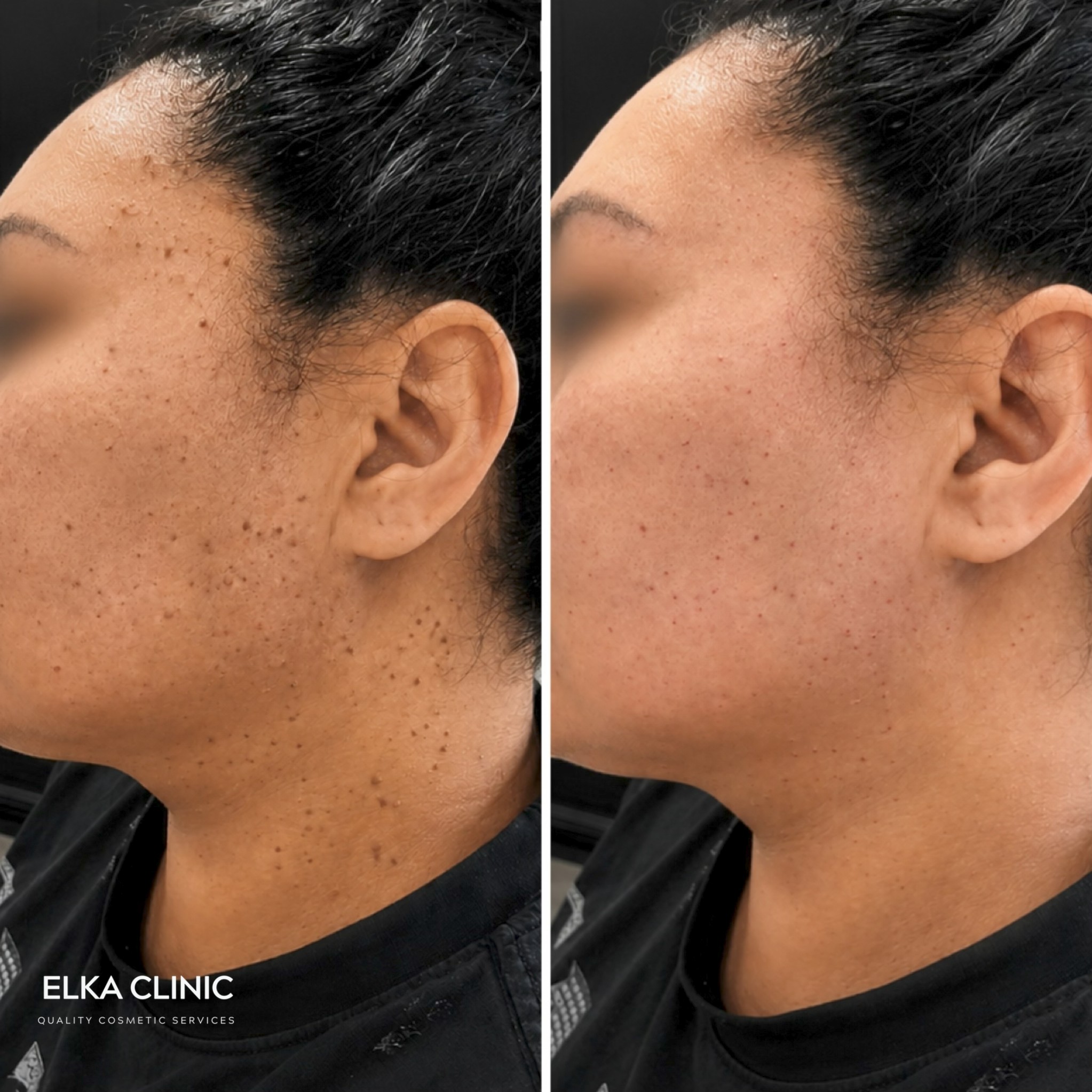
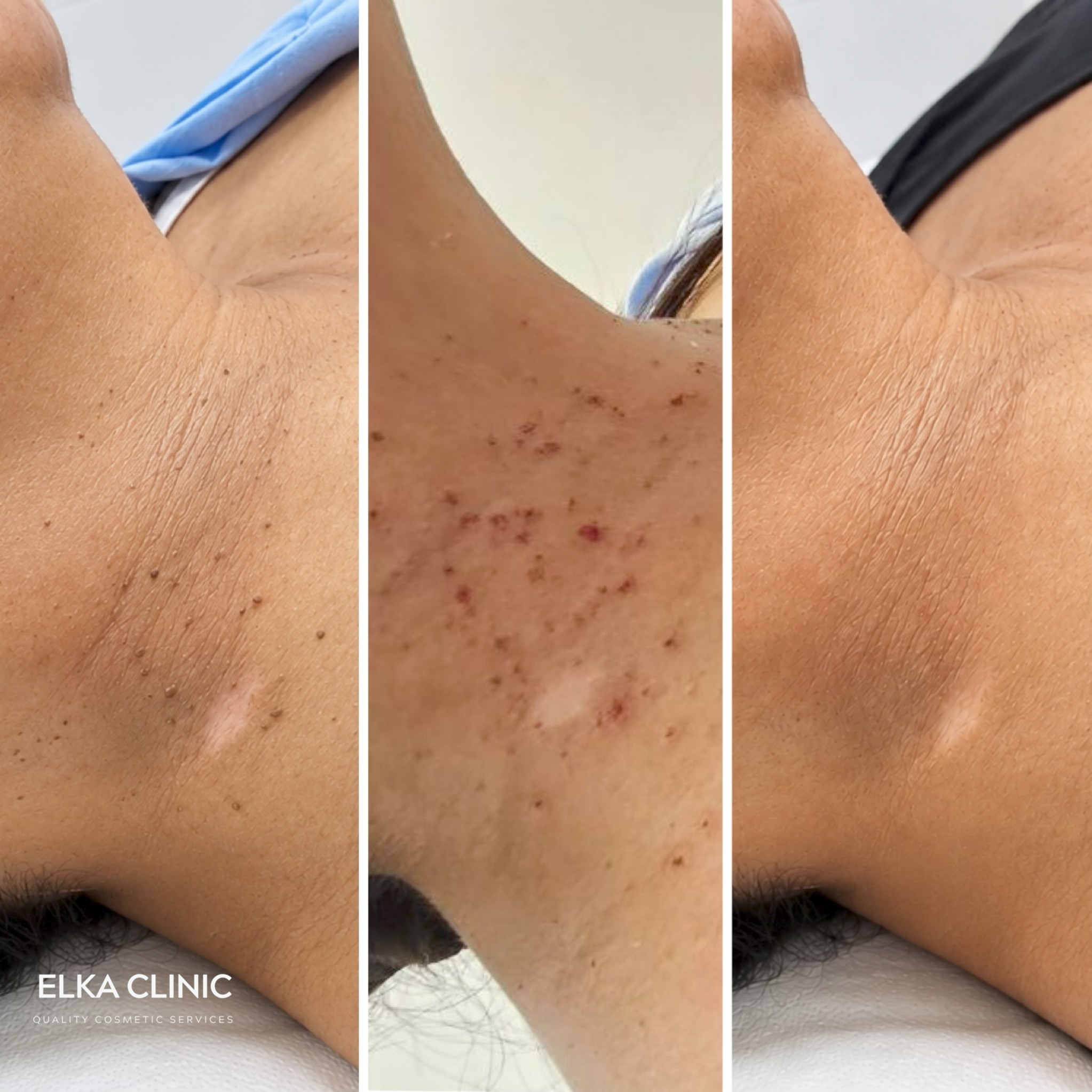
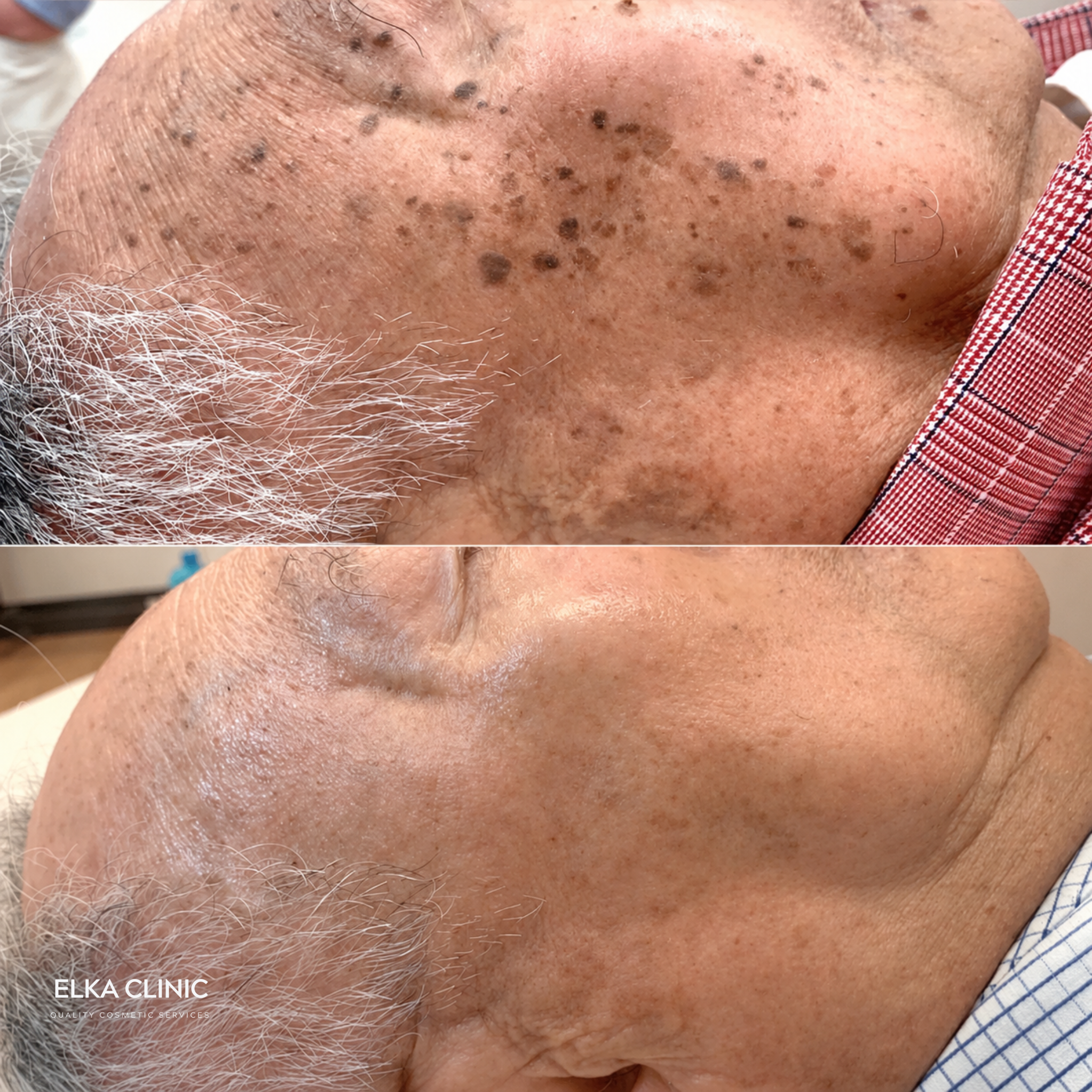
Removals Photographed Honestly
Related Reading
Treatments
- Benign Skin Lesion Removal Perth — the service page: what we treat, what we do not, and how plasma pen works.
- Plasma Pen Perth — fibroblast skin tightening for hooded lids and fine lines.
- Microneedling Perth — collagen induction for texture, scarring and tone.
Other FAQs
- Microneedling FAQ — sessions, downtime and realistic results.
- Plasma Pen FAQ — crusting, the pink stage and how long results take.
- General clinic FAQ — everything else about visiting ELKA CLINIC.
Book An Assessment In Perth
Every lesion looked at individually, nothing treated that should be seen by a doctor, and no removal without a clear explanation of how it will heal.
3/29 Hood Street, Subiaco WA 6008 · 1300 216 456 · contact@elkaclinic.com.au · Open 8:00am–10:00pm, 7 days, by appointment