
Microneedling FAQs
Straight answers for people already considering collagen induction therapy: what it genuinely changes, what it cannot, how many sessions a real course takes, downtime, risks and cost.
Grouped by stage of the decision. If you are still working out what the treatment involves, start with the microneedling service page and come back here for the detail.
Information reviewed August 2026 · Treatment performed by Maryam, Senior Skin Therapist
Jump Straight To Your Question
About Microneedling
What the treatment actually does to skin, and why the mechanism matters when you are judging whether it is worth a course.
What is microneedling?
Microneedling, or collagen induction therapy, uses a device with very fine sterile needles to create thousands of controlled micro-channels in the skin. Each channel is a small, deliberate injury.
The skin responds the way it responds to any injury: it repairs. That repair process lays down new collagen and elastin, and over the following weeks the treated area remodels itself. The result is firmer, smoother, more even skin, achieved by the skin rebuilding rather than by anything being added to it.
Depth is adjusted for the area and the concern. Fine work for tone and texture sits shallow; scar work goes deeper.
What can microneedling realistically improve?
It has good evidence and consistent clinical results for acne scarring, rough or uneven texture, enlarged pores, fine lines, uneven tone and some pigmentation, and stretch marks. It is also used to support hair thinning.
What it does well is remodel skin structure. What it does not do is lift, add volume or shrink pores permanently. A pore is an opening, not a hole that closes; what improves is the surrounding collagen support, which makes the opening look smaller.
Deep static wrinkles caused by repeated muscle movement are not a microneedling problem to solve. Nor is significant laxity.
Is it the same as a derma roller I can buy online?
No, and this matters. Home rollers use fixed-length needles dragged across the skin at an angle, which tears rather than channels, blunt quickly, and cannot be sterilised properly between uses.
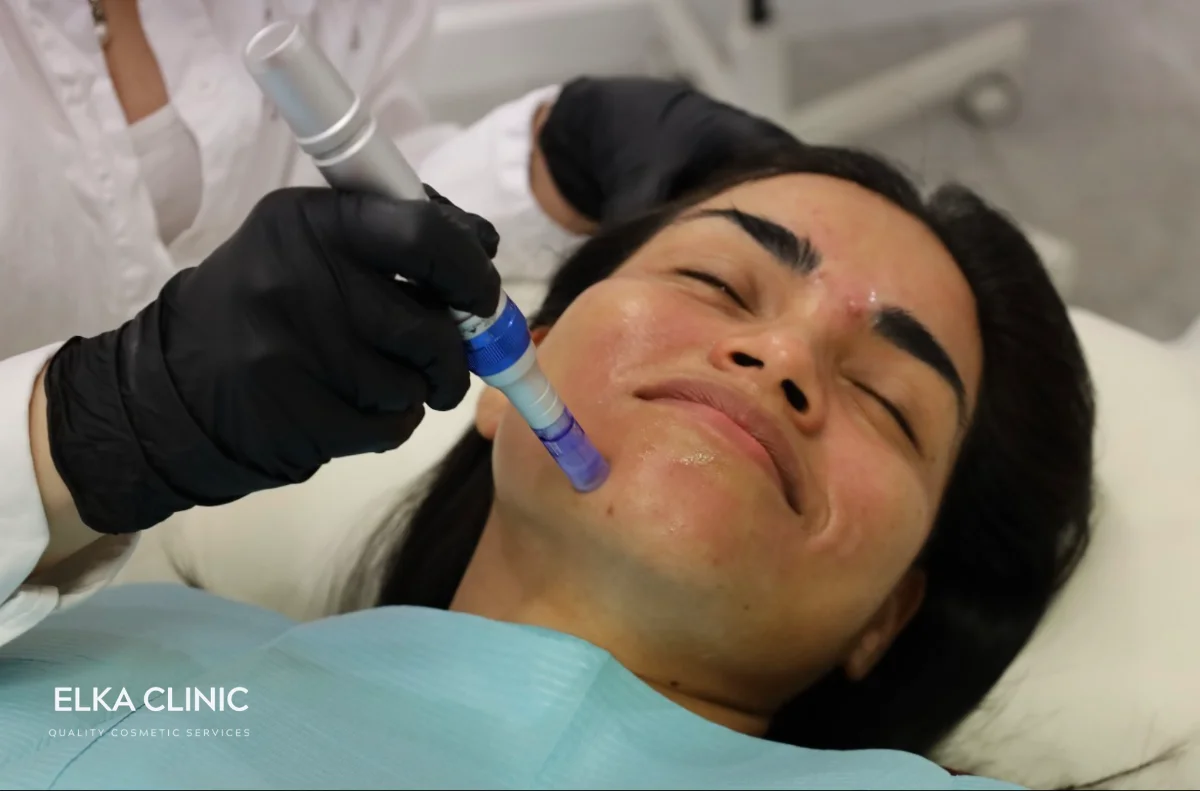
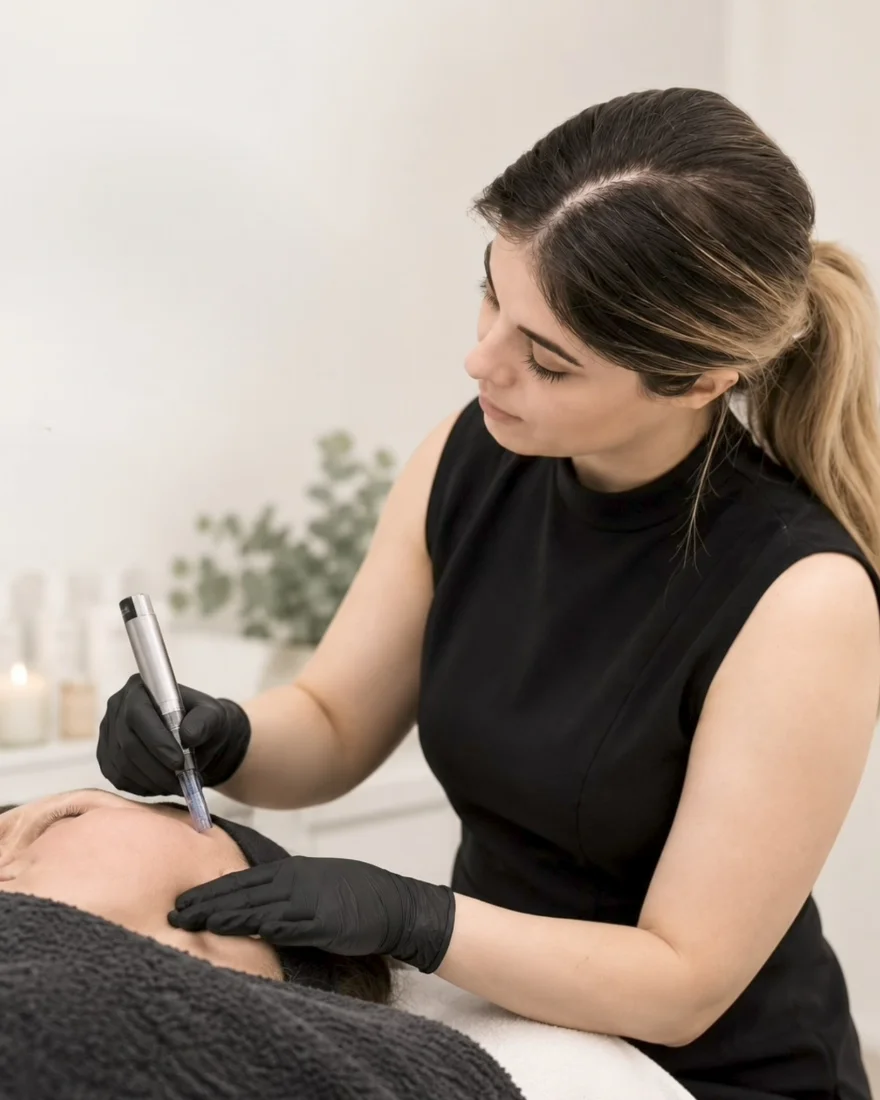
Clinical microneedling uses a motorised pen with a sterile single-use cartridge that stamps vertically at a controlled speed and adjustable depth, in a clinical environment, on skin that has been assessed first.
The difference in outcome is real, and so is the difference in risk. Home rolling is one of the more common causes of the scarring and pigmentation we are later asked to help with.
Does microneedling really build collagen, or is that marketing?
The mechanism is well established. Controlled micro-injury triggers a wound-healing cascade that includes new collagen and elastin deposition, and the effect has been measured in clinical studies.
Where marketing overreaches is in the timeline and the magnitude. One session produces a modest amount of change. The visible improvements people show off are the accumulated result of a course spaced properly, plus consistent sun protection.
Anyone promising dramatic change from a single session is selling something other than the treatment.
Is anything applied to the skin during treatment?
A sterile serum is used to allow the pen to glide and to support healing. What is used is chosen for the skin in front of us, and it is kept simple. The open channels created by the treatment mean anything applied has far greater access than usual, so this is not the moment for a complicated cocktail.
Products with fragrance, colour, or actives such as vitamin C or acids are not applied to freshly needled skin.
Suitability
Microneedling suits a wider range of skin than most resurfacing treatments, including darker skin tones, but it has genuine contraindications.
Am I a suitable candidate for microneedling?
Most healthy adults with concerns about texture, scarring, pores, fine lines or tone are suitable. Skin is assessed in person before any treatment, and photographs are taken so progress can be judged against something objective rather than memory.
You are less suitable if your main concern is laxity or volume loss, if you cannot commit to a course spaced over several months, or if you are unwilling to change a skincare routine built around strong actives during the treatment period.
Is microneedling safe for darker skin tones?
It is one of the safer resurfacing options for deeper skin, because it does not rely on heat or on removing the surface layer the way lasers and strong peels do. That materially lowers the risk of post-inflammatory pigmentation compared with heat-based treatments.
Lower risk is not no risk. Depth and aggressiveness are adjusted, sessions may be spaced further apart, and sun protection afterwards is essential rather than advisory.
Can I have microneedling if I have active acne?
Not over active, inflamed or pustular acne. Needling through infected skin spreads bacteria and risks making things considerably worse.
Microneedling is for the aftermath: the scarring, the texture and the marks left behind once the acne itself is controlled. If your acne is still active, the sequence is to get that settled first, medically if needed, and then treat the scarring.
What if I am on or have recently taken isotretinoin?
Microneedling is not performed during a course of isotretinoin, and a clearance period afterwards is required before treating. The medication changes how skin heals and increases the risk of poor healing and scarring.
Bring the details of your course and dates to consultation and we will plan the timing with you.
When should microneedling be delayed or avoided?
Delayed with active acne, cold sores, eczema, psoriasis or dermatitis in the area, sunburn or a fresh tan, recent laser, peels or waxing, and during pregnancy or breastfeeding.
Generally avoided or requiring medical clearance with a keloid scarring history, uncontrolled diabetes, active autoimmune conditions, clotting disorders or blood-thinning medication, current chemotherapy or radiotherapy, and any active skin infection.
If you have a history of cold sores and we are treating around the mouth, mention it. Preventative antiviral cover is sometimes recommended by your doctor.
Is there an age limit?
We treat adults. There is no upper limit, and mature skin often responds well, though results build more slowly as the skin’s natural collagen response slows with age.
For younger clients with acne scarring, treatment is worth timing sensibly. Scarring that is still evolving may be worth allowing to settle before beginning a course.
The Procedure
What a session actually involves, start to finish.
What happens during a microneedling appointment?
Skin assessment first: what you want changed, what your skin has been through, what you are currently using on it, and a realistic view of what a course can achieve.
Then photographs, taken in consistent lighting so that progress can be measured rather than guessed at.
Then a thorough cleanse, followed by topical numbing left on long enough to work properly.
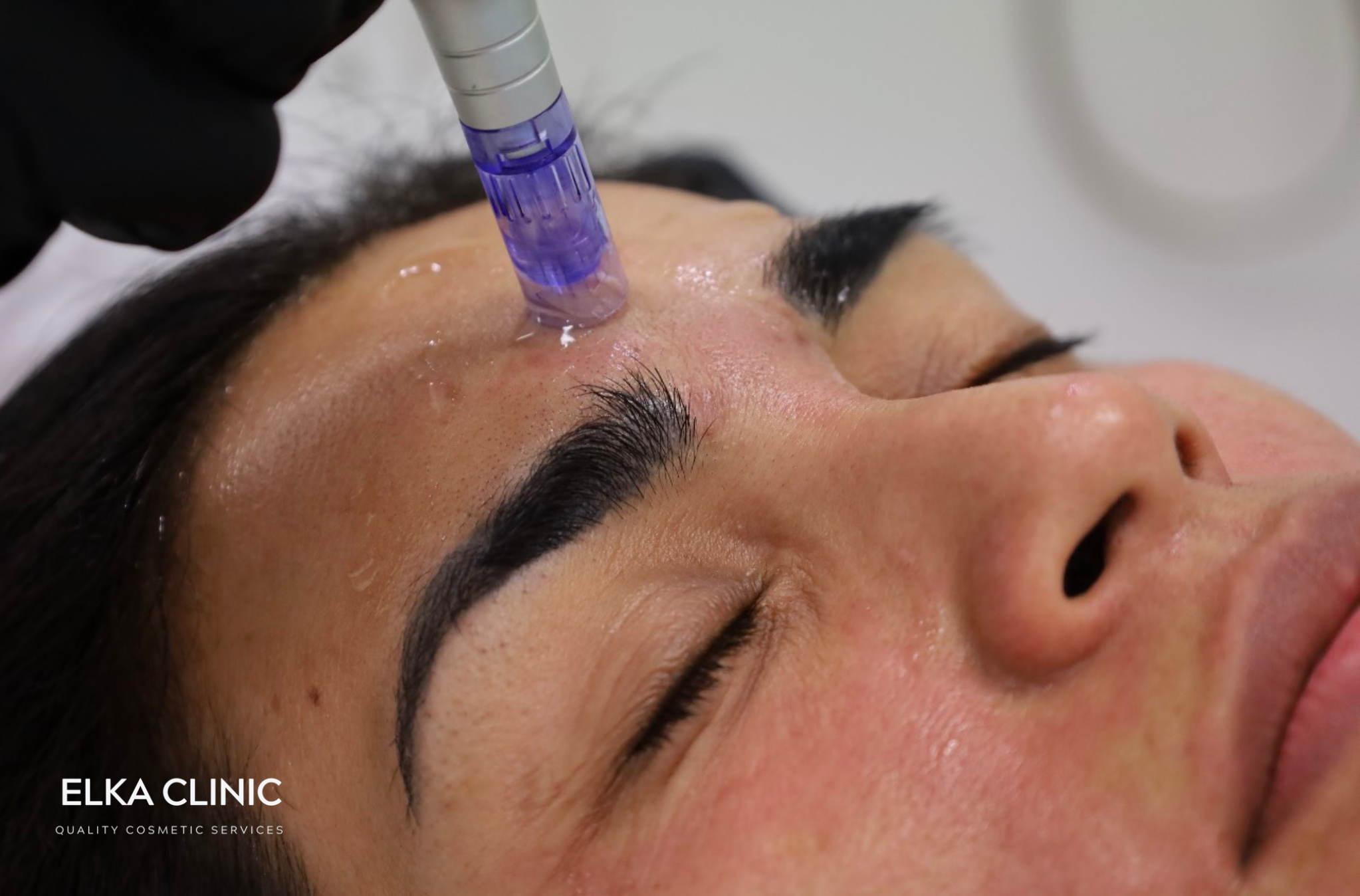
Then treatment itself, area by area, with depth adjusted for each region of the face. Bone-adjacent areas such as the forehead and jaw feel different from the cheeks.
Finally a soothing post-treatment application, sun protection, and clear aftercare instructions. Your next session is planned before you leave.
Does microneedling hurt?
With proper numbing, most clients describe it as very manageable: a vibration and a scratchy sensation rather than sharp pain.
Some areas are more sensitive than others. The forehead, the nose, the upper lip and anywhere the skin sits directly over bone are the parts people notice most. Deeper settings used for scar work are felt more than shallow tone work.
Afterwards the skin feels hot and tight, similar to mild sunburn, for the rest of the day.
How long does a session take?
Allow around an hour to ninety minutes for a full face. Numbing accounts for a good portion of that; the needling itself is comparatively quick.
Additional areas such as the neck, décolletage or a body site add time.
What depth is used, and how is it decided?
By concern and by area, not by a single setting for the whole face. Superficial depths suit tone, congestion and fine texture. Deeper settings are used for established acne scarring and stretch marks, where the point is to break down and remodel fibrous tissue.
The skin over the forehead, temples and around the eyes is thinner and is treated more conservatively than the cheeks.
Deeper is not better. Deeper than the skin needs simply means more downtime and more risk for the same result.
Is it hygienic? What is single-use?
The needle cartridge is sterile, single-use and disposed of in front of you. Nothing that penetrates skin is ever reused between clients.
Disposable barriers are used on surfaces and equipment, the treatment room is prepared for one client at a time, and the serums applied to open skin are drawn from single-use or clinically appropriate sterile sources.
Healing & Downtime
Most of the visible recovery is over within two to four days. The collagen work that actually produces the result carries on quietly for weeks afterwards.
What is the downtime after microneedling?
Short, and shorter than most people expect. The table below is the sequence most clients follow after a standard facial session.
| Stage | What the skin does | What to do |
|---|---|---|
| Day of treatment | Redness and warmth similar to mild sunburn. Skin feels tight and looks flushed. | Leave it alone. No makeup, no active skincare. Keep it clean and cool. |
| Day 2 | The flush typically fades to pink. Tightness eases. Skin may feel dry. | Gentle cleanser, simple moisturiser, sunscreen. Mineral makeup can usually resume. |
| Days 3–5 | Light flaking is common as the surface renews. Skin can look slightly dull before it looks better. | Do not pick or exfoliate. Picking is the most common reason a session heals unevenly. |
| Week 1–2 | Surface looks smooth and clear. Early glow appears. | Reintroduce active skincare only once flaking has finished and as directed. |
| Weeks 4–12 | Collagen remodelling continues beneath the surface. Texture and scarring improve gradually. | Attend your next session at the four to six week mark. Keep sunscreen daily. |
Deeper scar work commonly means a longer flush, sometimes with pinpoint marks for a few days. Shallower tone work often settles overnight.
Can I go to work the next day?
Most clients do. By day two the redness has usually settled to a pink flush that mineral makeup covers comfortably.
If you have an event, leave at least a week between your session and the event, and longer if you are having scar work. Booking a session two days before a wedding is the one scenario we would talk you out of.
What aftercare does microneedling need?
For the first 24 hours: keep the skin clean and leave it alone. No makeup, no active skincare, no touching with unwashed hands.
For 48 to 72 hours: avoid heavy sweating, gym sessions, saunas, steam rooms and swimming. Heat and bacteria are most likely to cause a problem while the channels are closing.
Retinoids, acids, vitamin C and exfoliants stay out of the routine until the skin has settled and you have been told to reintroduce them.
Sunscreen every day, without exception. Freshly needled skin is more vulnerable to pigmentation from UV than it is at any other time.
Will I break out afterwards?
Some clients do experience a purge in the week or two after a session, particularly if the skin was congested to begin with. It usually settles.
Persistent or worsening breakouts should be mentioned before the next session so the plan can be adjusted, and so we can check nothing applied at home is contributing.
When can I wear makeup again?
Not on the day of treatment. Mineral makeup from day two onwards is usually fine, applied with clean hands or a freshly cleaned brush.
Heavy or long-wear foundations are best left until the flaking phase has passed.
Results & Sessions
A single number for how many sessions you need would be misleading. What we can give you is the reasoning behind the range.
How many microneedling sessions will I need?
Each session sets off one cycle of collagen remodelling, and each cycle produces a modest amount of change. Sessions are spaced four to six weeks apart because that is broadly how long a cycle takes; treating sooner interrupts work already underway.
As a general guide, tone and texture commonly respond within three to four sessions. Pores and fine lines typically need four to six. Acne scarring and stretch marks are the slowest, often six or more.
These are ranges, not promises. Age, general health, smoking, sun history and how consistently you use SPF all affect what each session returns, which is why two people with the same concern can need different courses.
When will I see results?
There is an early glow within a week of the first session, which is largely surface renewal and hydration rather than collagen.
Real structural change becomes visible from around the four to six week mark and continues building for up to three months after each session. That is why the final assessment of a course happens months after the last treatment rather than immediately.
Photographs taken at the start are worth more than memory here. Gradual change is very easy to underestimate when you see your own face daily.
How long do the results last?
The collagen built is your own, so the improvement is durable. What it does not do is stop the ageing process or undo continued sun exposure.
Once a course is complete, many clients move to occasional maintenance, commonly a session every few months. Others stop entirely and keep the improvement they gained. Neither is wrong.
Can microneedling get rid of acne scars completely?
Improvement rather than erasure is the honest expectation. Rolling and boxcar scars generally respond well over a course. Deep ice-pick scars respond least, because the fibrous tract runs deeper than needling reaches, and are often better addressed with a combination approach.
A meaningful reduction in depth and shadowing, with smoother surrounding texture, is a realistic target. Perfectly smooth skin is not, and any clinic promising it should be treated with caution.
Does it help with stretch marks?
It can, and it is one of the few treatments with reasonable evidence for them, but expectations need to be set carefully. Older, white, mature stretch marks respond more slowly than newer red ones, and body skin heals more slowly than facial skin.
Courses for stretch marks are longer, often six sessions or more, and improvement is measured in reduced texture and better blending rather than disappearance.
Risks
Microneedling is a controlled skin injury. Performed properly on assessed skin it is low risk, but the risks are real and worth understanding.
What are the risks of microneedling?
Common and expected: redness, warmth, tightness, mild swelling on the day, and light flaking between days three and five.
Uncommon: prolonged redness, a breakout or purge, milia, temporary dryness or sensitivity, bruising, and pinpoint marks after deeper scar work.
Rare: infection, cold sore reactivation, post-inflammatory hyperpigmentation, granuloma formation, and scarring.
Almost all of the rare outcomes trace back to one of three things: treating skin that should not have been treated, going deeper than the skin needed, or aftercare that let heat, bacteria or sun onto healing skin.
Can microneedling cause pigmentation?
It can, in skin that is prone to it, and sun exposure in the days afterwards is the main trigger. This applies across skin tones but is a greater consideration for deeper skin and for anyone with melasma.
Managing it means adjusting depth, spacing sessions appropriately, avoiding treatment on tanned or sunburnt skin, and being genuinely strict with sunscreen for the weeks after each session.
If you have melasma, say so at consultation. Microneedling is used for melasma in some protocols, but it needs to be planned deliberately rather than stumbled into.
Can it make acne scarring worse?
Treating over active acne can. Treating settled scarring at an appropriate depth does not.
The keloid question matters too. If you form raised, thickened scars from minor injuries, microneedling carries a higher risk for you and needs a proper conversation and often medical input before proceeding.
What should I do if something does not look right?
Contact the clinic. Pain that increases after day two, spreading redness, heat, swelling that worsens rather than settles, pus or a rash beyond the treated area needs same-day assessment by a doctor as well as by us.
Redness lasting a little longer than expected, a purge, or dryness are common and usually settle. Tell us anyway, so the next session can be adjusted.
Combining Treatments
How microneedling sits alongside the other things people are doing to their skin.
Can I have microneedling and plasma pen?
Yes, and they complement each other well because they do different jobs. Microneedling remodels texture and scarring across an area; plasma pen tightens and contracts skin at specific points such as hooded eyelids or fine lines around the mouth.
They are not done on the same area on the same day. Plasma pen has a longer healing course, so sequencing is planned so that one area is fully healed before the other is treated.
What about cosmetic tattoo? Will microneedling fade my brows or lips?
Yes, if it is done over them. Needling directly across tattooed brows, lips or eyeliner will break up pigment and fade the work considerably faster.
Treatment is planned to avoid tattooed areas, and if you have brows or lips booked we will sequence the two so neither compromises the other. Always tell your therapist what cosmetic tattoo you have before a session.
How does it fit with injectables?
Leave time either side. Common practice is to allow around two weeks after anti-wrinkle injections or dermal filler before microneedling, and to let needled skin settle before having injectables.
Follow the timing your injector gives you, and tell us what you have had and when.
What skincare should I be using between sessions?
Simple, consistent and sun-protective. A gentle cleanser, a moisturiser your skin tolerates, and a daily broad-spectrum sunscreen do most of the work.
Actives such as retinoids and vitamin C support the result between sessions, but they come out of the routine in the days around each treatment. Specific timing is given to you based on what you are using.
The single biggest thing you can do to protect a course of microneedling is wear sunscreen every day, including in a Perth winter.
Pricing
Current pricing per session and per area is listed live on our booking system so it is always accurate.
How much does microneedling cost in Perth?
Price depends on the area treated and the length of the appointment. Rather than publish a figure here that can go out of date, current prices are shown against each service on our booking page.
Should I budget for a course rather than a session?
Yes. Microneedling is a course treatment and a single session judged on its own will almost always disappoint.
Work out what three to six sessions spaced four to six weeks apart looks like for your concern, and decide on that basis. If the course is not affordable, it is better to know before starting than after one session.
Do you offer payment plans?
Yes. Options are set out on our payment plans page, and you can ask about them at consultation.
Why is clinical microneedling more expensive than a salon treatment?
Because of what is included: a proper skin assessment, photographs, sterile single-use cartridges, appropriate depth control, a therapist trained to recognise when not to treat, and follow-up that adjusts the plan as your skin responds.
The cheapest needling is usually the shallowest, which is comfortable, has no downtime, and does very little. That is not a bargain.
Booking
Getting started, preparing well, and what happens if plans change.
How do I book microneedling?
Book online through our booking system, or contact the clinic if you would rather discuss your skin first. If you are unsure whether microneedling is the right treatment for your concern, book a skin consultation and decide afterwards.
Book your microneedling appointment online, or reach us on 1300 216 456.
Do I need a consultation first?
A skin assessment is built into the start of every treatment appointment. A separate consultation is worth booking if you have a complex history, active acne, melasma, a keloid tendency, or if you are weighing microneedling against other options.
How should I prepare for a session?
In the week before: stop retinoids, acids and exfoliants, and avoid waxing, peels and laser in the treatment area. Do not arrive with a tan or sunburn.
On the day: arrive with clean skin and no makeup if possible. Allow extra time for numbing. Bring sunscreen and a hat for the trip home.
Avoid alcohol the night before, and do not take aspirin or ibuprofen beforehand unless prescribed.
What if I need to reschedule?
Let us know as early as you can. Cancellation terms are shown at the time of booking.
If you arrive with an active cold sore, a breakout in the treatment area, sunburn or a fresh tan, the session will be postponed. That is a clinical call rather than a preference.
Who will perform my treatment?
Microneedling at ELKA CLINIC is performed by Maryam, our Senior Skin Therapist, who also performs plasma pen fibroblast treatments.
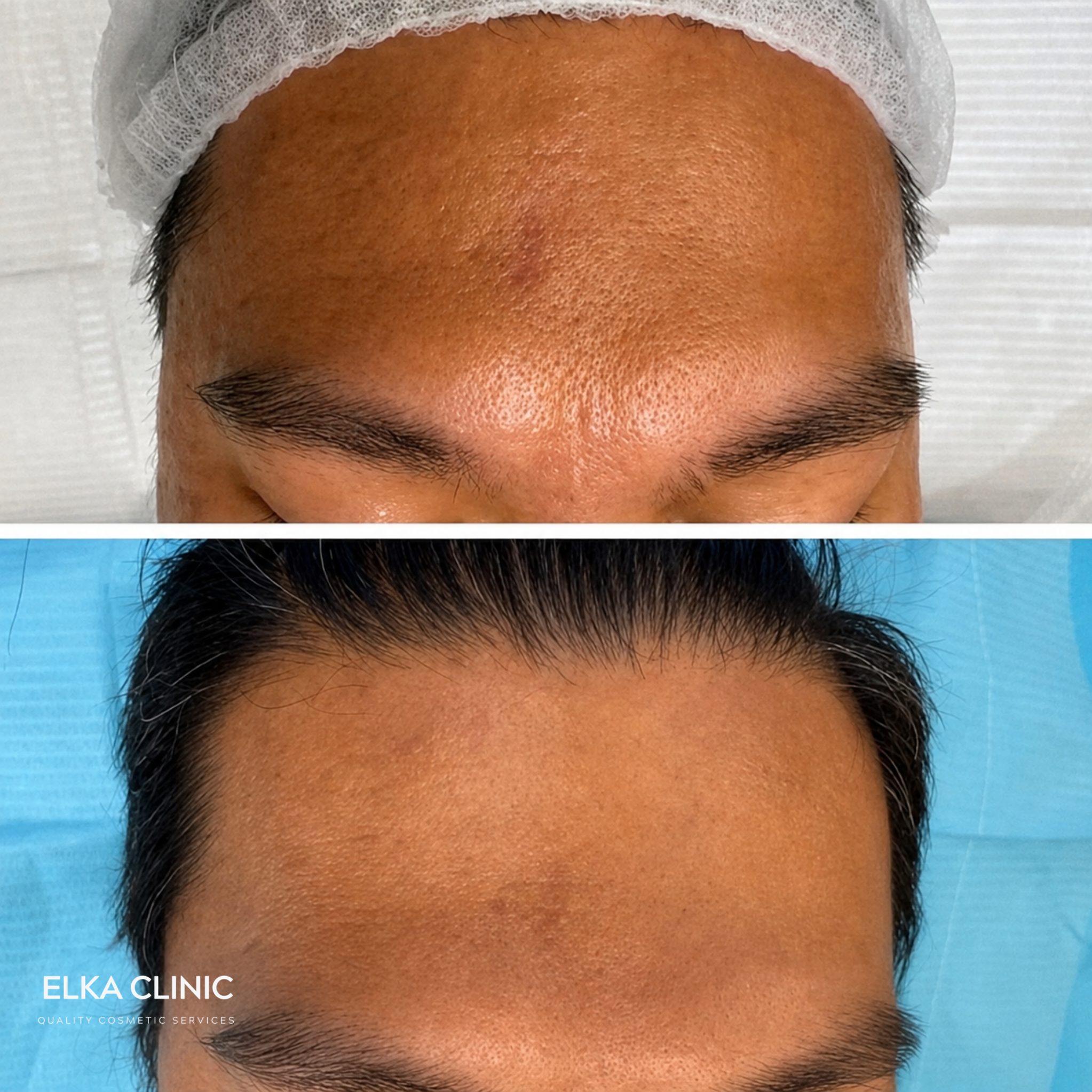
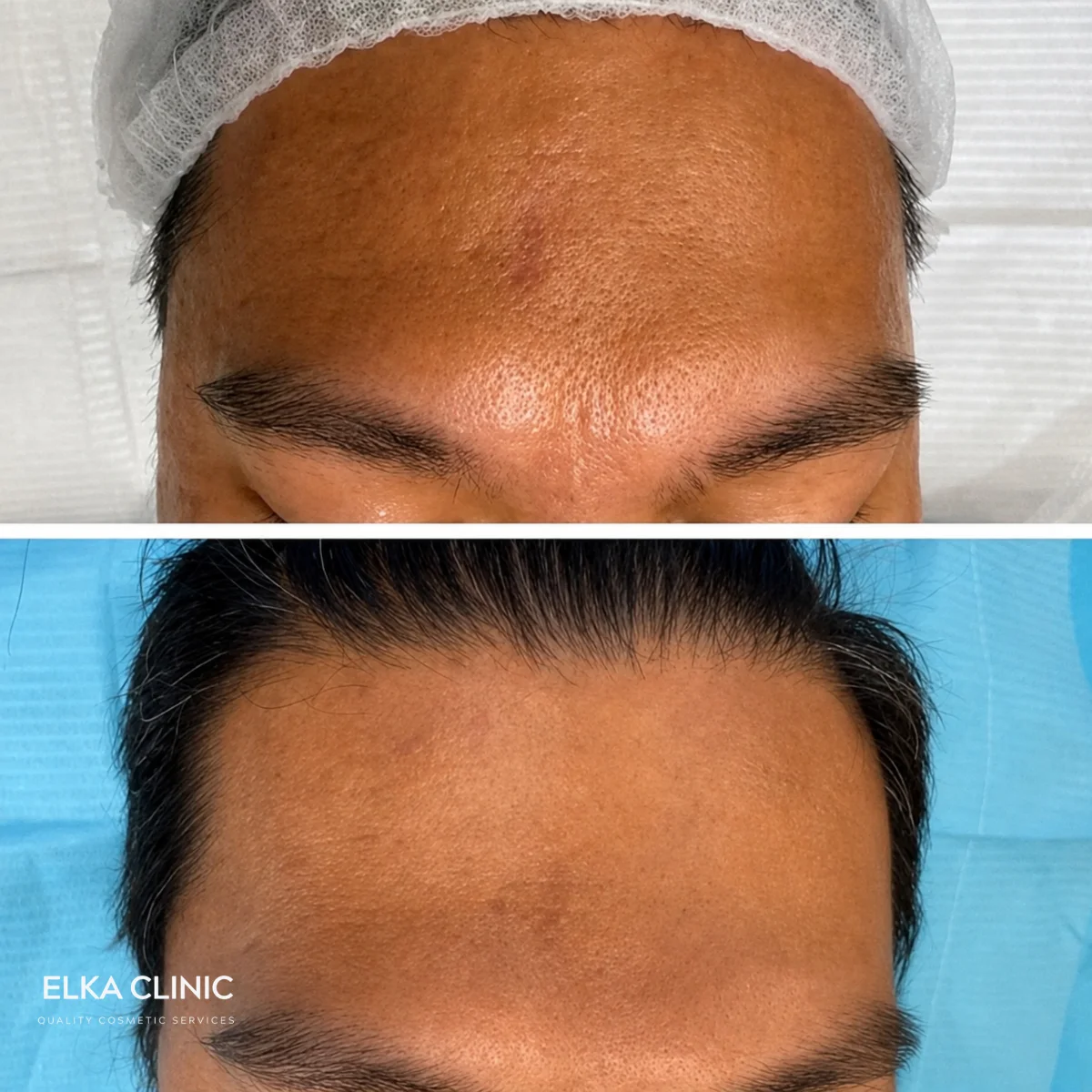
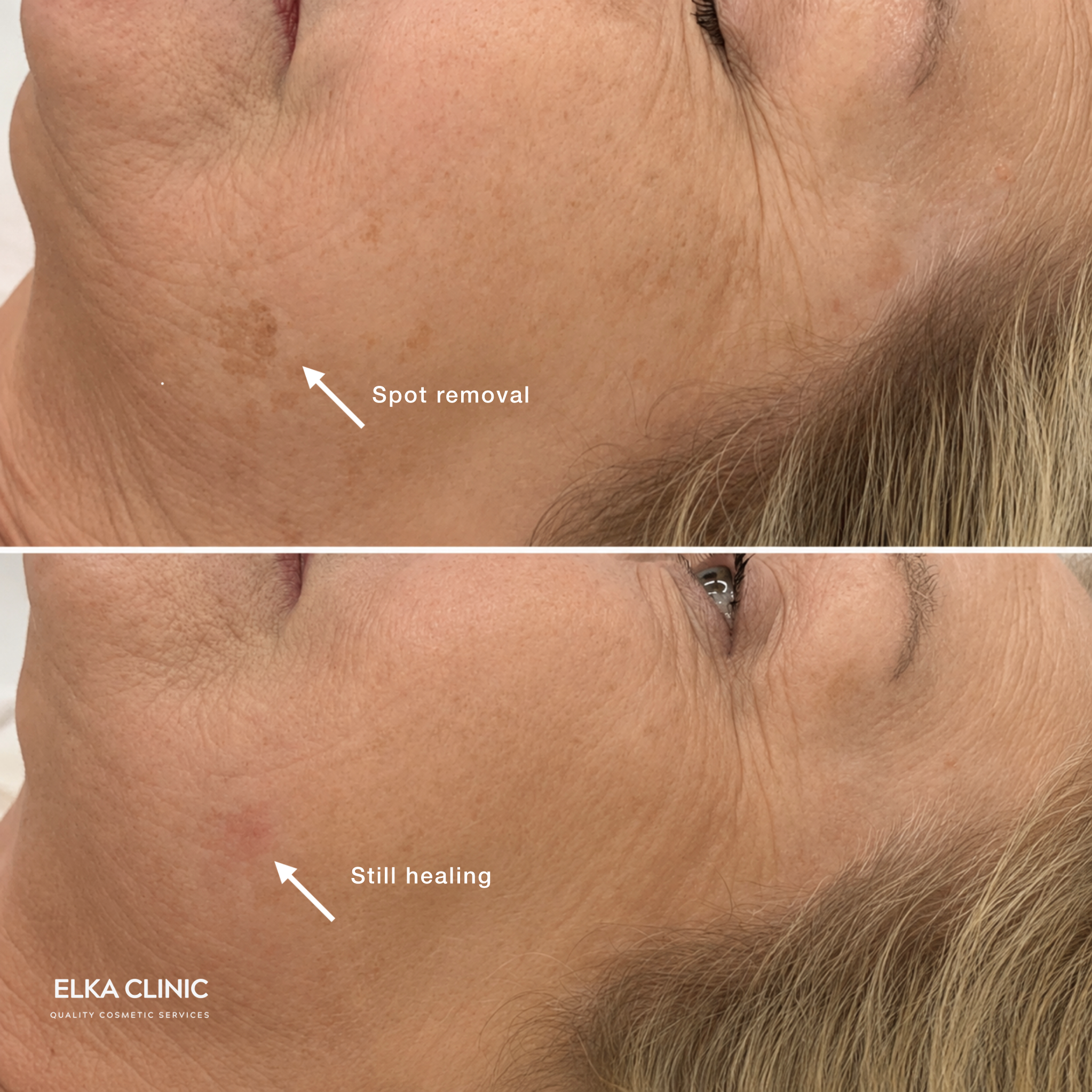
Microneedling Photographed Honestly
Related Reading
Treatments
- Microneedling Perth — the service page: concerns treated, technique, sessions and aftercare in full.
- Plasma Pen Perth — fibroblast skin tightening for hooded lids and fine lines.
- Benign Skin Lesion Removal — skin tags, milia and similar concerns.
Other FAQs
- Nano Brows FAQ — brow tattooing answered in full.
- Lip Blush FAQ — colour, healing and longevity.
- General clinic FAQ — everything else about visiting ELKA CLINIC.
Book Microneedling In Perth
Skin assessed properly, photographed at every stage, and treated at the depth it actually needs rather than the deepest one available.
3/29 Hood Street, Subiaco WA 6008 · 1300 216 456 · contact@elkaclinic.com.au · Open 8:00am–10:00pm, 7 days, by appointment