
Plasma Pen FAQs
Honest answers for people considering fibroblast skin tightening: what it can and cannot lift, the ten days of crusting, the pink stage nobody warns you about, how long results really take, and when surgery is the better answer.
Grouped by stage of the decision. If you are still working out what the treatment involves, start with the plasma pen service page and come back here for the detail.
Information reviewed August 2026 · Treatment performed by Maryam, Senior Skin Therapist
Jump Straight To Your Question
About Plasma Pen Fibroblast
A treatment that genuinely tightens skin without surgery, and which is also the most over-promised treatment in the industry. Both things are true.
What is plasma pen fibroblast?
A plasma pen creates a tiny electrical arc that jumps from the tip of the device to the surface of the skin without ever touching it. That arc discharges as a precise, extremely shallow point of heat.
Two things happen at once. The point of contact sublimates a microscopic amount of surface tissue, which causes the skin around it to contract immediately. Beneath that, the heat triggers the fibroblasts, the cells responsible for producing collagen and elastin, into a repair response that continues for months.
So there is an immediate tightening you can see on the day, and a slower, more meaningful remodelling that builds over the following months.
Is plasma pen a non-surgical eyelid lift?
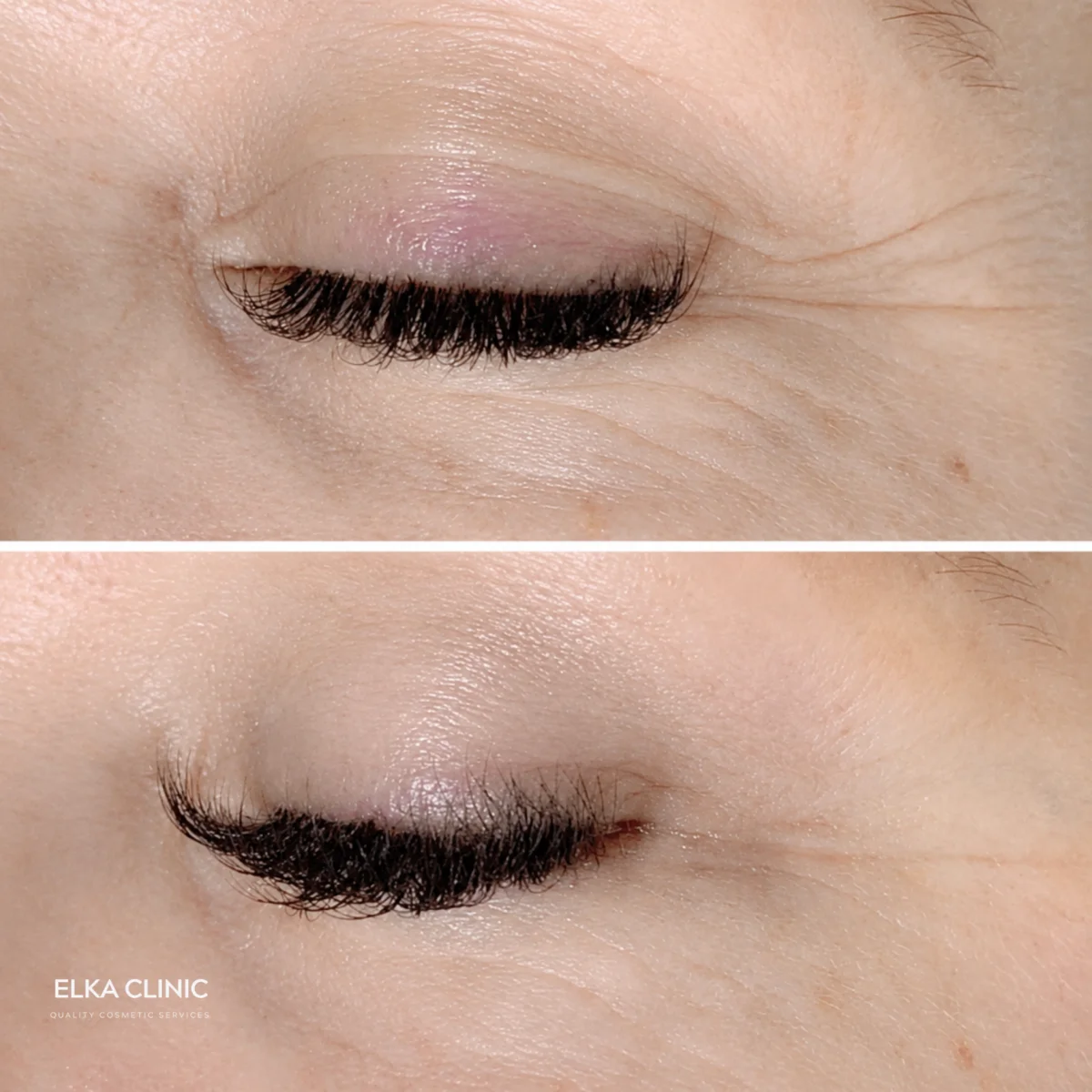
It is often marketed that way, and the phrase does more harm than good. Plasma pen can produce genuine, visible tightening of the upper eyelid, and for many people that is enough to change how their eyes look and feel.
What it is not is a blepharoplasty. Surgery removes tissue; plasma pen contracts it. If you have a significant amount of excess skin resting on your lashes, plasma pen will improve it rather than resolve it, and you may need more than one session to reach a result you are happy with.
Anyone showing you a single-session result that looks surgical is showing you either an unusually good candidate or a misleading photograph.
Does it hurt the skin? Is it a burn?
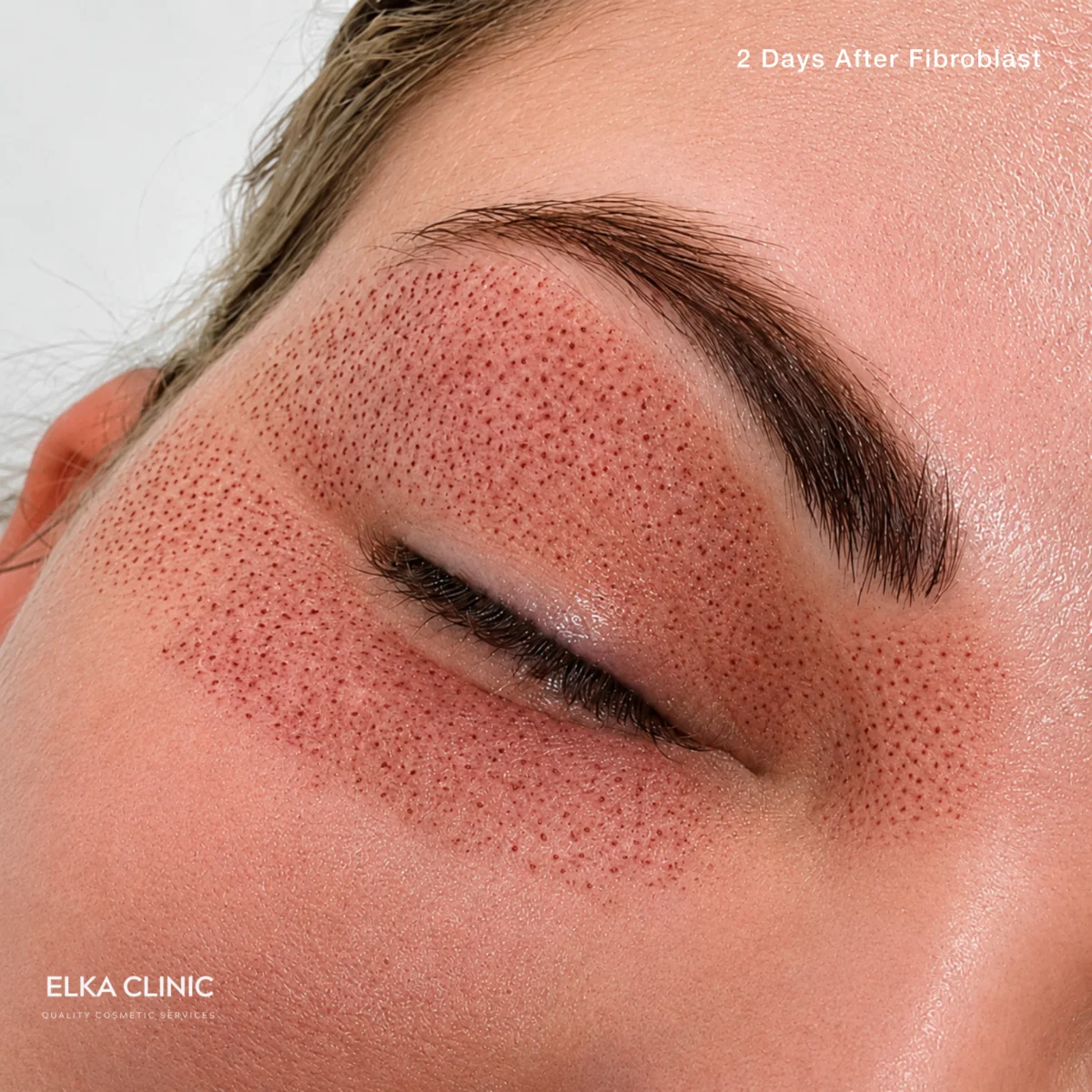
It is a controlled thermal injury, deliberately confined to a very shallow depth. That is the mechanism, and it is why crusts form afterwards.
What separates a good result from a bad one is control: the spacing between points, the depth of each one, the settings used for that particular skin, and knowing when to stop. Done properly the injury stays within the layer that regenerates cleanly. Done carelessly it goes deeper and risks scarring and pigmentation.
This is not a treatment where the operator matters slightly. It is a treatment where the operator matters more than the device.
What does it actually improve?
Loose or hooded upper eyelid skin, crow’s feet, fine lines around the eyes and mouth, forehead lines and frown lines, nasolabial folds, and crepey texture on areas such as the neck and décolletage.
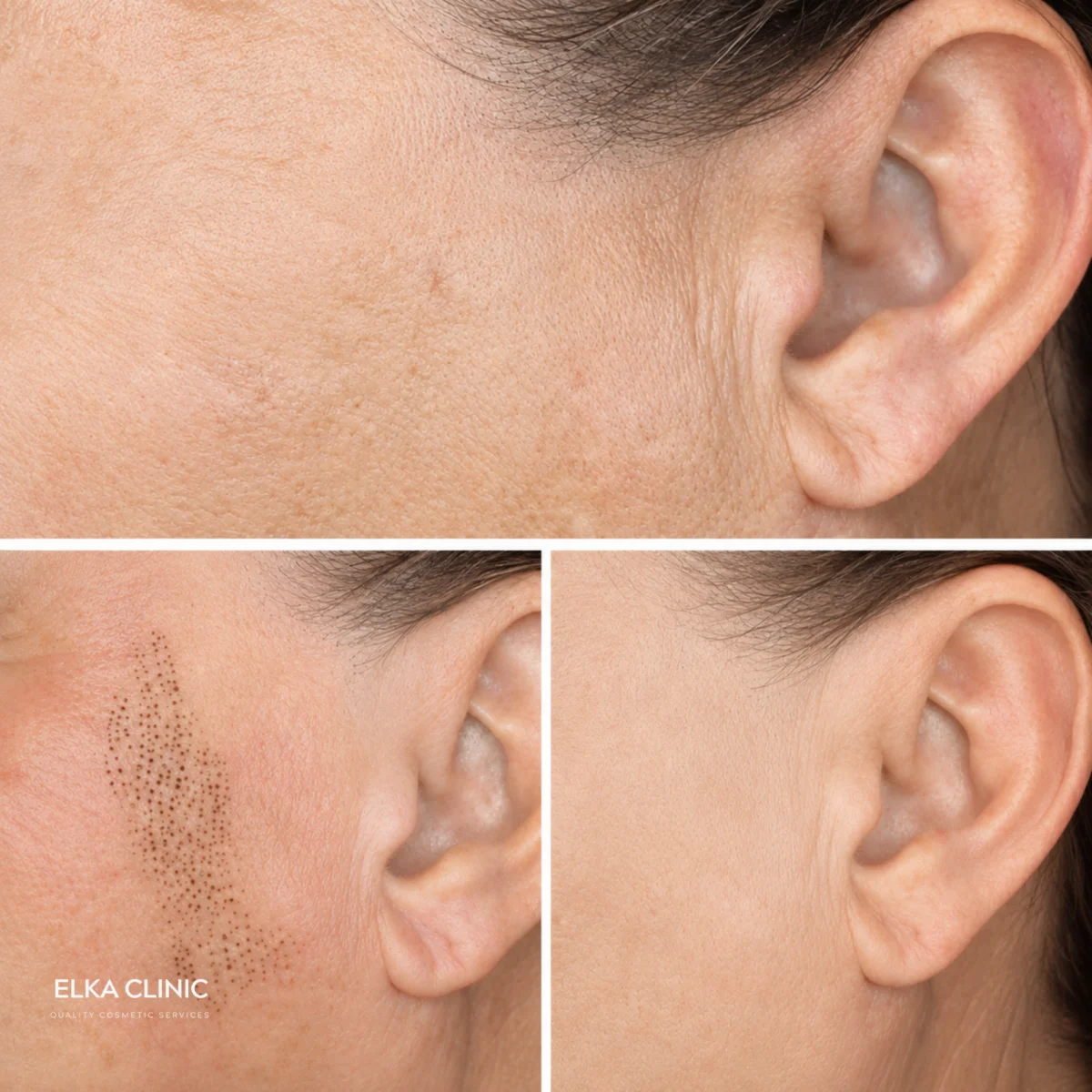
It also has a role in improving the appearance of some scars and stretch marks.
What it does not do is add volume, replace lost fat, lift deeper structural sagging, or treat pigmentation. Skin that has descended because the underlying support has changed is not a skin-surface problem.
Is it permanent?
The tissue that is contracted does not come back, so the change is long-lasting in a way that most non-surgical treatments are not. Many clients see results holding for around three years, and some longer.
What continues regardless is ageing. Plasma pen resets the clock on a particular area; it does not stop it. How long your result lasts depends heavily on sun exposure, smoking, genetics and how your skin ages generally.
Treatment Areas
What each area realistically offers, because the answer is genuinely different from one part of the face to another.
Upper eyelids — what can I expect?
This is the area plasma pen is best known for and it responds well. Expect a visible reduction in the hood resting on the lash line, a more open eye, and easier eyeshadow application.
Expect also that one session is commonly a partial result. Two or three sessions spaced properly is normal for moderate hooding, and heavy hooding may still be better served by surgery.
The eyelids swell more than any other area. Plan for that, not around it.
Crow’s feet and under-eye — what can I expect?
Fine crepey lines at the outer corner respond well, and the skin texture under the eye can improve noticeably. It is a common companion treatment to upper lid work.
Deep expression lines that appear only when you smile are muscle-driven and are not a plasma pen target. Static crepiness at rest is.
Forehead and frown lines — what can I expect?
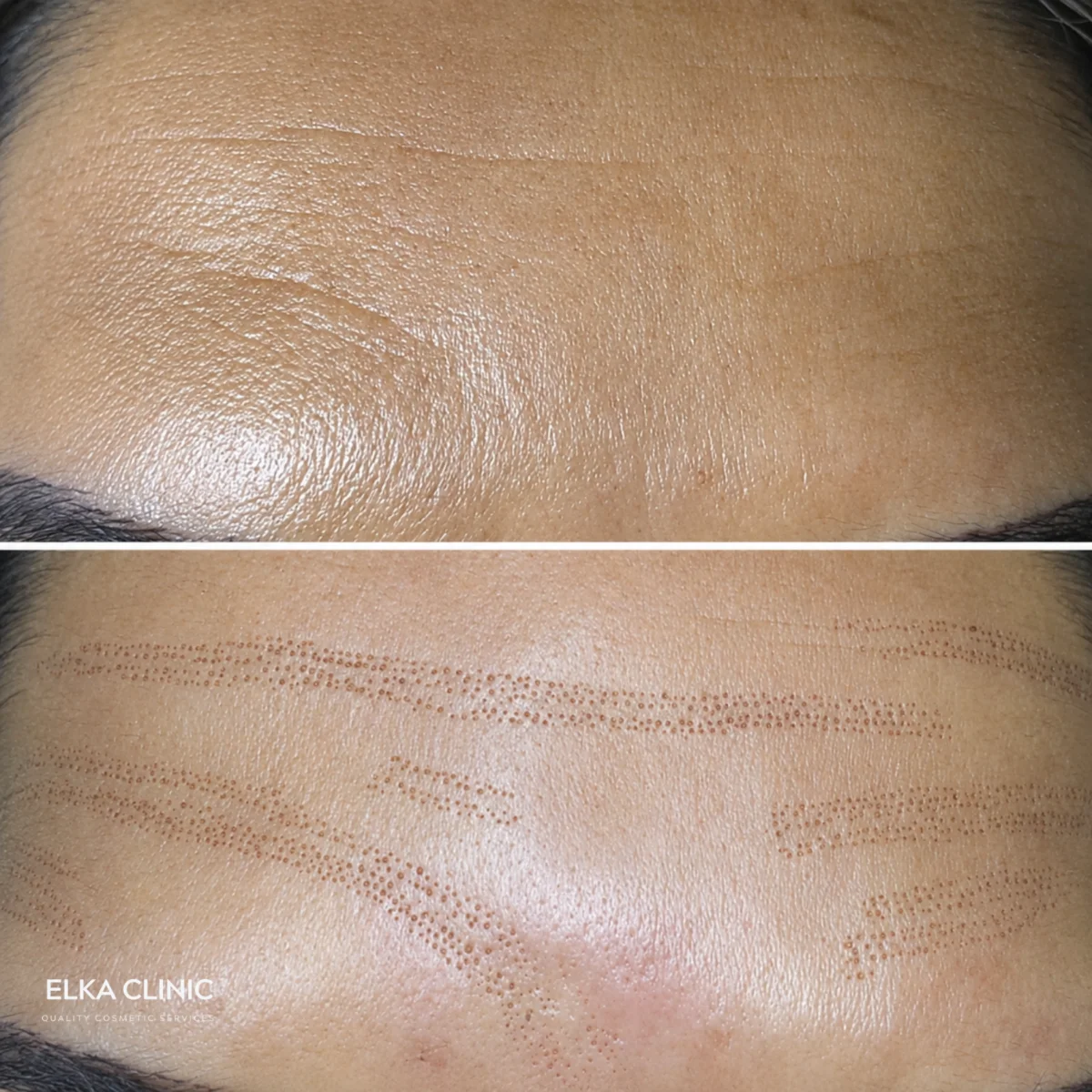
Fine horizontal forehead lines and the etched lines between the brows can soften. The improvement is in the skin quality and the etched line itself, not in the muscle causing it.
If the lines are still driven by strong muscle movement, plasma pen alone will underdeliver. Many clients get better results combining it with something that addresses the movement.
Around the mouth and nasolabial folds — what can I expect?
Vertical lip lines respond well and it is one of the more satisfying areas to treat, because those lines are notoriously resistant to skincare.
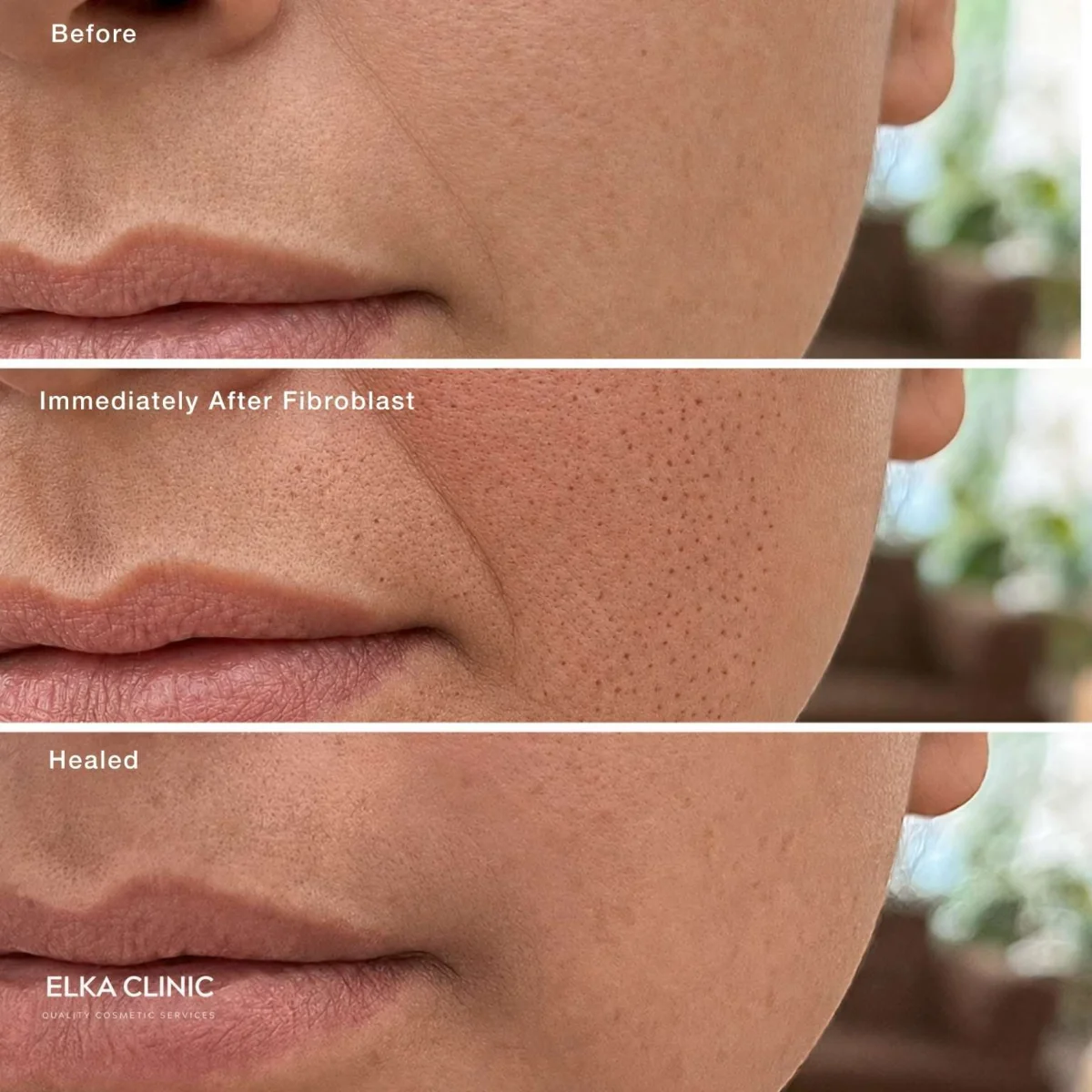
Nasolabial folds improve in terms of surface line and skin quality. The fold itself is partly a volume and structure issue, so expect softening rather than removal.
This area is more uncomfortable during treatment than the eyes, and the crusts are more visible because they sit in the middle of the face.
Neck, décolletage and body — what can I expect?
Crepey texture improves, but these areas heal more slowly than the face, sometimes by several days at every stage, and carry a higher risk of prolonged pink or pigmentation.
They also usually need more sessions. Treating a neck as a quick add-on to a face appointment is not how it works.
Suitability
Plasma pen has stricter suitability criteria than anything else we offer, and skin tone is a genuine factor rather than a formality.
Am I a suitable candidate?
The best candidates have mild to moderate laxity, fair to medium skin, no history of keloid scarring or post-inflammatory pigmentation, realistic expectations, and the ability to take ten days where the treated area looks obviously treated.
You are a poor candidate if you have significant sagging that needs tissue removed, if you cannot avoid sun for weeks afterwards, if you need to look normal next week, or if you are hoping for a surgical result without surgery.
Every plasma pen client is assessed in person before treatment. We do not book this treatment sight unseen.
Can I have plasma pen with darker skin?
This needs a careful and honest conversation. Plasma pen is a controlled thermal injury, and heat-based injury in skin that produces melanin readily carries a real risk of post-inflammatory hyperpigmentation, which can take many months to resolve.
For deeper skin tones the risk profile changes enough that in many cases we will recommend microneedling or another approach instead. Where treatment is considered, a test patch and a much more conservative approach are essential.
Any clinic that tells you skin tone is irrelevant to plasma pen is not being straight with you.
When should plasma pen be delayed or avoided?
Delayed during pregnancy and breastfeeding, with active infection, cold sores, eczema or dermatitis in the area, with sunburn or a fresh tan, after recent laser, peels or injectables that have not settled, and if you have a holiday or event within the next six weeks.
Generally avoided or requiring medical clearance with a keloid or hypertrophic scarring history, a strong tendency to post-inflammatory pigmentation, uncontrolled diabetes, active autoimmune conditions, current or recent isotretinoin, chemotherapy or radiotherapy, pacemakers and certain implanted electrical devices, and epilepsy.
If you have a history of cold sores anywhere near the treatment area, tell us. Preventative antiviral cover from your doctor is often recommended before treating around the mouth or eyes.
Can I have it if I have had filler or anti-wrinkle injections?
Yes, with sensible spacing. Let injectables settle fully before plasma pen, and let plasma pen heal fully before further injectables.
Tell us exactly what you have had and when. Treating over unsettled filler is not something we will do.
Is there an age where it stops being worthwhile?
Not an age, but a threshold of laxity. Once there is enough excess skin that it needs to be removed rather than contracted, plasma pen becomes an expensive way to get a partial result.
The assessment is about how much skin there is and how it behaves when it is gently lifted, not about the number on your birth certificate. Plenty of clients in their sixties and seventies are excellent candidates.
The Procedure
A long appointment with a lot of numbing, and a set of instructions afterwards that genuinely matter.
What happens during a plasma pen appointment?
Assessment first: the area, how the skin behaves, your medical history, your skin tone and healing tendency, and a frank conversation about what one session will and will not achieve. Photographs are taken.
Then a thorough cleanse and topical numbing, left on long enough to work properly. This takes considerably longer than clients expect and it is not a step to rush.
Then treatment: a grid of tiny plasma points placed across the area with controlled spacing. You will see small dark points appear as they are placed, and the skin visibly draws together.
Then a soothing application, detailed aftercare, and your review appointment scheduled before you leave.
Does plasma pen hurt?
With proper numbing, most clients manage it comfortably. The sensation is described as heat, small stings, or a series of tiny hot pinpricks, and there is often a distinctive smell that people are not expecting.
Around the mouth and on the forehead is felt more than the eyelids. There is a warm, sunburnt sensation for several hours afterwards.
Take paracetamol if you need it. Avoid ibuprofen and aspirin in the first day or two unless prescribed, since anti-inflammatories can interfere with the inflammatory phase that drives the result.
How long does an appointment take?
Allow two to three hours for a first appointment on a facial area. The great majority of that is consultation, photography and numbing rather than the treatment itself.
Larger areas, or more than one area in a session, take longer.
Will I be able to see a difference straight away?
Yes, and it is often quite dramatic before the swelling arrives. The immediate contraction is visible on the treatment bed.
Do not judge anything by it. Within hours the swelling begins, and for the next week or so what you see has almost nothing to do with your eventual result.
Can I drive home?
Usually, but if we are treating the upper eyelids, arrange a lift. Swelling can begin within hours and eyelid swelling in particular can be significant enough to affect your field of vision the next morning.
Healing & Downtime
Ten days for the crusts to come away on their own, then a pink stage that catches people out far more often than the crusts do. This is the part to plan your life around.
How long is the downtime after plasma pen?
Around ten days for the carbon crusts to form, dry and fall away by themselves on a facial area. The neck and body run several days slower at every stage.
After the crusts come away, the fresh skin underneath is pink. That pink stage typically lasts one to three weeks and is easily covered with mineral makeup once the skin is intact.
So the honest answer to “how much time do I need off” is: ten days where the area looks obviously treated, and a few weeks after that where you may want makeup.
What does plasma pen healing look like day by day?
The table below assumes a facial area. Allow extra days on the neck.
| Stage | What the skin does | What to do |
|---|---|---|
| Day of treatment | Small dark carbon crusts across the treated grid. Skin feels hot and tight. Swelling begins within hours. | Keep it clean and dry. Apply only what you were given. Sleep elevated. Cold compress over a clean barrier if needed. |
| Days 1–3 | Swelling peaks, most noticeably on the eyelids, and is often worst on waking. Crusts darken. | Sleep elevated. Do not pick. No makeup on the area. Expect to look worse before better; this is the hardest phase. |
| Days 4–7 | Swelling settles noticeably. Crusts dry and start to lift at the edges. Itching is common. | Leave them alone. Keep the area dry, clean and out of the sun entirely. |
| Around day 10 | Crusts have come away on their own, leaving fresh pink skin beneath. | Mineral makeup can usually resume once skin is intact. Sunscreen from now on, without exception. |
| Weeks 2–4 | The pink stage. Skin is intact but noticeably pink and can feel tight or dry. | Cover with mineral makeup if you wish. Keep it moisturised. Stay out of the sun. |
| Weeks 4–16 | Pink fades. Collagen remodelling continues and tightening keeps improving quietly for around four months. | Be patient. Attend your review. Decide about a second session at around twelve weeks, not before. |
Can I pick the crusts off if they are nearly ready?
No. This is the single most important instruction of the entire treatment.
Every crust that is removed early exposes skin that had not finished healing underneath it. That is how you get a mark that lasts, pigmentation that takes months to fade, or in the worst case a scar in a grid pattern.
They will come away by themselves. Ten days of restraint protects a result you are keeping for years.
What aftercare does plasma pen need?
Keep the area clean and dry. Use only what you were given, applied exactly as directed. Sleep elevated for the first few nights, particularly after eyelid treatment.
Avoid until the crusts have come away naturally: makeup on the treated area, swimming, saunas, steam, spas, heavy sweating and the gym, facials and active skincare, and any picking, scrubbing or exfoliating.
Avoid sun completely for the first month and be strict about sunscreen for at least three months afterwards. Sun on healing plasma skin is the most reliable way to cause lasting pigmentation.
Do not use makeup to cover the crusts. Wait until the skin is intact.
How bad is the swelling, honestly?
On the eyelids it can be significant. Many clients wake on day two with swelling that noticeably narrows their field of vision, and it can look alarming if you were not warned.
It settles substantially by day three to four. Sleeping elevated genuinely helps, as does avoiding alcohol and salt in the days beforehand.
Swelling that worsens after day four, spreads well beyond the treated area, or comes with heat, pain or discharge is not normal healing. Call the clinic on 1300 216 456 and see a doctor.
When can I go back to work?
It depends entirely on whether you mind being seen with visible crusts. They are not hideable and makeup cannot go over them.
Clients who work from home often return immediately. Clients who are client-facing usually take the ten days, or book the treatment before a period of leave. This is the treatment where planning your calendar first is the sensible order of operations.
Results & Sessions
The crusts falling off is not the finish line. The tightening keeps building quietly for around four months, and that is when the result should be judged.
When will I see my final result?
Not at two weeks. Not when the crusts come away. The immediate contraction you see on the day is only part of the story, and it is partly obscured by swelling and then by the pink stage.
Collagen remodelling continues for months. Improvement keeps accumulating for around four months after a session, and the proper point to assess a result is at around twelve weeks, with further gains beyond that.
Clients who judge their result at three weeks are almost always disappointed. Clients who wait are almost always pleasantly surprised.
How many sessions will I need?
A single session produces visible but usually partial improvement. For mild laxity one session is sometimes enough. For moderate hooding or established lines, two to three sessions is common.
Sessions are spaced at least twelve weeks apart, because treating again before the first round has finished remodelling means you are treating blind and stacking injury unnecessarily.
The decision about a second session is made at your review with photographs in front of you, not booked in advance out of optimism.
How long do the results last?
The contracted tissue does not return, so results are long-lasting, commonly around three years and often longer.
What shortens it is what ages skin generally: sun exposure, smoking, weight fluctuation and time. Perth sun in particular is not kind to a result you have spent ten days of downtime earning.
Can the results look uneven?
Minor unevenness during healing is common, because crusts do not all come away on exactly the same day and the pink stage fades at slightly different rates across an area.
Genuine unevenness in the final result usually traces back to inconsistent spacing or depth during treatment, or to crusts having been picked. Both are avoidable, and both are reasons to choose an experienced operator rather than the cheapest available.
What if I need more improvement than plasma pen can give?
Then you should know that before you book, not after. If the assessment suggests you will not be satisfied with what plasma pen can achieve, we will tell you and discuss the alternatives, including referral toward surgical opinion where that is genuinely the better path.
There is no version of this where taking a booking we do not believe in is the right thing to do.
Risks
This is the treatment on our list with the most significant risk profile. It deserves reading properly rather than skimming.
What are the risks of plasma pen?
Common and expected: carbon crusts, swelling that can be pronounced around the eyes, tightness, itching during healing, and a pink stage of one to three weeks afterwards.
Uncommon: prolonged pink or redness beyond a month, temporary dryness or sensitivity, milia, cold sore reactivation, and small areas that heal more slowly than the rest.
Rare but serious: infection, post-inflammatory hyperpigmentation, hypopigmentation, and scarring including a visible pattern where crusts were removed early.
Almost all of the serious outcomes come from one of three causes: treating skin that should not have been treated, going too deep, or aftercare that allowed picking, infection or sun exposure.
Will it leave marks or scars?
Not when performed correctly on suitable skin with aftercare followed. The plasma point is deliberately confined to a depth that regenerates without scarring.
It can when crusts are picked, when the grid is placed too densely or too deeply, or when the skin was not a good candidate in the first place. The pattern of plasma pen scarring is distinctive and difficult to correct, which is the strongest possible argument for choosing your operator carefully and following the ten-day rule.
What about pigmentation afterwards?
Post-inflammatory hyperpigmentation is the risk that most often takes months to resolve. It is more likely in deeper skin tones, in anyone with a history of pigmenting after injury, and in anyone who gets sun on healing skin.
Prevention is the whole strategy: honest candidate selection, conservative settings, complete sun avoidance for the first month, and disciplined sunscreen for at least three months.
When should I call the clinic?
Call 1300 216 456 or use the contact page if pain increases after the first couple of days, if redness spreads beyond the treated area, if there is heat, throbbing, yellow discharge or a foul smell, if swelling worsens rather than settles after day four, if you develop a fever, or if you notice any change in vision after eyelid treatment.
Crusts, swelling, itching and pinkness on the expected timeline are normal. The signs above are not, and they need same-day attention from a doctor as well as from us.
Alternatives
Plasma pen is one option among several, and it is not always the right one.
Plasma pen or microneedling?
They solve different problems. Microneedling remodels texture, scarring and tone across a whole area with minimal downtime, and it suits all skin tones well. Plasma pen contracts loose skin at specific points and produces tightening microneedling cannot match, at the cost of ten days of visible healing.
If your concern is texture, scarring or general skin quality, microneedling. If your concern is loose eyelid skin or etched lines, plasma pen. Many clients end up doing both, sequenced so that one area is healed before the next is treated.
Plasma pen or surgery?
Surgery removes tissue and is the only option that truly resolves significant excess skin. It also involves an operation, a surgeon, anaesthetic, cost and a scar.
Plasma pen contracts what is there, with no cutting, no stitches and no general anaesthetic, and produces meaningful improvement for mild to moderate laxity.
The dividing line is how much skin there is. If we think you are past what plasma pen can achieve, we will say so.
Plasma pen or laser resurfacing?
Laser resurfacing treats a broad surface area for texture, tone and pigmentation. Plasma pen targets specific points to contract skin.
They are not really competing treatments, and the choice depends on what you actually want changed. Pigmentation and overall resurfacing are not plasma pen problems.
Pricing
Current pricing per area is listed live on our booking system so it is always accurate.
How much does plasma pen cost in Perth?
Price depends on the area and its size. Upper eyelids, crow’s feet, the mouth area and larger regions such as the neck are priced separately.
Rather than publish a figure here that can go out of date, current prices are shown against each area on our booking page.
Should I budget for more than one session?
Assume so, unless your assessment suggests otherwise. A single session gives visible but usually partial improvement, and moderate hooding commonly needs two to three sessions spaced at least twelve weeks apart.
Working out the likely total before you begin is far better than discovering it at your twelve-week review.
Do you offer payment plans?
Yes. Options are set out on our payment plans page, and you can ask about them at consultation.
Why is plasma pen cheaper at some clinics?
Because operator experience, assessment quality, device quality and time spent are what you are actually paying for, and all of them can be cut.
Of everything we offer, plasma pen is the treatment where choosing on price carries the highest cost if it goes wrong, because the complications are pigmentation and scarring on visible facial skin, and both are difficult and slow to correct.
Booking
How to start, how to prepare, and what happens if plans change.
How do I book plasma pen?
Start with a consultation. Plasma pen is not a treatment we book sight unseen, because suitability, skin tone and expectations all need to be assessed in person before anything is planned.
Book your consultation online, or call 1300 216 456.
How should I prepare?
Plan the calendar first. Make sure you have ten days where visible crusts are workable, and no holiday, wedding or event within six weeks.
In the fortnight before: stop retinoids, acids and exfoliants in the area, avoid facials, peels, laser and waxing, and stay out of the sun. Do not arrive tanned or sunburnt.
In the 24 to 48 hours before: no alcohol, go easy on salt, and keep caffeine light on the day. All three affect swelling.
On the day: clean skin, no makeup, allow extra time for numbing, and arrange a lift home if we are treating your eyelids.
What if I need to reschedule?
Let us know as early as you can. These are long appointments and late cancellations are difficult to fill. Cancellation terms are shown at the time of booking.
If you arrive with a cold sore, an active skin infection, sunburn or a fresh tan, the treatment will be postponed. That is a clinical decision made in your interest.
Who will perform my treatment?
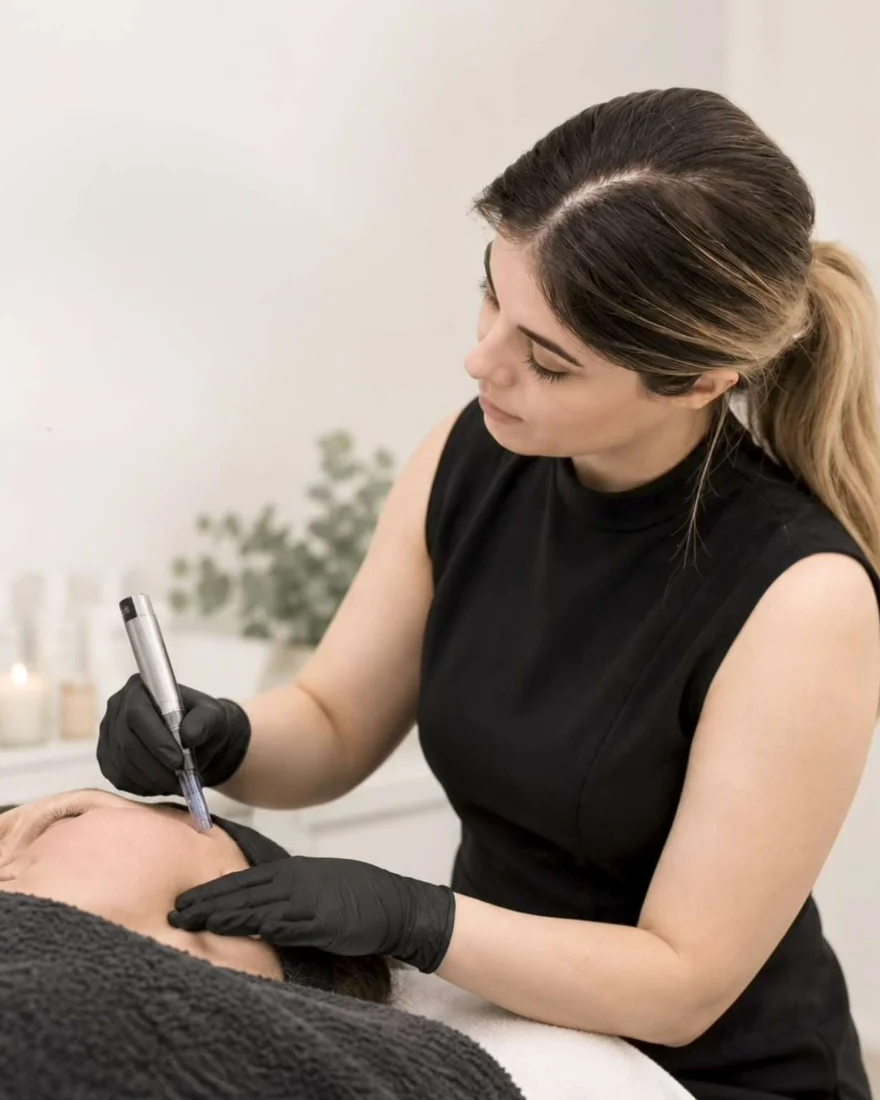
Plasma pen fibroblast at ELKA CLINIC is performed by Maryam, our Senior Skin Therapist, who also performs microneedling.
Plasma Pen Photographed Honestly
Related Reading
Treatments
- Plasma Pen Perth — the service page: areas, technique, recovery and risks in full.
- Microneedling Perth — collagen induction for texture, scarring and tone.
- Benign Skin Lesion Removal — skin tags, milia and similar concerns.
Other FAQs
- Microneedling FAQ — sessions, downtime and realistic results.
- Nano Brows FAQ — brow tattooing answered in full.
- General clinic FAQ — everything else about visiting ELKA CLINIC.
Book Plasma Pen In Perth
Assessed honestly before anything is booked, treated conservatively, and reviewed at twelve weeks when the result is actually there to see.
3/29 Hood Street, Subiaco WA 6008 · 1300 216 456 · contact@elkaclinic.com.au · Open 8:00am–10:00pm, 7 days, by appointment