
Microneedling Perth
Collagen induction therapy for acne scarring, uneven tone, enlarged pores, fine lines and rough texture. What we change is depth, spacing and how many passes an area receives — not a fixed protocol applied to every face.
Treatment is planned around the concern you want addressed and the condition your skin is in on the day. The forehead, cheeks and skin around the mouth do not behave the same way, so they are rarely treated at the same depth. Improvement builds between sessions rather than appearing at once, and results vary.
You can book treatment directly. An optional consultation is available if you would rather have your skin assessed and a plan discussed first. Afterpay can spread the cost of a course. Eligibility and approval are determined by Afterpay.
What Microneedling Can Improve
Clients usually ask whether microneedling will fix one specific thing. It does one job — it prompts the skin to repair itself — so how much a concern may improve depends on what that concern is and how your skin heals.
Acne scarring
Indented, rolling and boxcar scars commonly soften because new collagen builds under the depression and lifts it. Ice-pick scars are far more stubborn, and deep scars typically improve rather than disappear.
Uneven tone
Post-inflammatory marks and general dullness often respond because faster cell turnover clears pigment-carrying cells nearer the surface. Melasma is treated cautiously, since heat and inflammation can make it worse.
Enlarged pores
Pores do not close, but the collagen built in the wall around each pore can make the opening look tighter. Oilier skin typically needs more sessions to hold the change.
Fine lines
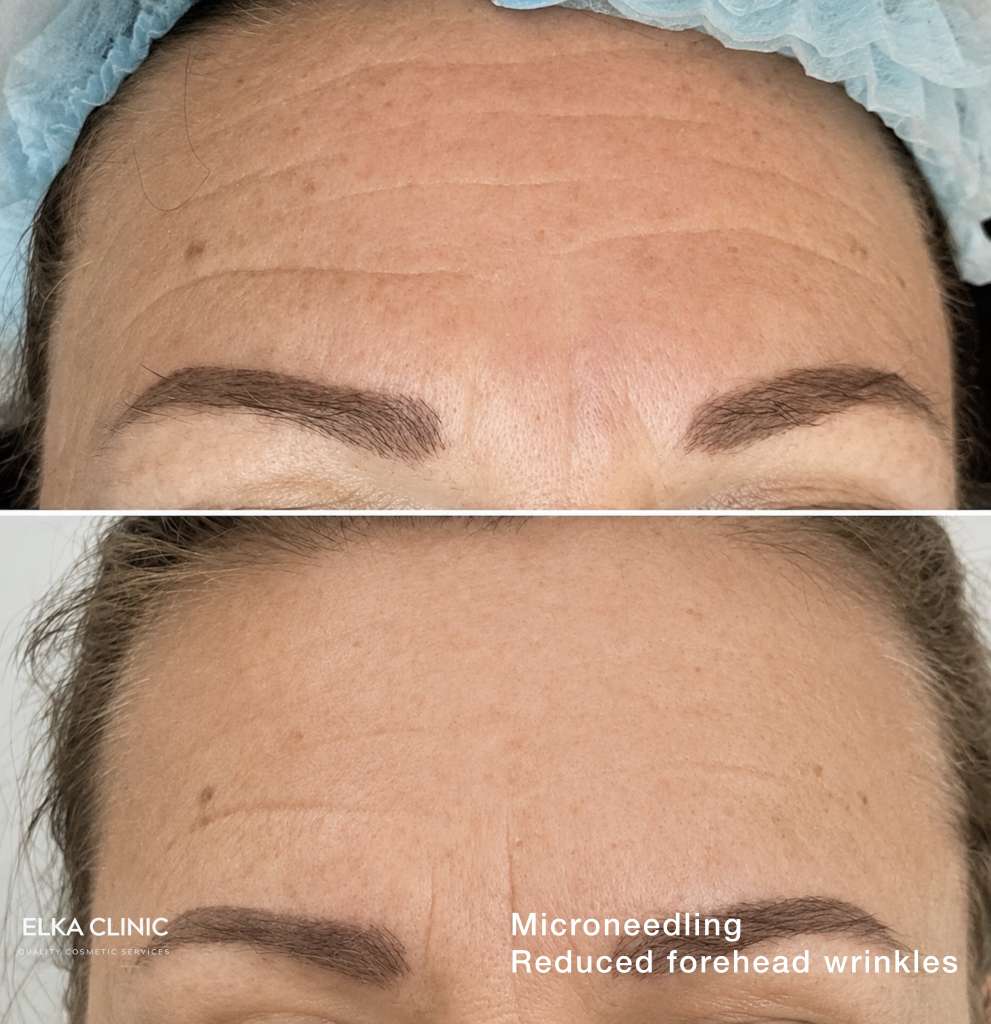
Fine surface lines — crow’s feet, the lines above the lip, early forehead lines — may soften as the dermis thickens. Deep folds caused by volume loss or muscle movement will not respond to needling alone.
Rough texture
Texture is often the first thing clients notice changing, usually within the first two or three sessions, because surface irregularity needs less remodelling than a scar does.
Stretch marks
Older, silvery marks respond slowly and partially. Newer, still-pink marks generally do better because the skin there is still actively repairing. Expect softening of texture and colour, not removal.
What it will not do. It does not replace lost facial volume, does not lift loose skin, and will not clear active acne — we treat scarring only once breakouts have settled. If another treatment would serve you better, we will say so.
How Microneedling Works
In plain English: we make a controlled number of very small punctures in the skin, the skin treats them as injuries worth repairing, and the repair process leaves behind more collagen than was there before.
Microneedling, skin needling and collagen induction therapy all describe the same treatment. Clinically it is a controlled skin-penetration procedure — the skin barrier is deliberately broken — which is why hygiene, single-use cartridges and honest screening matter as much as the needling.
A pen fitted with a sterile, single-use cartridge of fine needles moves across the skin at a set depth, each needle creating a channel a fraction of a millimetre wide. Nothing is removed and no chemical is used.
The response has three stages. For a day or two the body seals the channels. Over the next week it lays down a temporary, disorganised scaffold. Then, across the following weeks and months, that scaffold is replaced with properly aligned collagen. The third stage is the one that changes how your skin looks.
That is what “collagen remodelling” means, and it explains most of what clients find confusing. It is why skin can look worse before it looks better, and why we would rather plan a realistic course than promise a transformation from one appointment.
Depth is the main variable. Shallower settings suit thin skin, the eye area and tone work; deeper settings are used where scar tissue must be broken up. Deeper is not automatically better — too deep risks prolonged redness or marking, and in darker skin types, pigment change.
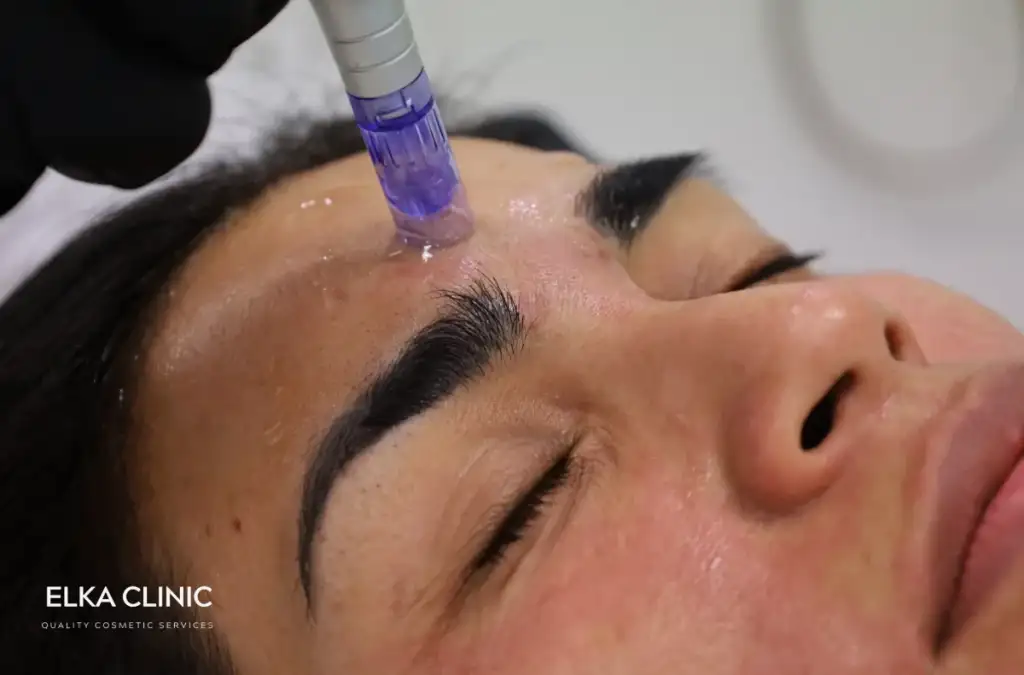
Genuine ELKA CLINIC treatment footage filmed in our Subiaco studio and shared with the client’s permission. It shows a session in progress and is not a before-and-after result.
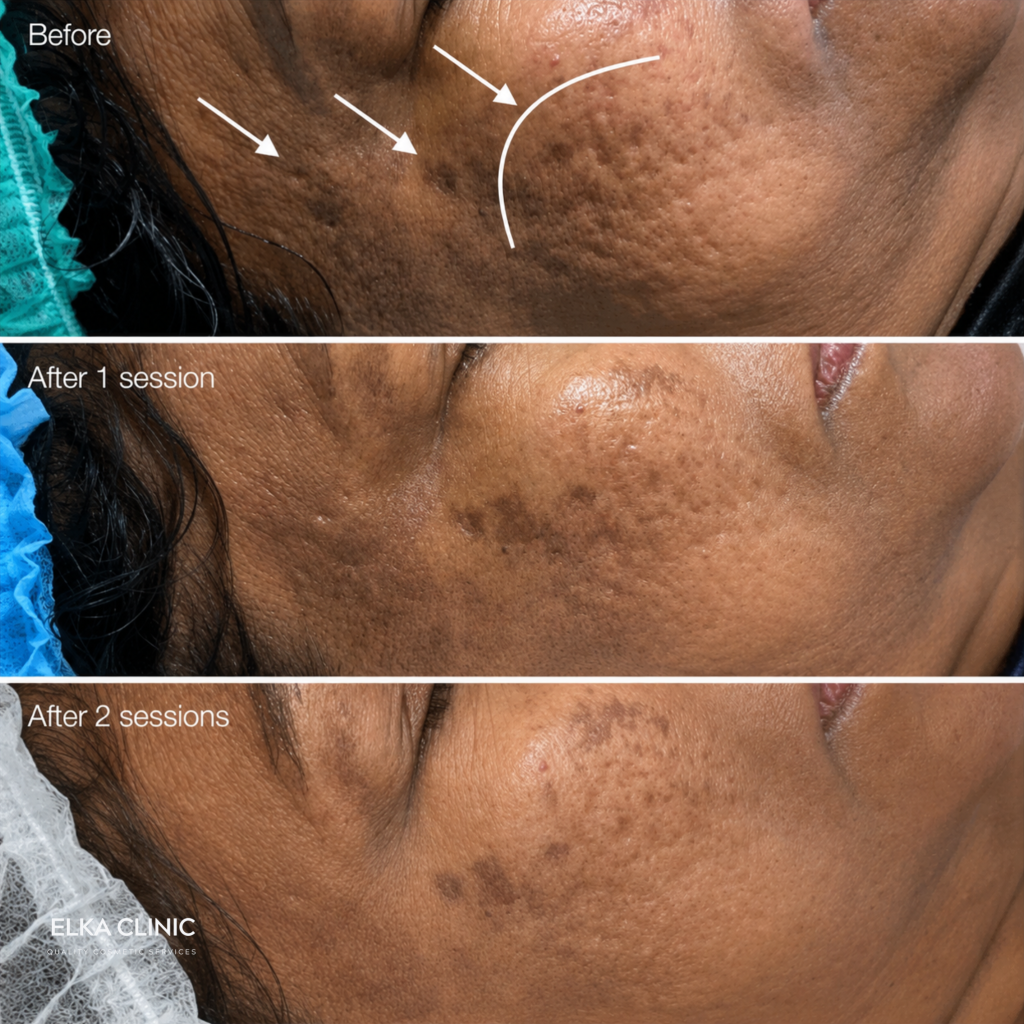
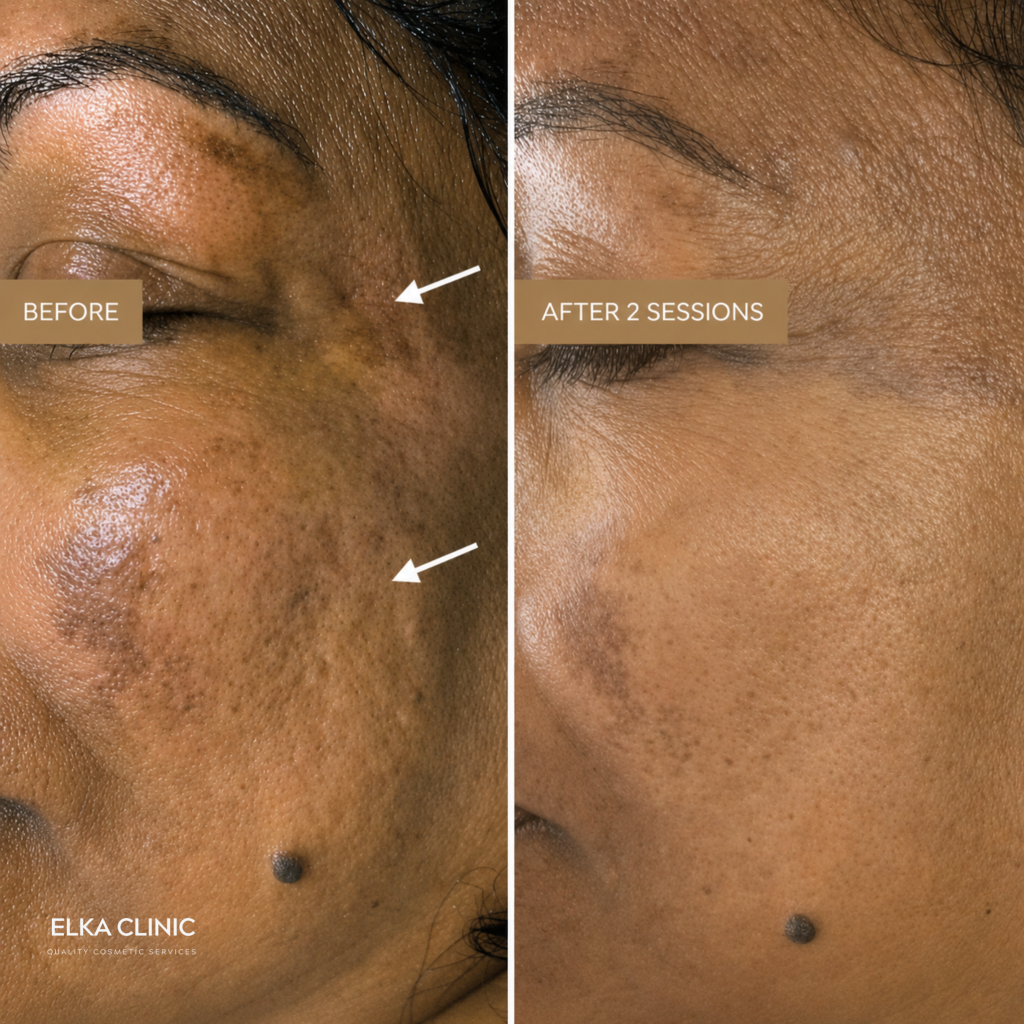
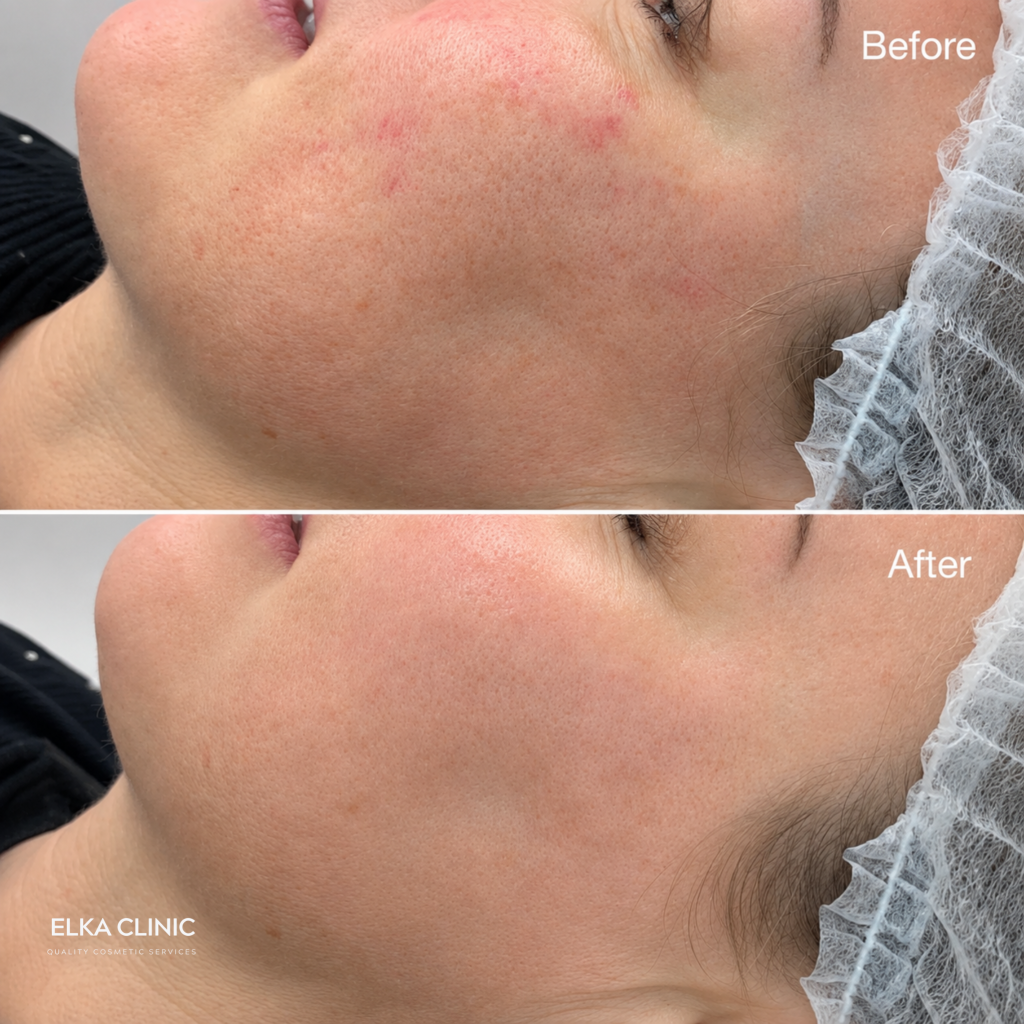
Every before-and-after photograph on this page shows a genuine ELKA CLINIC client. We do not use AI-generated treatment results or stock before-and-after images to demonstrate treatment outcomes. Individual results vary.
Genuine ELKA CLINIC Client Results
Browse the concerns below to explore genuine ELKA CLINIC client results and to see how microneedling may help different skin concerns.
Lighting, distance and angle are kept as consistent as we can manage, because a change of light can flatter skin more than a treatment does. Where an interval or session count has not been confirmed against clinic records, the caption says only “before and after”. Each photograph sits inside the concern it belongs to further down the page, and more of our skin work is on the microneedling gallery. Individual outcomes vary.
The overview below maps the concerns we treat most often. Each one opens into its own section further down the page, where the client photographs for that concern are kept together.
- 01Acne scarsIndented, rolling and boxcar scarring, treated once active breakouts have settled.View client results
- 02Pigmentation and uneven toneUneven tone, age spots, freckles and sun-related pigmentation, in selected cases.View client results
- 03Fine lines and textureFine lines, crepiness and rough or open-looking texture.View client results
- 04Forehead wrinklesHorizontal forehead lines, with glabellar frown lines discussed separately.View client results
- 05Chemical peel recoveryPigmentation left after a peel or other skin injury, once fully healed and settled.View client results
- 06Hair thinningScalp microneedling for early thinning and reduced density.View client results
Skin Concerns We Treat
The concern you bring changes the depth, the number of passes an area receives and how far apart sessions are booked. These are the concerns most commonly treated here.
- Acne scarring — indented, rolling and boxcar scarring, treated once active breakouts have settled.
- Post-inflammatory marks and uneven tone — the flat brown or red marks left behind after spots have healed.
- Enlarged pores — most noticeable across the nose, inner cheeks and chin.
- Fine lines — surface lines around the eyes, above the lip and across the forehead.
- Rough or uneven texture — skin that feels grainy or looks dull under direct light.
- Stretch marks — commonly on the abdomen, thighs and upper arms, with newer marks generally responding better than older silvery ones.
- Early skin laxity — mild loss of firmness, where the aim is a modest tightening of skin quality rather than a lift.
- Hair thinning — scalp needling, usually alongside whatever your doctor or trichologist has already recommended.
When we postpone or decline. Not suitable during pregnancy or breastfeeding, over active infection, cold sores or open breakouts, or with a history of keloid scarring. Tell us about any medication affecting bleeding or healing — and do not stop prescribed medication without advice from the professional who manages it.
Acne Scars
The question clients ask most: will microneedling actually get rid of my acne scars? Usually it reduces them. It rarely removes them, and anyone promising otherwise is overselling it.
An indented scar is an area where skin lost structure during healing and never rebuilt it. Needling breaks up the strands tethering the depression and prompts new collagen to fill from underneath. What you wait for is not the surface healing but the slow lift from below.
Scar shape predicts the outcome better than anything else. Broad, shallow rolling scars usually respond best. Boxcar scars soften but often keep a visible edge. Narrow ice-pick scars respond poorly, so we say so early. Most faces carry a mixture.
Scars are treated deeper than tone work, so expect a few days of visible recovery. Improvement typically accumulates over three to six sessions spaced four to six weeks apart.
Uneven Tone and Selected Pigmentation Concerns
Pigmentation is the concern where the type matters most, because two marks that look similar in the mirror can behave in opposite ways once treated. Needling is not a pigment-removal procedure, so we talk about improvement and management rather than clearance.
Post-inflammatory marks — the flat brown or reddish patches left once a spot has healed — generally respond well, because faster turnover clears pigment-carrying cells nearer the surface. Ordinary sun spots and sun-related freckling are a separate group that often improves alongside a broader lift in tone and typically returns without daily sun protection. Melasma is a third group again, and is not treated like either.
Whether needling suits a particular mark depends on more than how it looks:
- Cause and depth of the pigment — surface pigment behaves very differently from pigment held deeper, and the two are not always distinguishable by eye.
- Skin type — deeper tones carry a higher risk of pigment change, so depth is reduced rather than pushed.
- Active inflammation — treating skin that is inflamed or breaking out tends to add pigment, so we wait.
- Recent sun exposure — recently tanned or sunburnt skin is postponed, because new pigment forms readily while skin repairs.
- Current skincare and medication — retinoids, acids and some prescribed medications change how skin heals, so we ask what you use.
- History of post-inflammatory hyperpigmentation — if marks have darkened after past treatments or injuries, that pattern usually repeats, and the plan is made more conservative.
Melasma is a complex and recurring pigmentation condition. Microneedling is not appropriate for every client or every presentation, and medical or dermatological guidance may be recommended. It is driven partly by heat and inflammation, so an aggressive session can darken it; where it is present we work shallower, space sessions further apart, and are frank that the aim is management rather than clearance. We do not diagnose it either — melasma cannot be identified reliably from a photograph, so we work from your history and refer for assessment where that is warranted.
Sun protection is not an optional extra here. New pigment forms readily in skin that is actively repairing, so unprotected exposure in the weeks after a session can undo the gain. Clients unwilling to use daily SPF typically see the least durable results.
Microneedling treats flat pigmentation rather than raised marks. Raised, benign growths such as skin tags or milia are treated separately — see benign skin lesion removal.
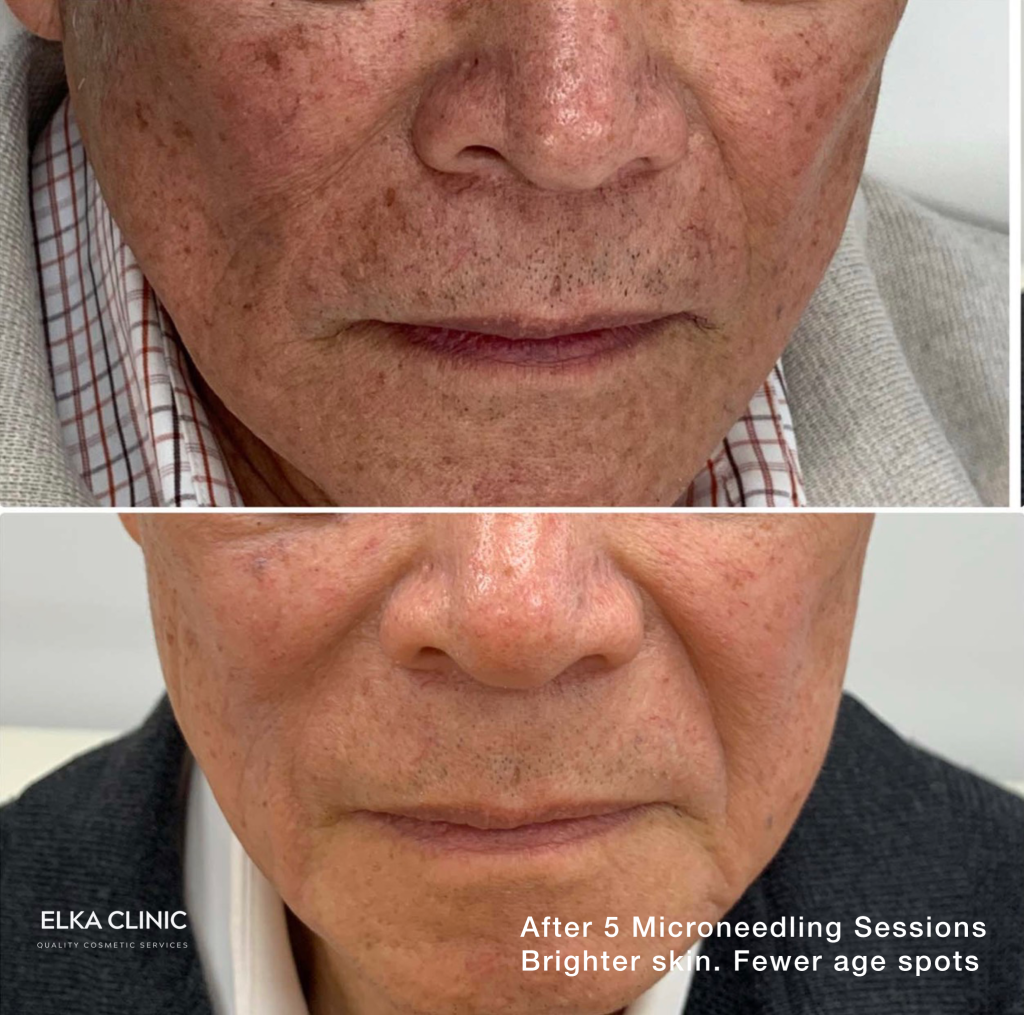
Age spots and general dullness sit within this same group of concerns. Where the pigment is surface-weighted and the skin is otherwise healthy, a course of microneedling may soften how dense individual marks look and lift overall brightness, so the complexion reads more even rather than perfectly uniform.
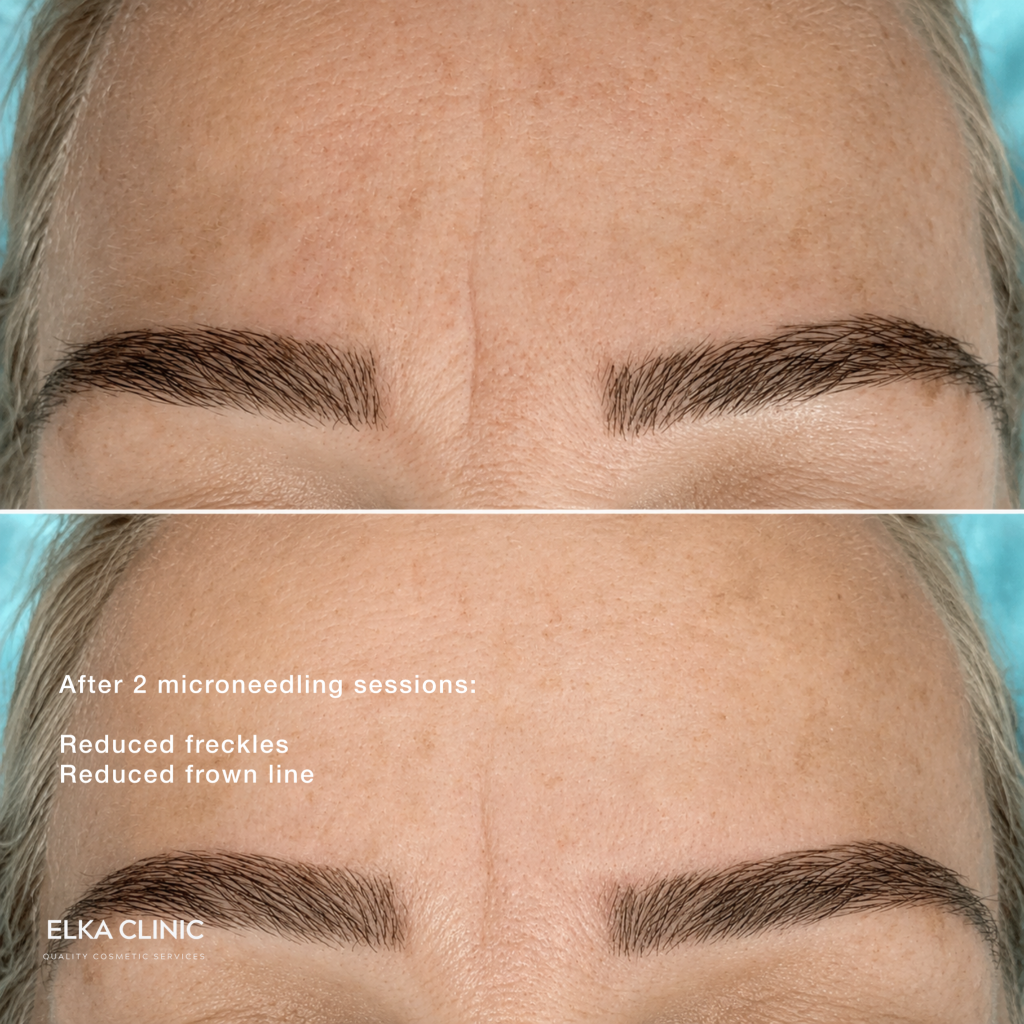
Freckles and other sun-related pigmentation may also respond, although they are influenced by ongoing sun exposure more than most concerns. Where freckling is treated, daily sun protection holds the result far more than the treatment itself does, and some clients prefer to soften freckles rather than chase their removal.
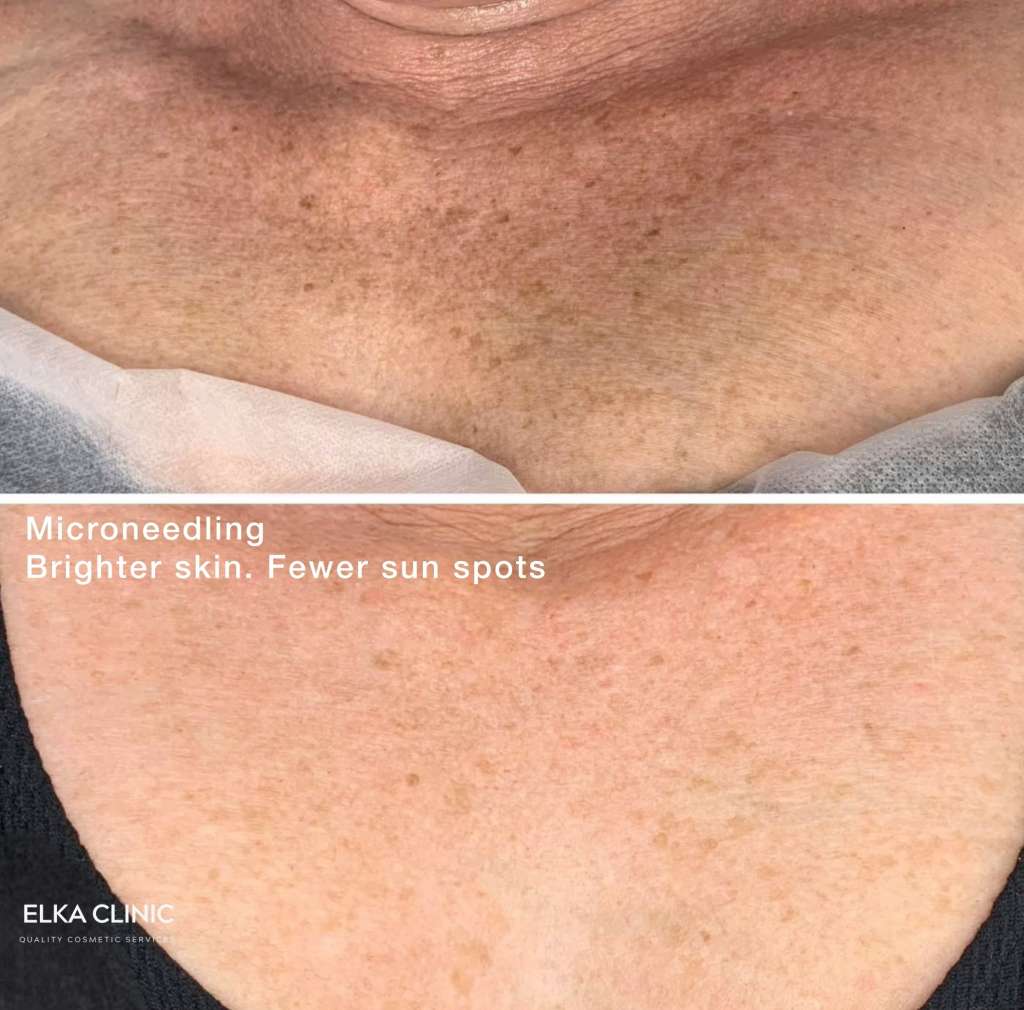
Sun-related pigmentation is not limited to the face. The chest and décolletage often carry freckling and mottled tone from years of exposure, and the same conservative approach can be used there where the skin is otherwise healthy and well protected afterwards.
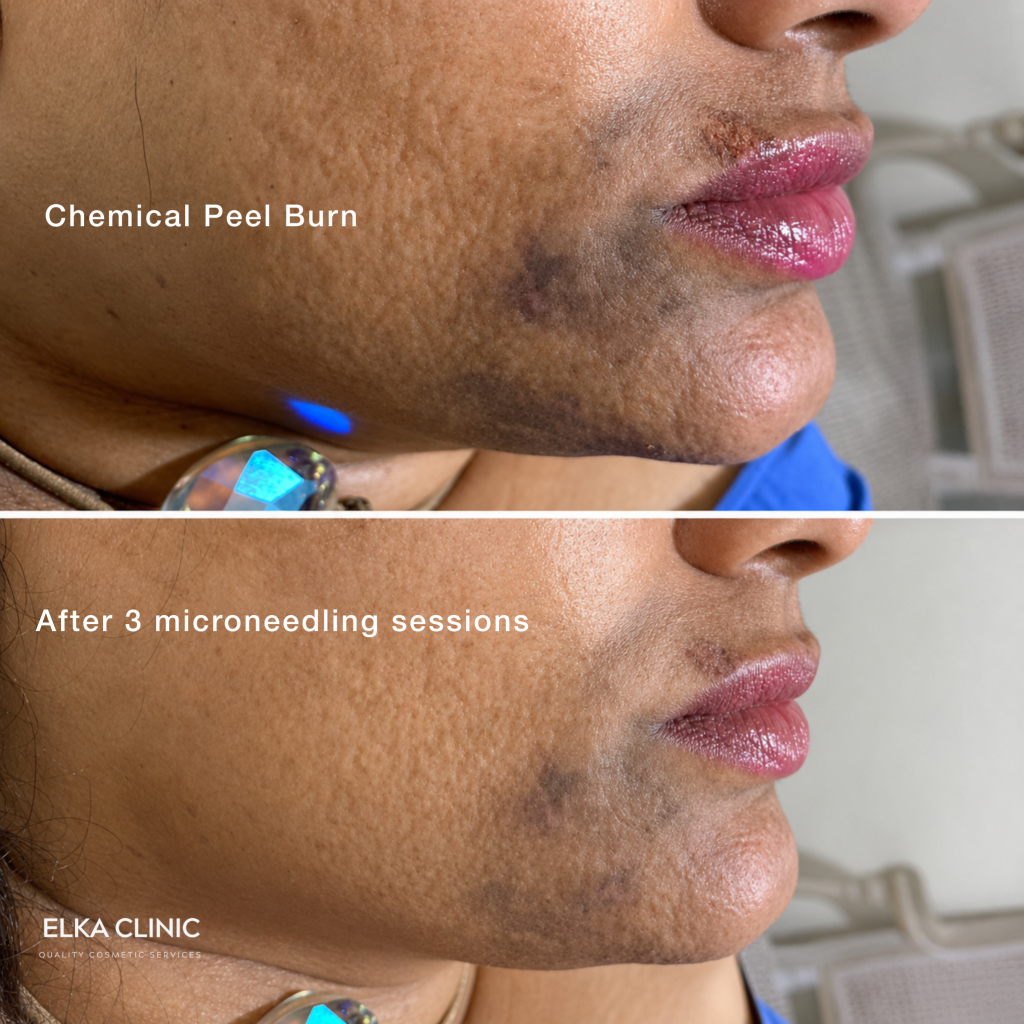
Pigmentation after a chemical peel or other skin injury
Some clients come to us with pigmentation left behind after a chemical peel, a burn or another injury to the skin. This is not one single condition, and microneedling is not a treatment for every chemical peel burn. An active, inflamed or unhealed injury needs to settle first and may need medical care, and some post-injury pigment is better left alone or referred on.
Where the skin has fully healed, the pigment is settled and the assessment supports it, selected clients may benefit from a carefully planned microneedling course worked at a conservative depth, with longer gaps between sessions and strict sun protection in between. If we do not think it is the right approach for your skin, we will tell you at the assessment rather than sell you a course.
The photographs below show one ELKA CLINIC client treated in these circumstances.
Fine Lines & Skin Texture
Texture usually changes first and lines change last. Understanding that order prevents most of the disappointment we see at a second appointment.
Surface texture sits in the upper layers and needs little remodelling, so clients commonly report smoother skin within two or three weeks. Fine lines are a change in the thickness of the dermis underneath, which takes far longer. Judging your lines at three weeks is judging too early.
One distinction is worth making first. A fine line visible when your face is still may soften as the dermis thickens. A deeper fold that appears only when you move, or one caused by lost volume, is structural and needling does not address it.
Mature skin is treated more conservatively, not less. Thinner skin marks more readily and takes longer to settle, so we work shallower and space appointments further apart. The result builds more slowly, but recovery is calmer.
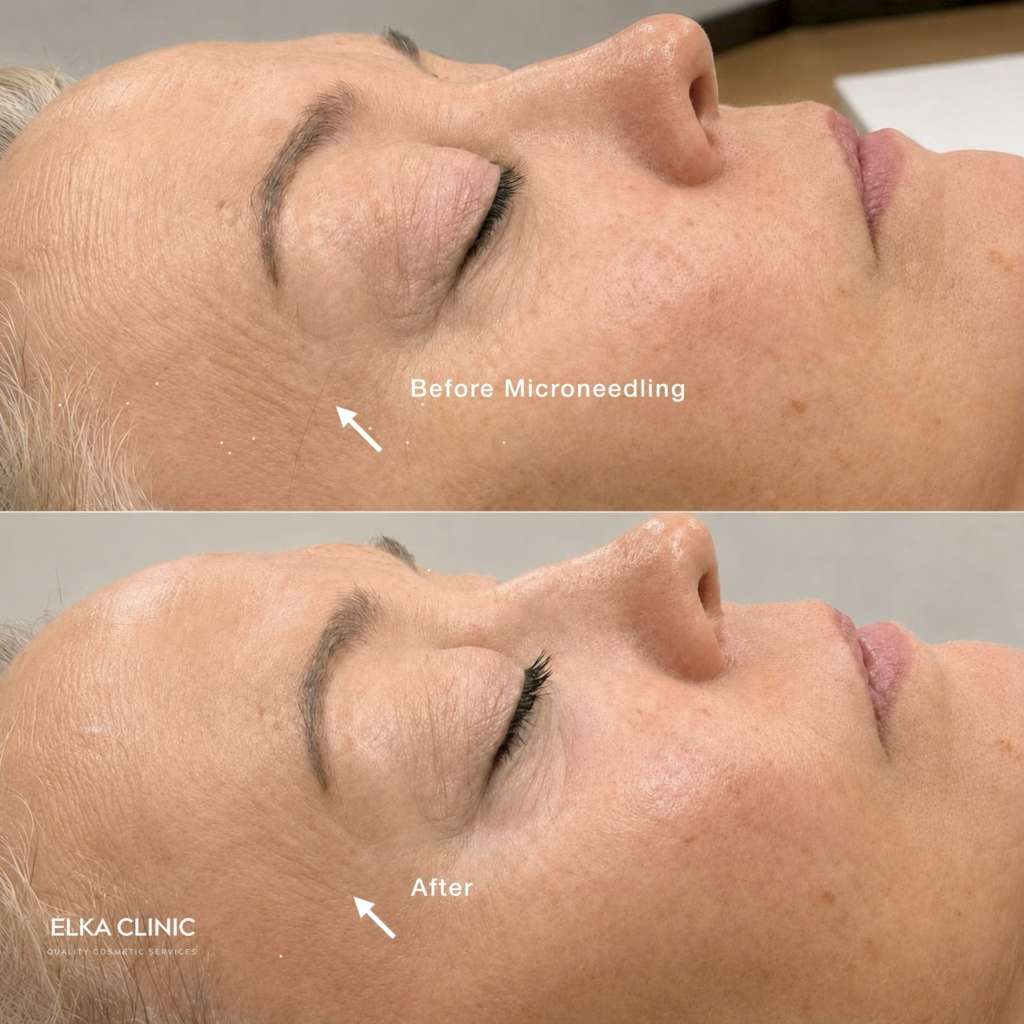
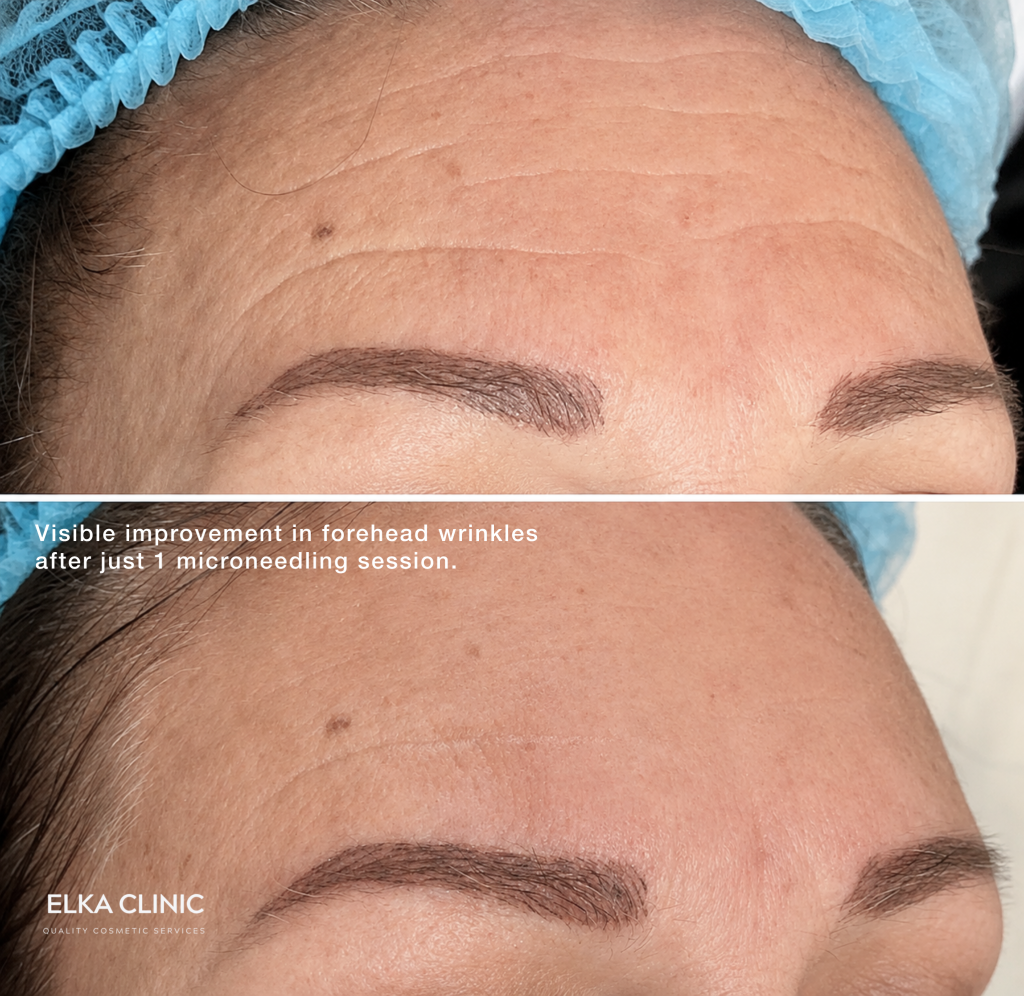
Forehead lines and fine lines
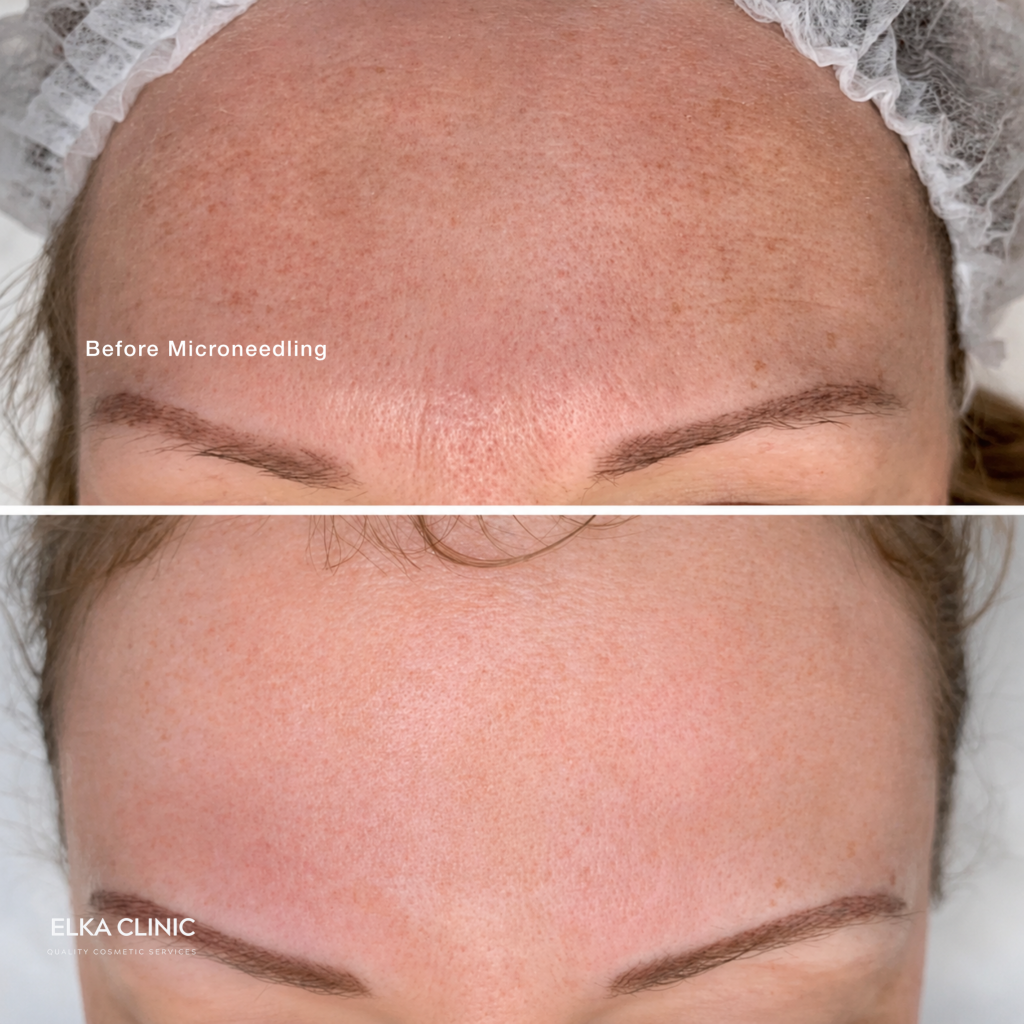
The photographs below are from several different ELKA CLINIC clients treated for fine lines and forehead lines. They are shown together to give a fair picture of the range we see rather than a single best case: line depth, skin thickness, age and habits all influence what is possible, so identical results should not be expected.
Glabellar (frown) lines
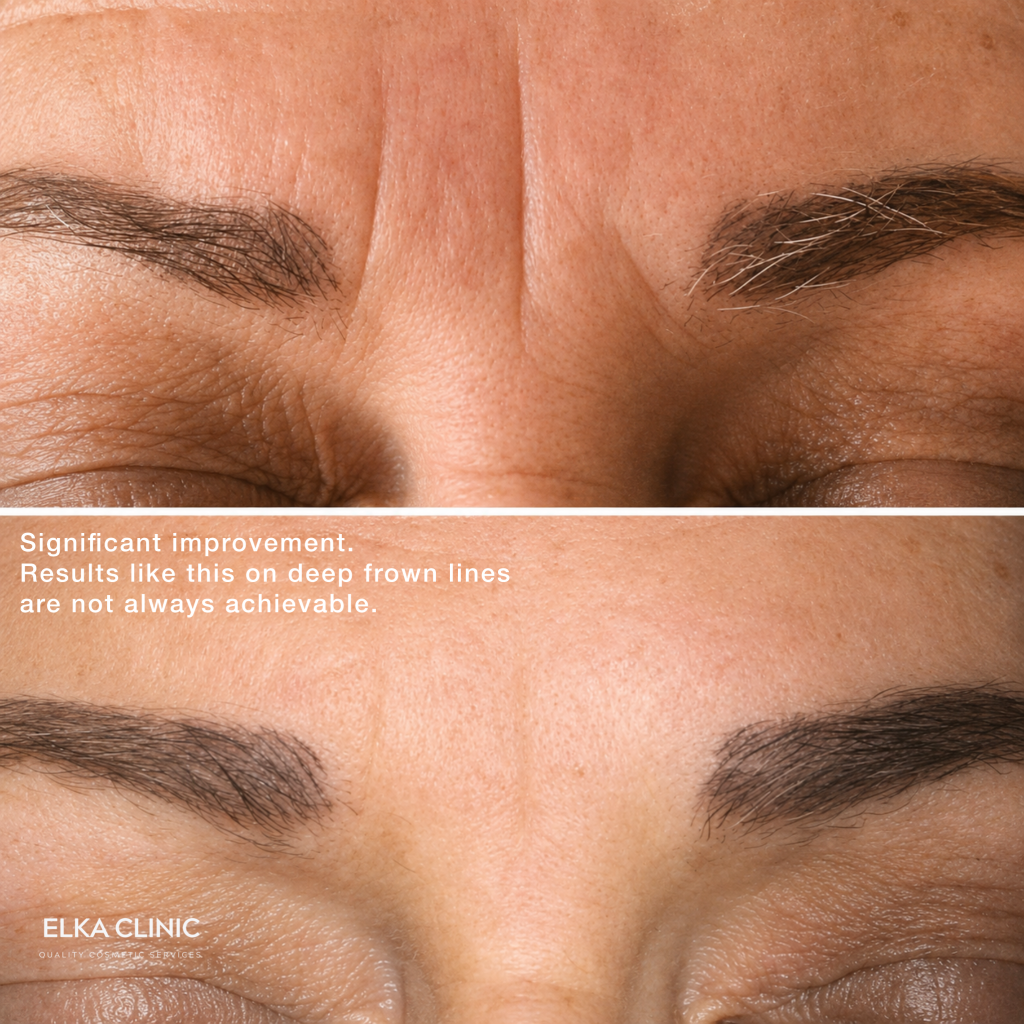
The vertical lines between the brows — the glabellar or frown lines — are driven mainly by muscle movement, so they are among the harder lines for a collagen-based treatment to influence. Where the crease still relaxes when the face is at rest, microneedling may reduce how deeply it is etched into the skin surface across a course of sessions. Where the line is held by strong repeated movement, or sits as a fixed crease at rest, microneedling on its own is unlikely to be the right answer and we will say so at assessment.
Please read this carefully. An improvement of this kind is not always achievable. The freckle and frown-line photographs in the pigmentation section above show one ELKA CLINIC client’s response and are not a guide to what any individual should expect. Individual outcomes vary.
Enlarged pores
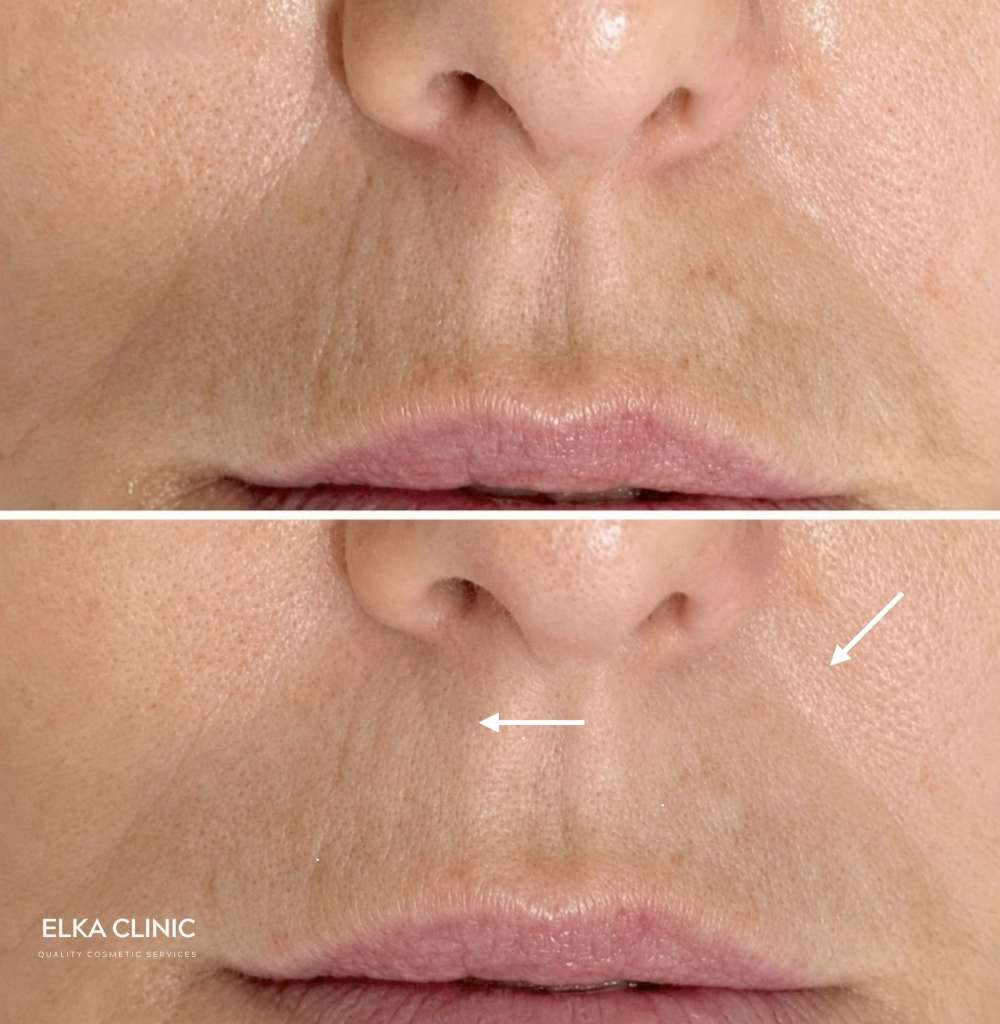
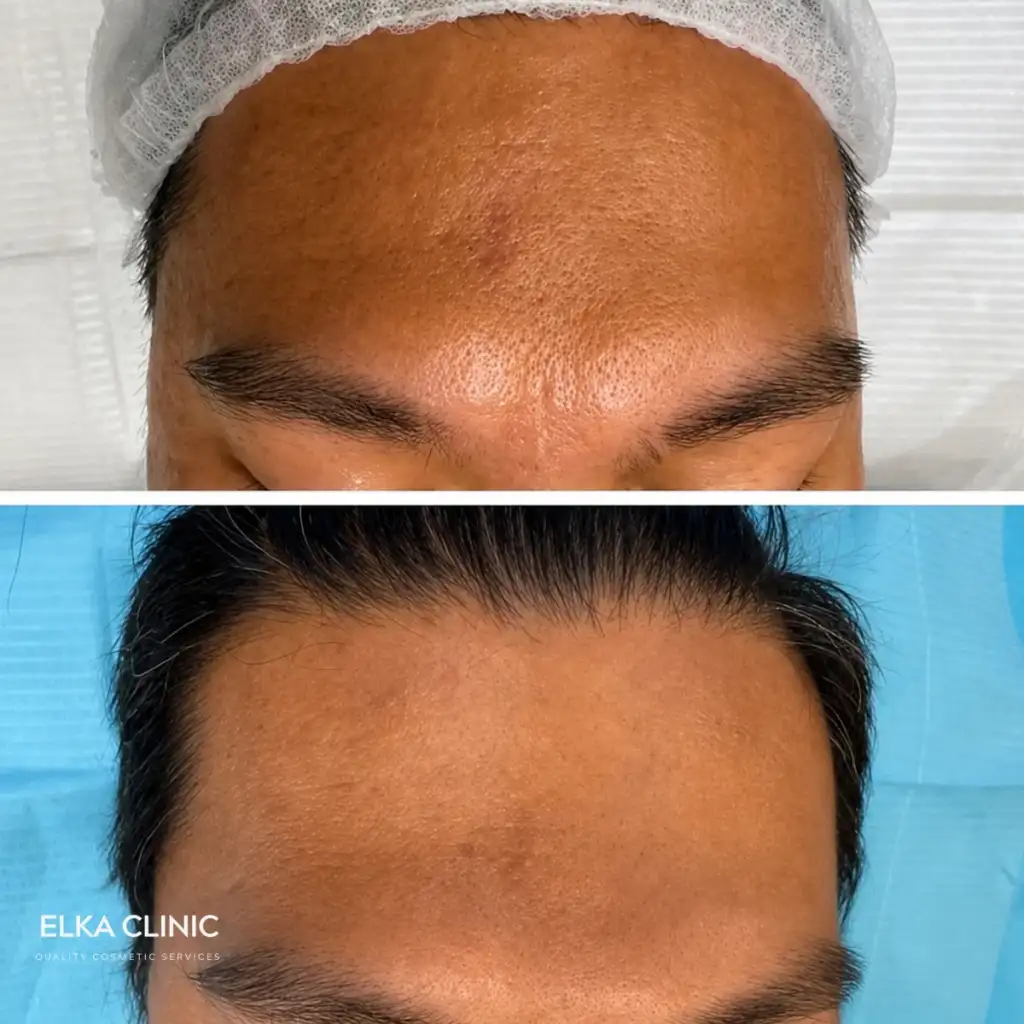
Pores look larger when the skin around them is loose, sun-damaged or congested, and microneedling works on the wall of the pore rather than closing the opening, so any change is partial and gradual rather than dramatic. It is also not confined to the cheeks, where pores are most often discussed. The photographs below are from two ELKA CLINIC clients: one treated around the mouth and chin, and one treated for enlarged pores across the forehead.
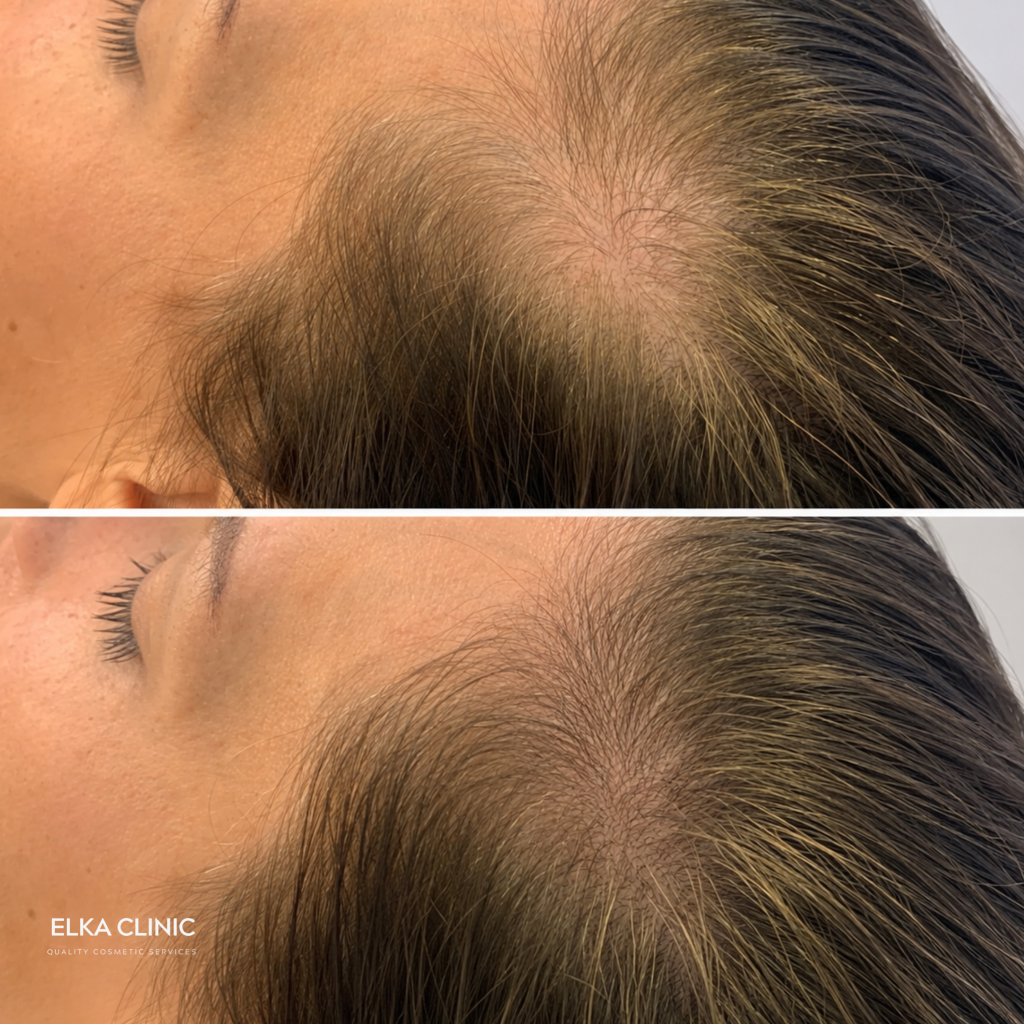
Hair Thinning
Scalp needling is offered here as a supporting treatment, not as a hair-loss cure, and we would rather set that expectation before you book than after.
Scalp microneedling may be considered as part of a broader plan for selected types of hair thinning. Because hair loss can have different causes, unexplained, sudden or active hair loss should be assessed appropriately before cosmetic treatment.
The reasoning is the same as on the face. Controlled micro-injury increases blood flow and prompts a repair response around each follicle, which may create a more favourable environment for hairs that are still active. It cannot revive a follicle that has already closed.
So we ask what is causing the thinning first. Thinning driven by a medical condition, a medication, iron or thyroid levels, or a hormonal pattern needs that cause addressed, and that sits with your GP or a trichologist rather than with us.
Realistically this is a slow course. Sessions are usually spaced around four weeks apart and change is assessed over months using consistent photographs. Some clients notice improvement; others do not, and results vary considerably.
What To Expect
A first appointment usually runs between 60 and 90 minutes, most of which is preparation and numbing rather than needling.
Before your appointment
Most people need to do very little. The one instruction that matters for almost everyone is leaving strong actives alone in the days beforehand; the rest applies only where it is relevant to you.
- Actives — 5 to 7 days Stop topical retinoids, acids, exfoliants and topical antibiotics over the treatment area around five to seven days before. They increase sensitivity and make recovery harder than it needs to be.
- Laser, IPL and hair removal — 2 weeks No laser or IPL over the area for at least two weeks beforehand, and no waxing, electrolysis or depilatory creams. If the area needs to be hair-free, shaving the day before is fine.
- Sun and tanning — 2 weeks Avoid sunbathing, sunbeds and unprotected sun exposure over the area in the fortnight before. Recently sun-exposed skin carries a higher risk of a pigmentation problem.
- Blood-thinning agents — 24 hours Aspirin and similar blood-thinning agents make bruising more likely. If you take one for a medical reason, do not stop it — tell us instead and we will plan around it.
- Anti-inflammatories Ibuprofen and similar anti-inflammatories work against the controlled inflammation microneedling relies on, so they are best avoided immediately beforehand. Prescribed pain relief is different: keep taking it and let us know.
Skin assessment
Your skin is examined in good light and we agree which concern is being prioritised. Medications, skin conditions, recent sun exposure and pigmentation history are discussed, since each can change the depth used or postpone treatment.
Photographs
Standardised photographs are taken before anything begins. Skin changes slowly enough that memory is unreliable, and a fair comparison at session four depends on having a consistent image from session one.
Cleanse and numbing
The area is double-cleansed and a topical numbing product is applied, then left to take effect. Before needling begins, the skin is prepared with an appropriate antiseptic solution, such as isopropyl alcohol. Most clients describe a light vibration rather than pain, although sensitivity differs between people and areas.
Treatment
A sterile single-use cartridge is used and the pen is worked across the area in sections. Depth and passes are adjusted per zone — scarred cheeks are treated differently from the forehead.
Post-treatment care
A calming serum and barrier support are applied. Expect skin to look flushed, similar to mild sunburn, and to feel warm and tight for the rest of the day. The full Microneedling aftercare instructions are published on our website, so you can check them at any point while your skin settles.
Review and planning
Your next appointment is planned around how your skin actually settled rather than a fixed calendar. Photographs are repeated at review, and the plan is adjusted — including stopping earlier than expected if the concern has responded well.
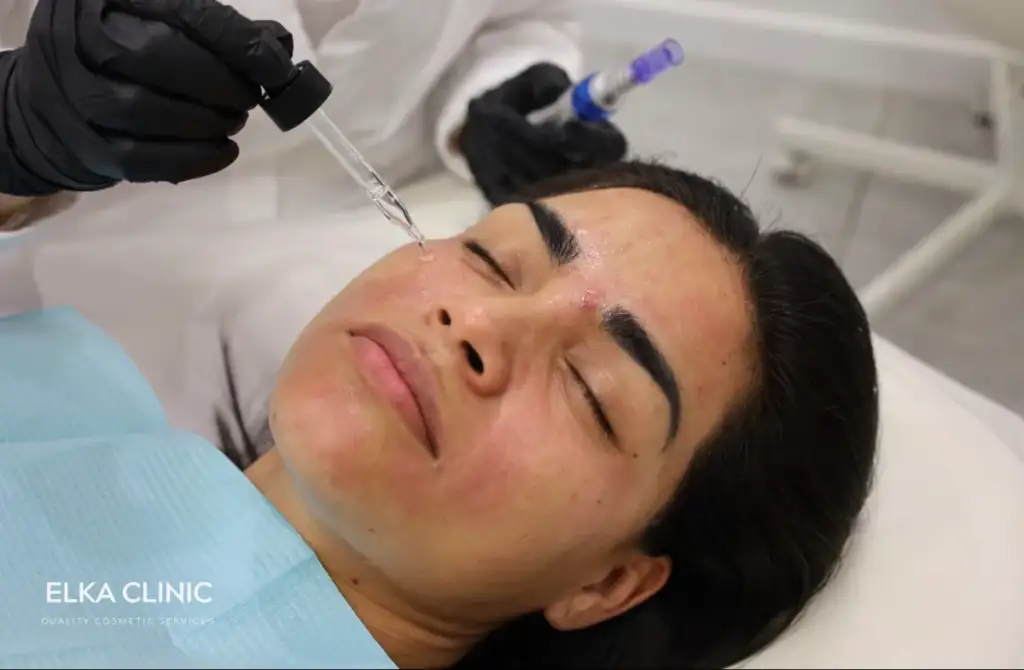
Genuine ELKA CLINIC client photograph taken during a microneedling session in our Subiaco studio. The flushing shown here settles over the following days and is not a before-and-after result.
Healing & Recovery
Most of the visible recovery is over within two to four days. The part that matters — the collagen work — carries on quietly for weeks afterwards.
On the day, expect redness and warmth like mild sunburn, and skin that feels tight. By day two the flush typically fades to pink. Around days three to five many clients notice light flaking — normal, and best left alone, since picking is the most common reason a session heals unevenly.
Deeper scar work commonly means a longer flush, sometimes with pinpoint marks for a few days; shallower tone work often settles overnight. Worth knowing before booking around an event — we suggest leaving at least a week, and longer for scar work.
Keep the treated area completely dry for the first 4 hours as a minimum, and ideally for about 12 hours. After roughly 12 hours gentle cool or lukewarm water is fine if you need it, and from about 24 hours you can cleanse gently with a mild, fragrance-free cleanser. Keep the skin clean and leave it alone for the first 24 hours: no makeup, no active skincare. For 72 hours, and until the skin has settled, avoid heavy sweating, strenuous exercise, saunas, steam rooms, spas and swimming, since heat and bacteria are most likely to cause a problem while the channels close. Keep deliberate sun exposure off the area for at least 72 hours and while it stays sensitive. Vitamin C and other strong active serums stay out for approximately 3 to 5 days and until the skin has settled; retinoids, acids and exfoliation stay out for at least 7 days and until redness, sensitivity and flaking have resolved, and longer if the skin is still irritated. Once the skin comfortably tolerates topical products, use a broad-spectrum SPF 30+ daily on an ongoing basis. Further microneedling sessions, where recommended as part of your treatment plan, are generally spaced at least 4 weeks apart.
Contact us rather than waiting if you develop increasing pain, spreading heat, swelling that worsens after day two, or any sign of infection. These are uncommon, but they are handled far more easily early.
Side effects and risks. Microneedling is not risk-free and is not suitable for everyone. Temporary redness, swelling, dryness, tightness, sensitivity and light flaking are expected, and pinpoint bleeding is common where deeper settings are used on scarring. Less commonly it can cause irritation, prolonged redness, breakouts, infection, or pigment change — darkening or lightening — a higher risk in deeper skin tones and in skin that has marked before. It is also possible to complete a course and be unsatisfied, most likely with ice-pick scarring, deep folds and hair thinning.
How Many Sessions May Be Recommended
The most common question, and the one where a single number would be misleading. What we can give you is the reasoning behind the range.
Each session sets off one cycle of collagen remodelling, and each cycle produces a modest amount of change. Sessions are spaced four to six weeks apart because that is broadly how long a cycle takes — treating sooner interrupts work already underway.
As a general guide, tone and texture commonly respond within three to four sessions. Pores and fine lines typically need four to six. Acne scarring and stretch marks are slowest, often six or more. These are ranges, not promises.
Age, general health, smoking, sun history and how consistently you use SPF all affect what each session returns, so two clients with the same concern can need different courses. Once a course is complete, many clients move to occasional maintenance while others stop entirely. Neither is wrong.
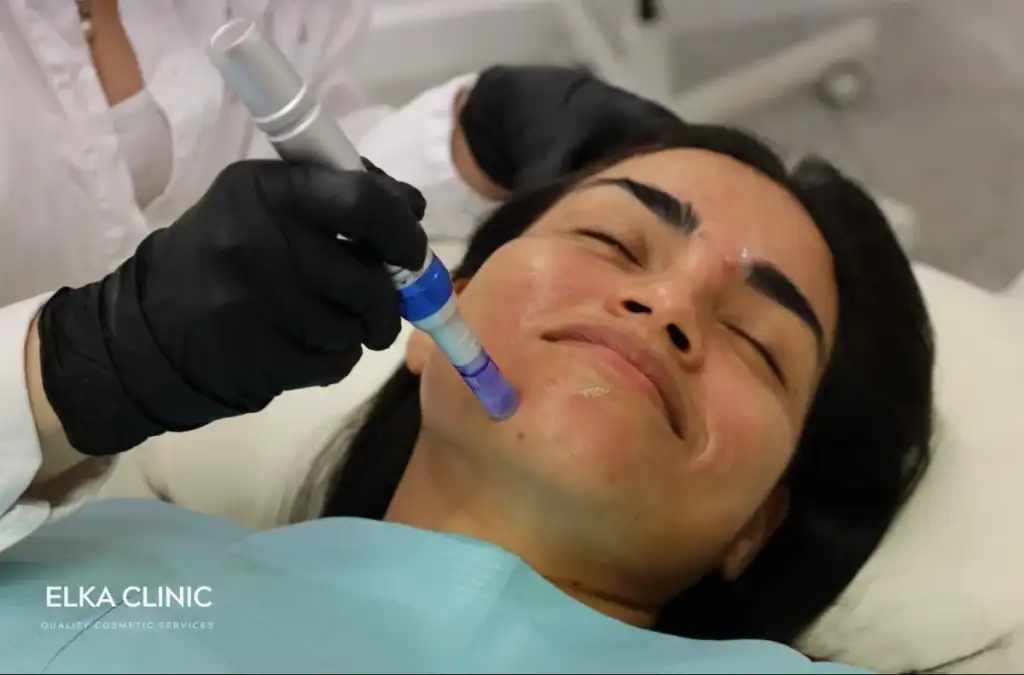
Genuine ELKA CLINIC client photograph taken during a microneedling session in our Subiaco studio. It shows treatment in progress, not a before-and-after result.
Why Clients Choose ELKA CLINIC
- Assessed before a course is agreed — depth, spacing and the number of passes are set from what your skin shows, and pigmentation history is asked about before treatment rather than during it.
- Photographed and reviewed — standardised photographs at every session, so the plan is adjusted on evidence instead of impressions.
- Told when it is not the right treatment — if your scar type, your line depth or the cause of your hair thinning means the likely benefit is small, we say so before you commit to a course.
- Conservative depth by default — particularly on thinner skin and deeper skin tones, where going deeper raises the risk of marking and pigment change without reliably improving the result.
- Single-use needle cartridges — cartridges and consumables are single-use, and we work within our scope of practice.
- Subiaco studio, by appointment — one client at a time, with street parking nearby.
- Afterpay available — useful when a concern needs a course rather than a single session.
Who performs microneedling at ELKA CLINIC
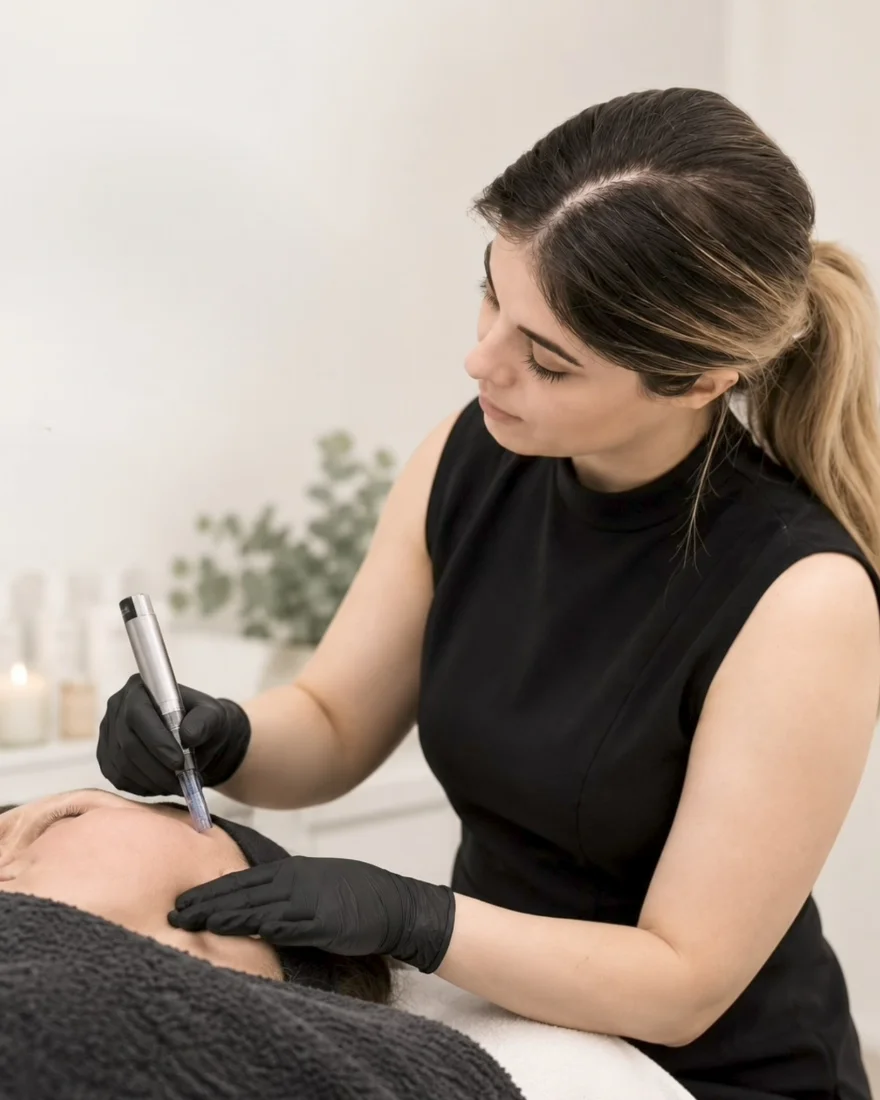 Mary, Senior Skin Therapist, ELKA CLINIC Subiaco
Microneedling at ELKA CLINIC is performed by Mary, our Senior Skin Therapist, who carries out the skin treatments at the clinic. ELKA CLINIC has operated in Subiaco since July 2015 and was founded by Ellie, Founder & CEO, who leads the team and still consults.
Depth, spacing and the number of passes are set for the area and for the skin in front of us. Pigmentation history is asked about before a course is agreed rather than after, because that is what determines how cautiously darker skin types are treated.
You are welcome to book your treatment directly. If you’d like professional advice before deciding, you can also book a consultation. More about the clinic and team.
Microneedling FAQs
The eight questions asked most often before a first appointment.
Does microneedling hurt?
Most clients describe a light vibration or scratching sensation rather than pain. A topical numbing product is applied and left to take effect first. Deeper work on scarring is felt more than shallower tone work, and sensitivity differs between people.
How long until I see results?
Texture and brightness commonly change first, often within two to three weeks. Fine lines and scarring take longer because they depend on collagen being rebuilt underneath, and improvement typically continues for two to three months after each session. Results vary.
How many sessions will I need?
As a general guide, tone and texture commonly respond within three to four sessions, pores and fine lines typically need four to six, and acne scarring or stretch marks often need six or more, spaced four to six weeks apart. The plan is reviewed as your skin responds rather than fixed in advance.
What is the downtime?
Expect redness and warmth like mild sunburn on the day, fading to pink by day two, with light flaking common around days three to five. Shallower work often settles overnight; deeper scar work can stay flushed for several days.
Will it get rid of my acne scars?
It commonly reduces them rather than removing them. Broad rolling scars usually respond best, boxcar scars soften but often keep a visible edge, and narrow ice-pick scars respond poorly. We assess your scar types before estimating what is realistic.
Is it safe for darker skin tones?
It is generally considered suitable across skin tones because it does not rely on heat or light. Deeper skin tones do carry a higher risk of pigment change if a session is too aggressive, so we work more conservatively and take pigmentation history into account.
Can I have it if I have melasma?
Sometimes, but cautiously, and only after your pigmentation history has been reviewed. Sessions are kept shallower and spaced further apart, and we are clear that the realistic aim is careful management rather than clearance. Some clients are better served by a different approach.
Do I need a consultation before booking?
No — you can book treatment directly. An optional consultation is worth considering if you have melasma, a history of keloid scarring, recent oral acne medication, a condition affecting healing, or want scarring or hair thinning assessed first.
These answers summarise the detail set out above rather than repeating it. If your question is not here, an optional consultation is the quickest way to get a specific answer, or see our general FAQ.
Pricing & Payment Plans
Current microneedling prices and available appointment times are shown on our online booking page, which is kept up to date rather than duplicated here.
Cost depends on the area treated and, more importantly, how many sessions your concern realistically needs. A single session for tone is a different commitment from a course of six for established scarring, and we would rather talk that through than quote a headline figure.
We do not sell prepaid packages up front. Sessions are reviewed as your skin responds, and if a concern settles in four appointments rather than six, that is where the course stops.
Afterpay is available at ELKA CLINIC, which is often the practical difference between completing a course and stopping halfway. Eligibility and approval are determined by Afterpay, and details are on our payment plans page.
Book Microneedling in Perth
Book treatment directly, or book an optional consultation first if you would rather have your skin assessed and a plan discussed. Current pricing and available times are shown on our online booking page. Afterpay is available at ELKA CLINIC. Eligibility and approval are determined by Afterpay.
3/29 Hood Street, Subiaco WA 6008 · 1300 216 456 · contact@elkaclinic.com.au