
Our Safety Standards & Hygiene Protocols
Home|About|Our Safety Standards
Considered care before, during and after treatment. ELKA CLINIC is a cosmetic tattoo and advanced skin clinic in Subiaco, Perth. Safety here is a series of decisions rather than a single policy: whether a treatment suits you, who performs it, what you are told beforehand, how you are looked after while you heal, and what happens if a concern arises.
- Suitability assessed in person
- A named practitioner
- Treatment-specific aftercare
- Support while you heal
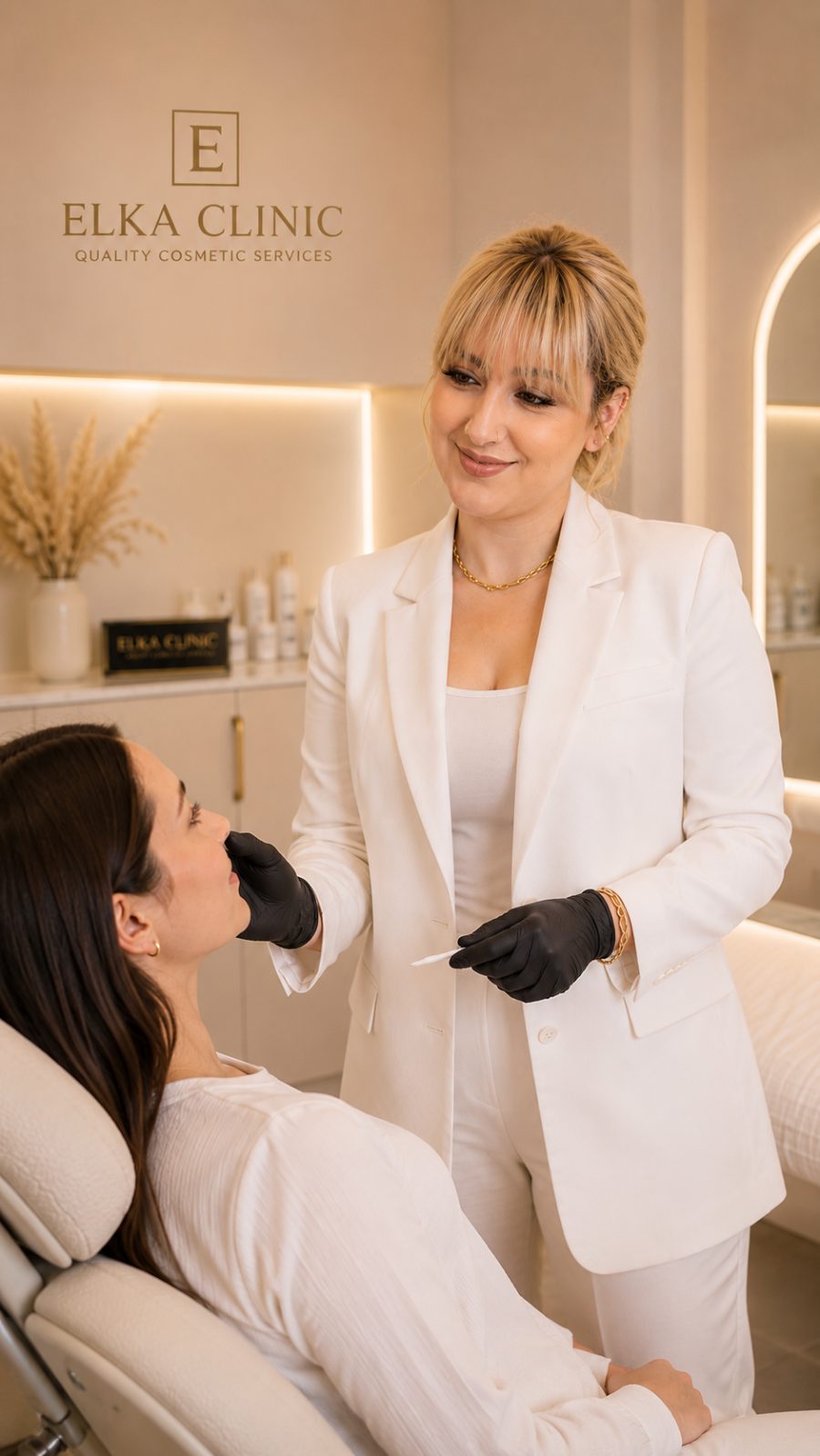
Safety starts before your appointment
The most important safety decision is made before any needle, device or pigment is involved: whether the treatment you asked for is right for you.
We talk through what you want to change, your skin and treatment history, and anything affecting timing. What we assess is whether a cosmetic treatment is appropriate — not what is causing a medical condition. Our practitioners are not doctors, and where something needs a medical opinion first, we ask you to get one before we proceed.
Treatment may then go ahead as planned, be adjusted, be postponed, or not be recommended at all. Photographs are taken before and after every treatment, so any change is judged against a record rather than a memory.
A free 30-minute in-person consultation is available before booking, and is optional for most treatments. Plasma pen fibroblast is the exception: suitability, skin tone and expectations need assessing in person.
What we ask about, and why
Each answer changes either what we recommend, or when.
- Your goals, so we can say early if a treatment cannot deliver them.
- Relevant skin and treatment history, including how you have healed before.
- Any previous cosmetic tattoo. Existing colour, saturation and condition are assessed first, and lightening may be recommended before new work.
- The condition of the area on the day. A cold sore, infection, sunburn or fresh tan changes the answer.
- Medication or health circumstances affecting bleeding or healing. Never stop a prescribed medication in order to have a cosmetic treatment; that decision belongs with your prescriber.
- Age. Cosmetic tattoo is not performed on anyone under 18.
- Timing. Pregnancy and breastfeeding are a precaution across our treatments.
- Whether a patch test would help. Allergic reactions to cosmetic tattoo pigment are very rarely reported, but a patch test can be done at your consultation or 24 hours before your appointment.
Contraindications are treatment-specific, so the detailed lists stay with the treatment they belong to.
Treatment-specific suitability
Know who is performing your treatment
The practitioner who plans your treatment performs it, so you are never uncertain who is responsible. Full backgrounds are on Meet the Team.
Understanding what you are agreeing to
Nobody should be finding out what a treatment involves while it is happening.
Before we begin, your practitioner explains what the treatment does, how it is expected to heal, what it will not do, the aftercare you are responsible for, and how much variation to expect. You can ask anything, and decide not to go ahead.
That is documented as well as discussed. A consent form is sent to you online through Fresha ahead of your appointment, one for cosmetic tattoo and a separate one for skin treatments, and it requires your signature.
For cosmetic tattoo there is a further step. Mapping, shape and colour are worked out with you at the appointment, and nothing permanent begins until you have seen the design and agreed with it.
That conversation is not identical across treatments. A microneedling session is one step in a course measured over months; a lip blush is a design decision visible while it heals.
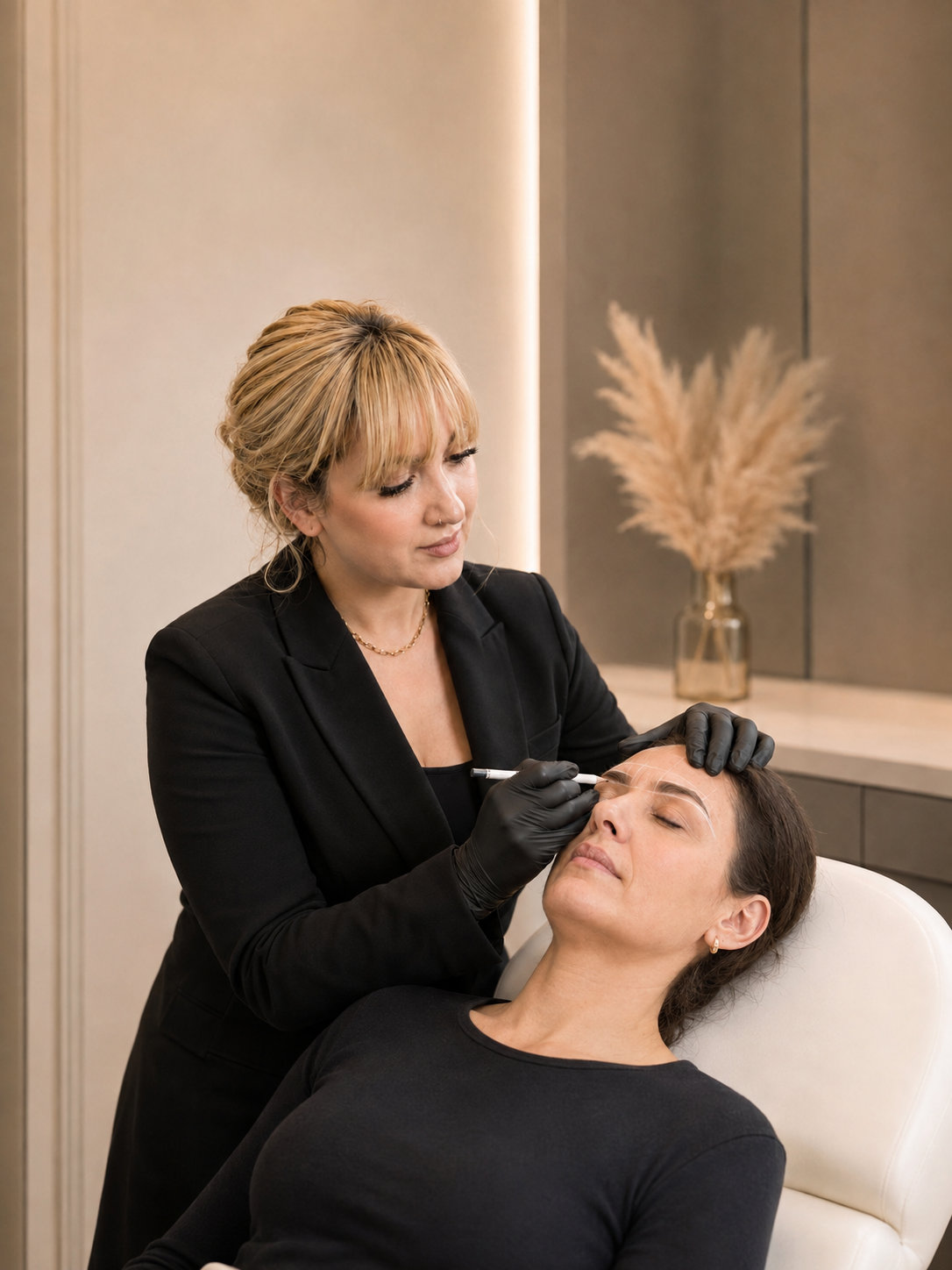
Safety considerations differ by treatment
Treating every service as though it carried the same considerations is how one gets missed.
Cosmetic tattoo
Existing pigment, the condition of the skin, and design and placement approval come before any work begins. Healed colour varies between people, so we would rather build a result in stages than commit to too much at once.
Microneedling
Skin is assessed in person so progress is judged objectively. Depth and intensity are set for your skin, and sessions are spaced four to six weeks apart so one round of healing finishes before the next. It is not risk-free and not suitable for everyone. Microneedling FAQ
Plasma pen fibroblast
The strictest suitability criteria of anything we offer, which is why it is not booked without being seen. Skin tone is a genuine factor, healing visibly involves small crusts, and sessions are spaced at least twelve weeks apart. Plasma Pen FAQ
Benign skin lesion removal
ELKA CLINIC does not diagnose skin cancer and does not screen moles. Only lesions already established as benign are treated, and anything suspicious, changing or unexplained is referred to a GP or dermatologist. A mole is removed only once a doctor has confirmed it is benign. Lesion Removal FAQ
Equipment and materials used responsibly
Equipment is matched to the treatment, and materials are used as intended.
- Sterile, single-use needles and cartridges, disposed of safely after your treatment and never reused between clients.
- Professional cosmetic tattoo pigments selected for the treatment and intended use.
- Settings chosen for your skin, adjusted as it responds rather than left at a default.
Where a device matters, it is named on that treatment’s own page rather than used as a badge here.
Emergency preparedness & first aid
As part of our commitment to client safety, ELKA CLINIC maintains a dedicated first-aid kit on site, with an EpiPen also available as part of our emergency preparedness. Where emergency medical assistance is required, 000 will be contacted. These measures form part of our broader approach to maintaining a safe and prepared clinical environment.
Detailed infection-control, cleaning and cross-contamination procedures are set out in the hygiene section below.
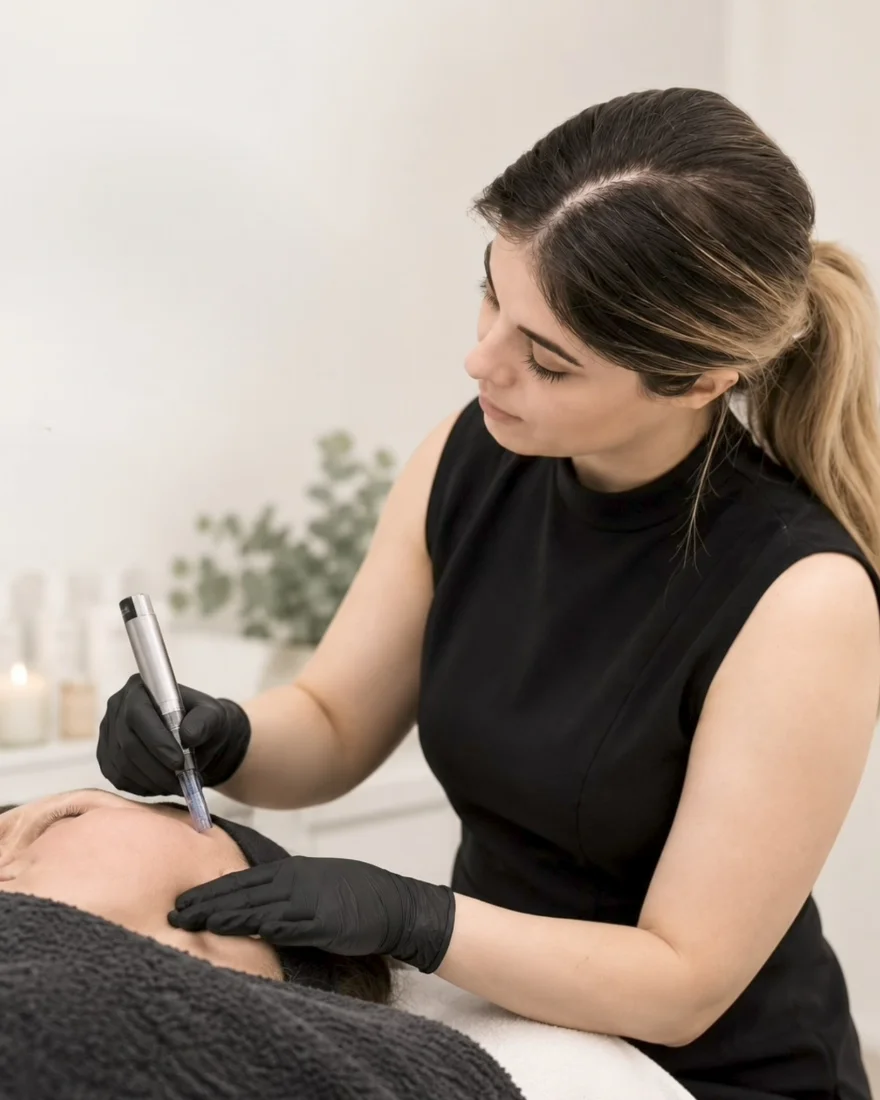
Safety does not end when you leave
Much of what determines your result happens after you go home, which is where aftercare stops being a courtesy and becomes a safety measure.
Before you leave, your practitioner takes you through what to do, what to avoid and what is normal for your treatment. Written aftercare is also published on this website, so you can check it at two in the morning in week two. For eyebrow tattoos an aftercare cream is provided.
Each treatment FAQ sets out its healing stages, so you can tell an expected phase from something that warrants a phone call. If anything differs from what you were told to expect, contact the clinic.
Where follow-up is called for, it is scheduled once the result has healed enough to assess properly. The intervals between sessions are healing time, not scheduling preference.
If you feel unwell, or develop symptoms outside what we described, please contact your GP or an appropriate medical service. ELKA CLINIC is a cosmetic clinic, not a substitute for medical care.
Sometimes the safest treatment is no treatment
This is the part of a safety standard that costs a clinic money.
If a treatment is not suitable for your skin, your health history or the result you describe, we will say so rather than book you in. That may mean postponing, adjusting the plan, suggesting an alternative, or asking you to see a doctor first.
When we are likely to pause
- Something active in the area. A cold sore, infection, sunburn or fresh tan means the appointment is postponed.
- Healing that needs more time, whether from recent treatment elsewhere or work of ours still settling.
- Existing cosmetic tattoo that needs lightening first, where old pigment is too saturated or the wrong tone.
- Medication or health circumstances that change how skin heals. We will discuss timing, and will not ask you to stop anything prescribed.
- A lesion that needs a medical opinion. Anything suspicious, changing or unexplained is referred rather than treated.
- An expectation the treatment cannot meet. Microneedling does not lift loose skin, and heavy eyelid hooding is often better served by surgery than plasma pen.
Responsible treatment includes knowing when not to treat.
If you have a concern after treatment
Contact the clinic. We would much rather hear from you while something can still be influenced.
- We listen first: what you are seeing or feeling, and when it started.
- We ask for what helps, often including photographs to compare with the images taken before your treatment — though a photograph is a starting point rather than an answer.
- We review it properly: the work itself, how your skin has responded, and what stage of healing you are at. Where that needs to be in person, we will ask you to come in.
- We give guidance within our scope: aftercare, what to expect next, and what would change our advice.
- We arrange follow-up where needed, and stay available rather than closing the conversation.
- We recommend medical assessment where a concern sits outside what a cosmetic clinic should be managing.
We cannot promise that every concern can be resolved, identified from a photograph, or managed inside the clinic. We do commit to looking at it with you.
Where the question is about standing behind our work, that is set out in Our Guarantee. This page is about how treatment is decided and delivered.
Safety includes rigorous hygiene
Infection control is part of the same framework, built into how each treatment is prepared and delivered rather than written down once and left there.
Which measures apply depends on the procedure. A cosmetic tattoo, a microneedling session and a plasma pen or lesion removal appointment use different equipment, so they do not call for the same controls. Each treatment room is prepared for one client at a time, and relevant treatment surfaces and equipment are cleaned and disinfected between clients.
What follows is what we actually do, rather than what a clinic is generally expected to say.
Sterile single-use needles and cartridges
Cosmetic tattoo needles and cartridges arrive individually packaged and sterile. A new one is opened for each client, used once, and never used on anyone else. Microneedling works the same way: a new sealed sterile cartridge is used for each client and disposed of in front of the client after treatment.
Disposable pigment cups
Cosmetic tattoo pigment is dispensed into new disposable cups for each client. They are used once and discarded after the appointment, so pigment is never carried from one client to the next.
Cleaning, disinfection and barriers
Between clients, relevant treatment surfaces and equipment are cleaned and disinfected — the treatment bed or chair, the trolley and work surfaces, equipment surfaces and the other treatment surfaces that get touched. Single-use protective barriers then cover the cosmetic tattoo machine, handpiece, cables and other items handled during treatment. Barriers are an additional control, used for one client only; they add to cleaning and disinfection rather than replacing it.
Gloves and hand hygiene
Ellie, Samira and Mary wear new disposable gloves for cosmetic tattoo, microneedling, plasma pen and lesion removal treatments, and change them where needed — for example after moving outside the clean treatment field. Hands are washed or sanitised before and after treatment, and again at every glove change. Gloves complement hand hygiene rather than replacing it.
Sharps and contaminated waste
Used cosmetic tattoo needles and cartridges, and used microneedling cartridges, go into an appropriate sharps container. Contaminated treatment waste that is not sharps goes into a separate clinical waste bin, so the two are never handled together.
Reusable instruments
Reusable metal instruments such as tweezers are cleaned first, then sterilised in the clinic autoclave before being used again. Cleaning is its own step: an autoclave sterilises, it does not clean.
Two categories, handled differently. Single-use items are used once and discarded. Reusable metal instruments are cleaned and then sterilised between clients. Sterile needles and cartridges are never put through the autoclave — they arrive sterile and are discarded after one use.
Cosmetic tattoo
- Sterile single-use needles and cartridges, new for every client
- New disposable pigment cups, discarded after the appointment
- Disposable barriers on the machine, handpiece and cables
- Relevant treatment surfaces and equipment cleaned and disinfected between clients
- New gloves, with hand hygiene before, after and at every glove change
- Needles and cartridges into the sharps container
- Reusable metal instruments cleaned, then autoclave sterilised
- The treatment area gently cleansed before treatment
- Topical numbing cream generally applied for approximately 20–40 minutes, depending on the treatment area and individual sensitivity
- Appropriate antiseptic skin preparation, such as isopropyl alcohol, before skin penetration
Microneedling
- A new sealed sterile cartridge for every client, disposed of in front of you after treatment
- Used cartridge into the sharps container
- New gloves, with hand hygiene before, after and at every glove change
- The treatment area gently double-cleansed to remove makeup, surface oils and residue
- Topical numbing cream generally applied for approximately 20–30 minutes
- Appropriate antiseptic skin preparation, such as isopropyl alcohol, before microneedling begins
- Relevant treatment surfaces and equipment cleaned and disinfected between clients
- Products selected according to your skin’s needs and the treatment being performed; where a product is supplied as a sterile preparation, that applies to that product
Plasma pen fibroblast and benign skin lesion removal
- The treatment area cleansed and prepared before the procedure, including appropriate alcohol skin preparation
- New gloves, with hand hygiene before, after and at every glove change
- Contaminated treatment waste handled separately where applicable
- Relevant treatment surfaces and equipment cleaned and disinfected between clients
Skin is cleansed and prepared before treatment. It is not sterilised, and no honest clinic can claim otherwise.
Infection prevention training
Samira has attained HLTINF005 — Maintain infection prevention for skin penetration treatments, a nationally recognised unit of competency. It was issued as a Statement of Attainment by the Academy of Cosmetic Tattoo Australia on 30 April 2025, and forms part of the Diploma of Cosmetic Tattoo. This is Samira’s individual training. It is not a clinic accreditation, and it is not a government or health department approval.
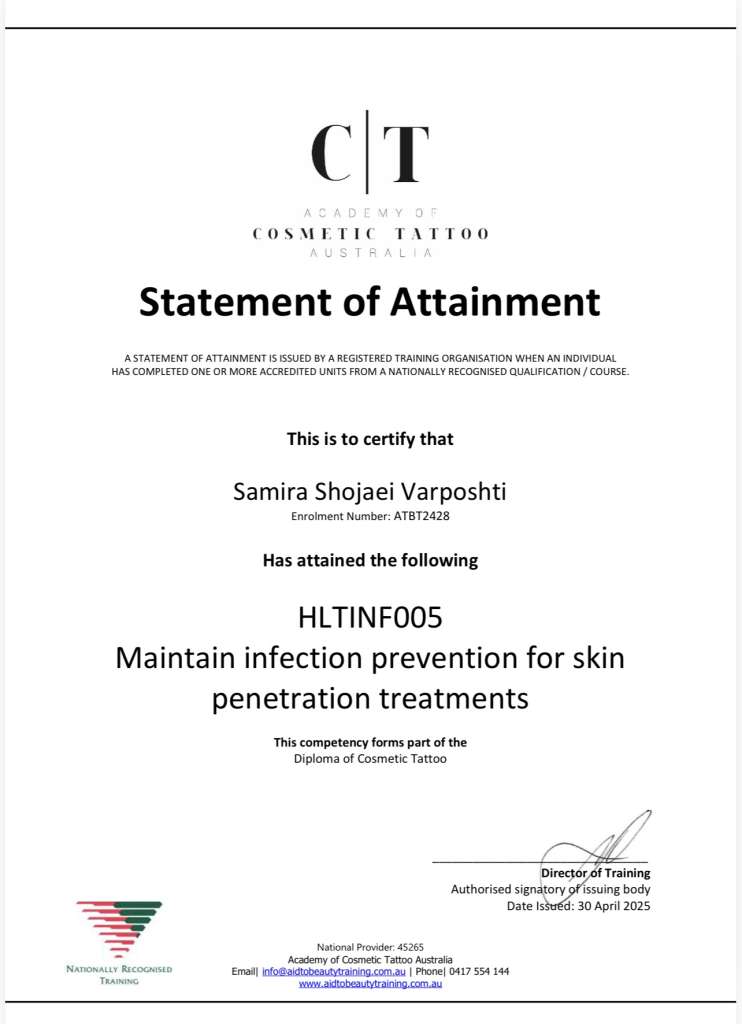
HLTINF005 — Maintain infection prevention for skin penetration treatments. Statement of Attainment, Academy of Cosmetic Tattoo Australia, 30 April 2025.
These measures reduce the risk of infection and cross-contamination. Together — hand hygiene, new gloves, sterile single-use needles and cartridges, disposable pigment cups, disposable barriers, cleaning and disinfection of relevant treatment surfaces and equipment between clients, correct sharps disposal, contaminated waste kept separate, and reusable instruments cleaned and sterilised where required — they make cross-contamination far less likely. None of them removes risk entirely, and no procedure that breaks the skin can be described as risk-free.
That is why suitability, aftercare and being able to reach us afterwards matter as much as what happens in the treatment room. If you would like to see how a treatment is set up before you book, ask at your consultation.
Safety and transparency
Appropriate treatment
We consider whether a treatment suits you before proceeding.
Clear practitioner responsibility
You know who is performing your treatment.
Honest expectations
We explain limitations and expected healing, not identical results.
Treatment-specific aftercare
Written for the treatment you had, and available online.
Support after treatment
Contact the clinic if something concerns you while you heal.
Knowing when not to treat
Treatment may be postponed or declined where that is the safer answer.
Have a question before treatment?
If you are unsure whether a treatment is suitable for you, ask before you book. A question answered now is worth more than a treatment adjusted later.
You can also read our general FAQ or view pricing and availability. ELKA CLINIC, 3/29 Hood Street, Subiaco WA 6008.
Safety information reviewed August 2026