A soft wash of colour across the cheeks can make a face appear more rested, balanced and naturally fresh. It is easy to understand the appeal of pmu cheek blush: the idea of waking up with a gentle, healthy-looking flush without reaching for cheek colour each morning. Yet cheeks are not lips, brows or eyeliner. Their larger surface area, constant movement and visibility mean this treatment deserves particularly careful thought.
For clients who value refined, believable cosmetic tattooing, the central question is not simply whether cheek blush can be done. It is whether the finished, healed result will continue to suit your skin, colouring, lifestyle and personal style over time.
What is PMU cheek blush?
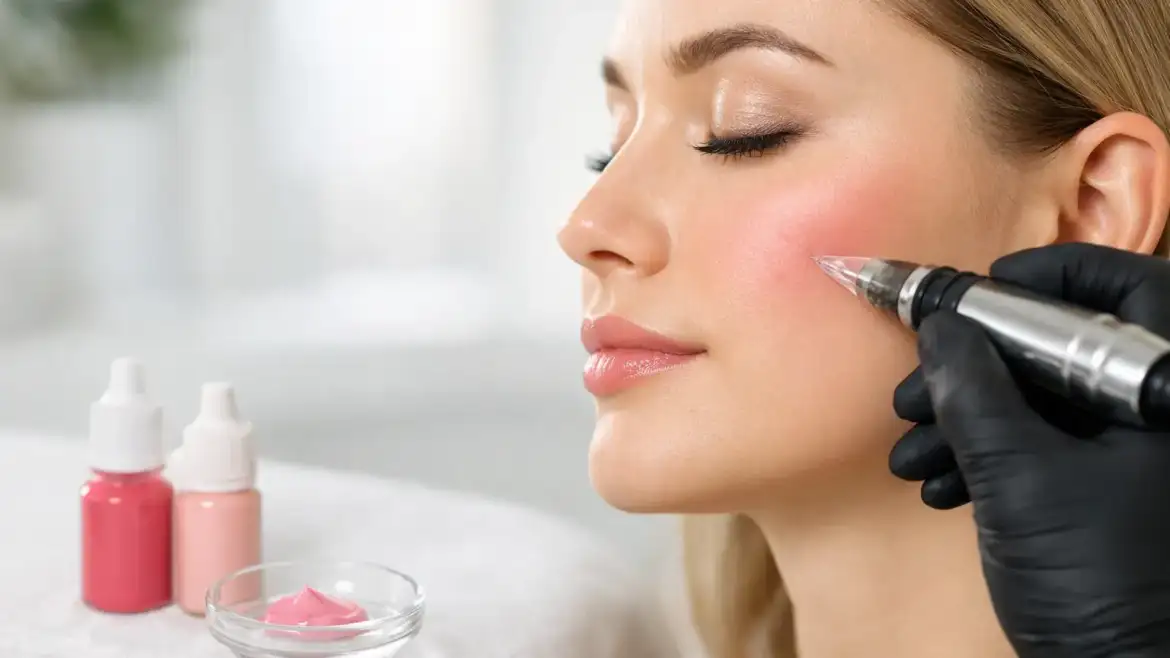
PMU cheek blush refers to the placement of cosmetic tattoo pigment through the cheek area to create a soft, diffused appearance of colour. Rather than a defined makeup stripe or a bright circle on the apples of the cheeks, a well-considered approach aims for a sheer veil of warmth that works with the face’s natural structure.
The concept is often compared with lip blush tattooing because both treatments use carefully selected pigment to enhance natural colour. In practice, cheek work is a different consideration. Lip blush concentrates pigment within a clear border and relatively contained area. The cheeks offer a broad, open canvas where even subtle shifts in tone, placement or intensity can be noticeable.
It is also worth remembering that cosmetic tattoo pigment does not perform like topical cheek colour. Makeup can be changed with the seasons, adjusted for an event or removed at the end of the day. PMU is intended to fade gradually, but it remains a longer-term colour decision. That changes the standard for what looks beautiful: restraint usually matters more than impact.
Why cheek blush requires a conservative eye
A flattering flush is highly personal. Some people naturally suit peach tones, while others look more harmonious with muted rose, berry or neutral warmth. The wrong undertone can compete with the skin rather than enliven it, particularly once the colour has healed.
Placement matters just as much. The cheeks sit at the centre of facial expression, and the ideal position is not identical for every face. A placement that looks lovely in a filtered reference image may not complement an individual’s bone structure, skin texture or natural areas of redness. Mature skin also calls for thoughtful restraint, as soft enhancement can be far more elegant than visible colour concentration.
There is a practical consideration, too. Our faces change through natural ageing, weight fluctuation, skin changes and shifting beauty preferences. A subtle, skin-like effect allows more room for those changes than a stronger or highly stylised blush placement.
This does not mean pmu cheek blush is automatically unsuitable. It means the treatment should never be approached as a quick extension of a daily makeup routine. The most successful outcomes begin with an honest discussion about whether a client wants lasting colour, or simply the flexibility of changing their blush shade whenever they wish.
The consultation should lead the treatment
A premium cosmetic tattoo consultation is where a good decision takes shape. Before any treatment planning, the artist should understand what you see when you look in the mirror. Is the goal to reduce the need for daily makeup? Do you want to restore the soft colour you feel your complexion has lost over time? Or are you drawn to a particular trend that may not reflect your usual style?
Your natural skin tone and undertone need close assessment in person. Photographs, social media lighting and a mobile screen can all alter the appearance of colour. An experienced artist also considers existing natural redness, pigmentation, texture and how your complexion tends to respond during healing. These details influence whether cheek pigmentation is likely to look soft and balanced.
At ELKA Clinic, cosmetic tattoo planning is guided by facial harmony rather than a one-size-fits-all template. That same philosophy is especially relevant for cheek colour. The aim should be to support the face, not to create a result that appears separate from it.
A consultation is also the right time to share relevant information about previous cosmetic tattooing, skin procedures, sensitivities and your usual skincare routine. Clear disclosure supports safe, appropriate planning and gives your artist the best foundation for advising whether to proceed, postpone or consider a different enhancement.
Choosing colour that will still feel like you
The most wearable cheek colour often looks quieter than clients expect before treatment. Freshly implanted pigment can appear more defined initially, then soften during healing. For that reason, choosing a gentle starting point is generally wiser than pursuing a strong first impression.
Think of the desired result as a natural undertone rather than a visible layer of makeup. The colour should work when you are bare-faced, but also sit comfortably beneath the makeup you choose to wear for dinner, work or special occasions. A pigment that is too warm, too cool or too saturated can limit that flexibility.
Lifestyle deserves consideration as well. If you regularly enjoy experimenting with bronzed, rosy, berry or minimal makeup looks, a fixed cheek tone may feel restrictive. If your personal style is consistently understated and you are seeking a whisper of everyday colour, you may be more comfortable with a subtle enhancement.
Healing is part of the design, not an afterthought
No cosmetic tattoo result can be judged properly on the day of treatment. Fresh colour is only one stage of the process. As the area settles and heals, the pigment can appear lighter, softer and more integrated with the skin. The final result develops over time, which is why experienced artists plan for healed colour rather than designing solely for the treatment-day appearance.
Cheek blush can be particularly challenging because the colour is viewed across a larger area. Natural skin variation may make pigment appear different from one part of the cheek to another, and the face’s daily movement can affect how the result is perceived in changing light. A result that is intentionally subtle gives the skin space to remain the focus.
Following personalised aftercare is essential. Your artist will provide guidance based on the treatment and your individual needs, including how to protect the area while it settles and when to return for review if recommended. Trying to speed up the process or judging the colour too early can create unnecessary concern.
When a different approach may be the better choice
Not every beauty goal needs a cosmetic tattoo solution. If your preferred blush shade changes often, if you enjoy a more sculpted or editorial cheek look, or if you are unsure how much colour you truly want, traditional makeup offers freedom that PMU cannot replicate.
Likewise, clients with prominent natural flushing may find that adding pigment is not the clearest route to a balanced-looking complexion. A professional assessment can help distinguish between wanting more warmth and wanting a more even visual effect. Sometimes the most valuable advice is to pause rather than commit to a treatment that may not deliver the refined result you have in mind.
For clients seeking a polished appearance with minimal effort, other carefully selected cosmetic tattoo enhancements may better align with their priorities. Softly defined brows, a natural lip blush or subtle eyeliner can add structure and brightness while leaving cheek colour fully flexible. The right choice depends on what you wish to enhance and how permanent you want that decision to feel.
A soft result is the most sophisticated result
The appeal of cheek blush is understandable: a little colour can change the entire expression of the face. But with cosmetic tattooing, subtlety is not playing it safe. It is the artistry that allows an enhancement to look believable in daylight, in photographs, across changing seasons and years after the initial appointment.
If you are considering PMU cheek blush, allow the consultation to be a genuine conversation rather than a step towards an automatic booking. The best treatment plan is the one that respects your features, your skin and the way you want to feel when you see yourself without makeup.