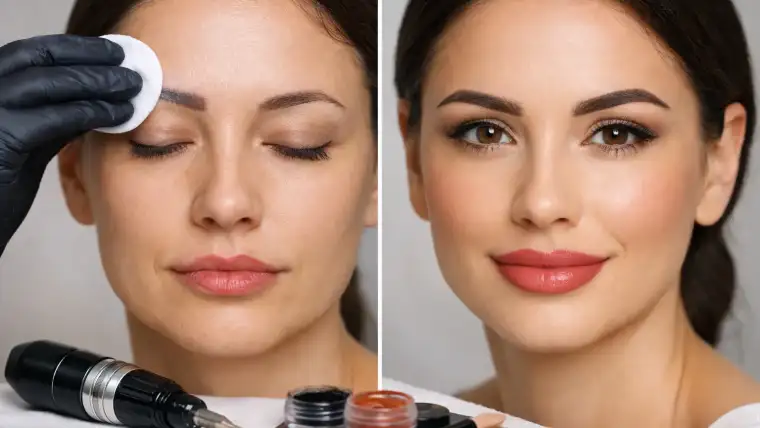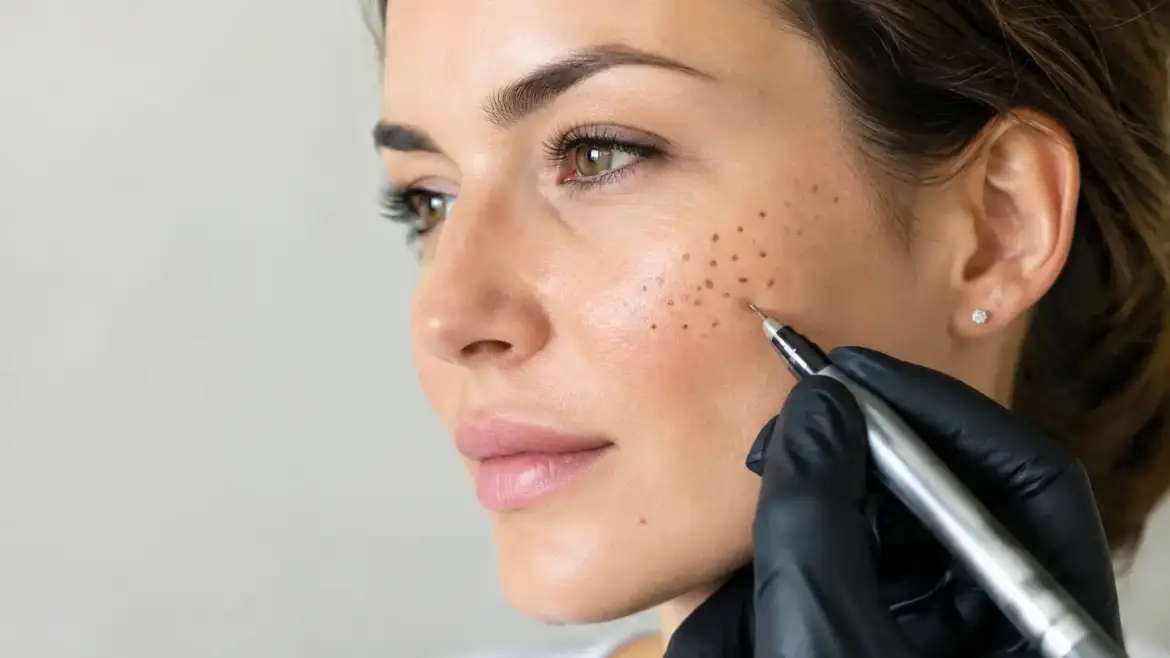
A cheek pigmentation tattoo can sound like a simple answer to uneven-looking colour, faded freckles or a desire for a softly flushed complexion. In reality, the cheeks are one of the most complex areas of the face to tattoo convincingly. Their colour changes with warmth, sun exposure, skincare, circulation and time – so a result that looks suitable on treatment day must also be considered in its healed, long-term form.
For anyone who values polished, natural-looking enhancement, the right question is not simply whether cheek tattooing is possible. It is whether a cosmetic tattoo is the most appropriate approach for your skin, your goals and the look you want to maintain over time.
What does cheek pigmentation tattoo mean?
The phrase cheek pigmentation tattoo is used in a few different ways, which can make online research confusing. Some people use it to describe tattooing a soft blush effect or cosmetic freckles. Others are referring to skin camouflage, where pigments are placed to reduce the visible contrast of an area that appears lighter or darker than the surrounding skin.
These are very different goals. Blush and freckle tattooing are intentional beauty enhancements, designed to add colour or character. Camouflage work aims for visual blending and requires an especially cautious, highly individual approach. Neither should be treated as a standard service that can be chosen from a colour chart.
Unlike brows, lips or eyeliner, the cheek area does not have a clear natural boundary. A beautiful result relies on restraint, careful placement and an understanding of how the face carries colour. Too much density, an overly warm or cool pigment, or placement that does not suit facial structure can make the result look obvious rather than softly believable.
Why the cheek area requires careful planning
Cheeks are expressive, exposed and changeable. They can look different from morning to evening, indoors versus outdoors, and across seasons. A natural flush may sit higher on one person and lower on another. Some complexions develop warmth easily, while others show cooler or more muted undertones.
This matters because cosmetic tattoo pigment is not the same as topical makeup. Makeup can be adjusted to suit an outfit, a change in season or a different level of tan. A tattoo must be selected with the expectation that it will heal, soften and evolve gradually. The shade seen immediately after a procedure is not the final result.
When the goal is to visually soften uneven colour, the challenge becomes greater. Existing skin tone may not remain consistent, and pigment placed beneath the surface cannot adapt as the skin changes. A close match at one appointment may appear less harmonious later if the surrounding area deepens, lightens or becomes more flushed.
For this reason, a skilled professional will assess more than the photograph or concern that brought you in. They will consider the overall complexion, undertone, texture, amount of natural cheek colour, lifestyle, sun exposure and the way your skin has responded to cosmetic tattooing or skin treatments in the past.
Natural-looking results are built on subtlety
The most refined cosmetic tattoo work should not announce itself. On the cheeks, this principle becomes essential. A softly placed enhancement may complement facial balance and reduce the need for daily colour cosmetics, while a heavy application can compete with the features rather than support them.
If freckles are the desired look, they should appear irregular, delicate and appropriate to the complexion. Uniform dots, strong contrast or placement that ignores the natural planes of the face can look artificial once healed. If a blush effect is being considered, the colour needs to be understated enough to work with your natural skin tone rather than sitting on top of it.
This is also why reference photos need interpretation, not duplication. A result that flatters one person may not suit another person’s colouring, cheek shape or preferred level of definition. Premium cosmetic tattooing is not about reproducing a trend. It is about designing an enhancement that continues to feel like you.
Suitability depends on the skin and the goal
Not every concern that appears to be pigmentation is suitable for tattoo camouflage. Changes in colour, texture or sensitivity may need to settle before any cosmetic procedure is considered. A responsible practitioner may recommend waiting, adapting the plan or deciding that tattooing is not the right option.
Skin texture matters as much as colour. Pigment can heal differently through areas that are very textured, oily, dry or prone to frequent change. The cheeks also receive regular contact from skincare, makeup, mobile phones, pillowcases and hands, all of which can affect the practical aftercare period.
Your expectations matter too. If you are seeking a perfectly even, always-identical complexion, cosmetic tattooing is unlikely to be the right fit. Skin is living tissue, not a flat canvas. A more realistic goal is a subtle visual improvement that respects natural variation and avoids an overworked appearance.
It is particularly important to be open about previous cosmetic tattoo work, skin procedures, current skincare habits and any history of unpredictable pigment healing. This information helps a practitioner make a considered recommendation rather than rushing into a treatment plan.
The consultation should be as detailed as the treatment
A thoughtful consultation is where good decisions begin. Rather than selecting a pigment immediately, your practitioner should ask what you notice day to day, what you hope will change and what a successful result would look like to you.
They should assess the area in natural-looking light, discuss how pigment may soften during healing and explain the limitations of working on a mobile, colour-variable part of the face. If camouflage is being considered, the conversation should include the possibility that a colour match may need refinement rather than assuming one session will create a permanent, exact blend.
For an intentional blush or freckle effect, design matters. Placement, density, warmth and intensity should be agreed before treatment begins. Conservative planning is often the wiser choice because depth can be built gradually, while excessive saturation is difficult to make appear softer later.
A professional consultation should leave you feeling informed, not pressured. If the best advice is to wait or choose a different approach, that is a sign of careful practice and genuine client care.
Healing is part of the final result
Fresh cosmetic tattooing can look stronger, warmer or more defined than its healed appearance. As the skin recovers, colour often settles and softens. This stage requires patience, particularly on the cheeks where the desired result is usually delicate.
Follow the personalised aftercare supplied by your practitioner closely. Avoid picking or disturbing the area, and be realistic about scheduling around events, exercise, sun exposure and your usual skincare routine. Your artist should explain what to expect and when to return for assessment if a review appointment is appropriate.
Long-term colour retention varies between people. Lifestyle, skin type, exposure and natural skin turnover all play a role. A good cosmetic tattoo plan allows for this reality rather than promising that one shade will remain unchanged indefinitely.
Questions worth asking before you commit
Can this be designed to look natural after it heals?
Ask to see healed examples of work that are relevant to your goal, complexion and desired level of softness. Fresh work can be visually impressive, but healed results reveal the artist’s judgement with pigment selection, placement and restraint.
What happens if my natural cheek colour changes?
This is especially relevant if you are considering camouflage. An experienced practitioner should explain that surrounding skin can change while tattoo pigment remains relatively stable, which is why suitability and conservative treatment planning are so important.
Is a gradual approach possible?
For many cosmetic tattoo goals, building colour carefully over planned sessions is preferable to placing too much pigment at once. This gives both you and the artist an opportunity to evaluate the healed result before adding further depth.
A cheek enhancement should feel considered, not impulsive. Whether your aim is soft cosmetic colour, delicate freckles or a more balanced-looking complexion, choose an approach that respects your skin’s individuality. The most elegant result is one that still looks quietly believable when you are not wearing anything else.