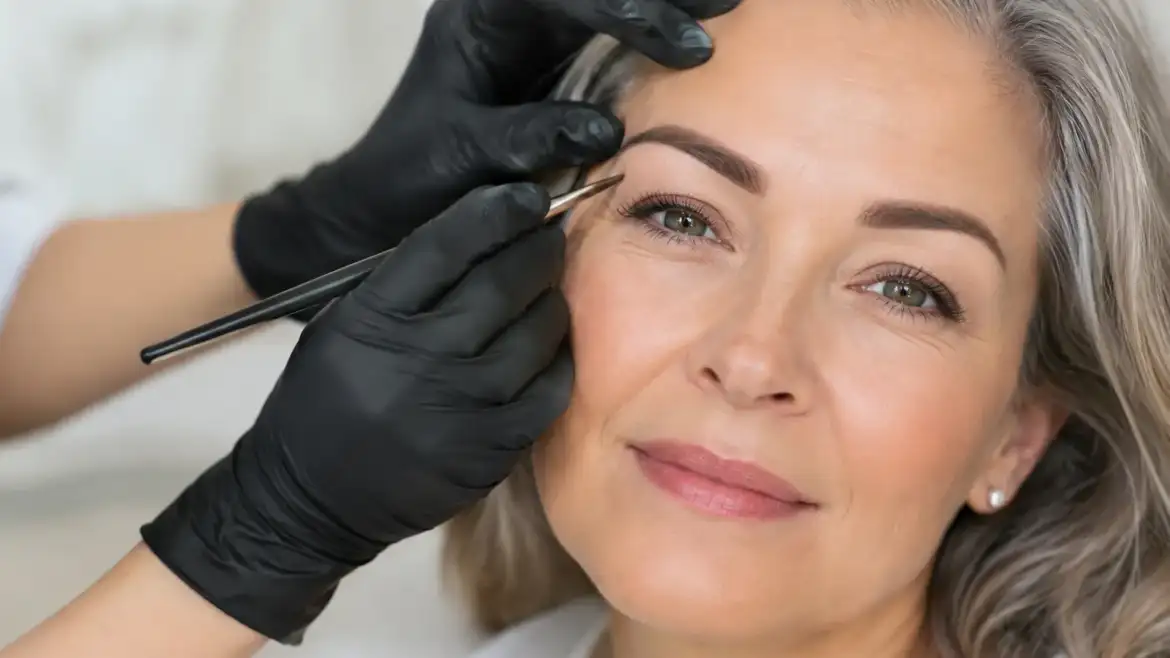
A mature skin ombre brow transformation is rarely about creating a bold new brow. More often, it is about restoring the gentle definition that can become softer over time, giving the face a more polished and balanced appearance without looking heavily tattooed. The most successful result still looks like you – simply rested, refined and more defined.
For mature clients, the artistry lies in knowing when to add colour, where to create structure and, just as importantly, what to leave soft. Skin texture, natural brow hair, facial proportions and healing characteristics all influence the treatment plan. A one-size-fits-all brow can look harsh at any age, but on mature skin it can be particularly unforgiving.
What ombré brows can do for mature skin
Ombré brows use fine layers of pigment to create a soft, shaded effect. Rather than placing crisp hair strokes throughout the entire brow, the artist builds a lighter front that gradually deepens through the body and tail. When thoughtfully designed, this creates the appearance of fullness and shape while retaining an airy, natural finish.
This approach is often well suited to mature skin because it does not rely on every individual line remaining sharply defined after healing. Skin that is delicate, textured or less firm may not hold very fine hairstroke work as predictably as firmer skin. A gentle powder-style finish can heal more evenly, provided the colour is layered conservatively and the shape respects the client’s natural features.
The transformation may be especially meaningful for clients whose brows have become sparse, uneven or difficult to see without a brow pencil. It can reduce the daily effort of creating symmetry while preserving a familiar, age-appropriate look. The aim is not to create a brow that is darker, larger or more dramatic than necessary. It is to create a brow that belongs on the face.
Why mature brow design needs a different approach
Mature brows deserve a considered design process. Facial features change over time, and a brow shape that suited someone years ago may not provide the same balance now. Brow placement, arch height and tail length must work with the face as it is today, not with a trend or a template.
A skilled artist begins with the natural brow framework. Existing hair growth is assessed, along with areas of asymmetry, brow bone structure and the way expressions affect the shape. Perfectly identical brows are not the goal because natural faces are not perfectly identical. Instead, the focus is visual harmony – brows that look balanced when the face is relaxed and expressive.
For many mature clients, a softer arch and a gently lifted tail can be more flattering than an overly high or sharply angled brow. An extended or heavily dropped tail may make the eye area appear less open, while a brow that is too thick or too dark can dominate delicate features. These choices are subtle, but they are where refined cosmetic tattooing makes its difference.
Colour should enhance, not announce itself
Pigment selection is equally important in a mature skin ombre brow transformation. The starting colour should complement natural hair colour, skin tone and the client’s usual level of definition. A deeper shade is not automatically better for sparse brows. In fact, beginning too dark can make the healed result feel more obvious than intended.
At ELKA Clinic, the preference is for soft, buildable colour that is reviewed as it heals. Cosmetic tattoo pigment initially appears stronger, then settles as the skin recovers. This is why the first appointment is approached with restraint. Additional refinement can be made at the perfecting session, while an overly saturated result is harder to soften.
The consultation sets the standard for the result
A reassuring treatment experience starts well before pigment is placed. During a consultation, the artist should discuss your brow history, daily routine, preferred finish and concerns about looking overdone. This is also the time to identify whether previous cosmetic tattoo work is present, as existing pigment can influence colour selection, shape options and the likelihood of achieving a particular result.
Clear photographs and an in-person assessment help establish what is realistic. Mature skin can heal beautifully, but pigment retention varies from person to person. Factors such as skin condition, lifestyle, previous tattooing and aftercare can affect how colour settles. Honest planning means allowing for these variables rather than promising an exact outcome before the skin has healed.
The brow mapping stage is particularly valuable. Before treatment begins, the proposed shape is drawn onto the skin and adjusted with the client’s input. This gives you time to see the intended placement, thickness and overall balance. A premium cosmetic tattoo treatment should never feel rushed. You should feel comfortable with the design before moving forward.
What happens during an ombré brow appointment
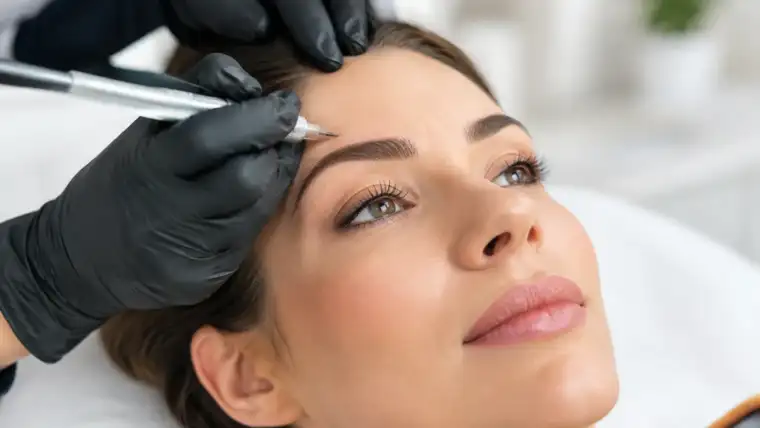
Once the shape and colour have been agreed upon, pigment is placed in controlled, gradual layers. The front of the brow is kept lighter, avoiding a dense block of colour at the centre of the face. Definition is then built through the middle and tail, where slightly more depth can support the brow shape.
The technique is tailored throughout the appointment. Some areas of skin may accept pigment differently from others, particularly where there is texture or less natural brow hair. An experienced artist adjusts pressure, density and layering rather than forcing a uniform effect across every part of the brow.
The brows will usually look more defined immediately after the appointment than they will once healed. This is expected. As the area settles, the colour softens and the finish becomes more integrated with the skin. A perfecting session is generally part of the process, allowing the healed colour and shape to be assessed before any careful additions are made.
Healing with patience and realistic expectations
Healing is not the moment to judge your final result. During the early stages, brows may appear darker or warmer than expected, then seem to soften significantly as the skin naturally renews. This temporary variation can feel unsettling, especially for first-time cosmetic tattoo clients, but it is a normal part of the process.
Your artist will provide individual aftercare instructions based on your treatment and skin. Following them carefully supports the best possible healed result. Avoid picking, rubbing or trying to correct uneven-looking areas during healing. The colour can appear to fade before it settles, which is one reason the perfecting appointment should only take place after appropriate healing time.
Long-term colour retention also differs between clients. Some people prefer a subtle refresh when their brows begin to lose definition, while others enjoy their result for longer before considering further refinement. The right timing is personal and should be based on how the brows look, your preferences and an assessment of the existing pigment.
When ombré brows may not be the only option
Ombré brows are not automatically the best choice for every mature client. If there is good natural brow density and only a few areas need support, a softer enhancement or a combination approach may be more appropriate. If previous cosmetic tattooing has faded unevenly, the priority may be colour correction and shape assessment before planning a new style.
The best technique is the one that suits your skin, natural hair pattern and desired healed appearance. A consultation should feel like an honest conversation, not a push towards a particular treatment. Sometimes the most elegant decision is to use less pigment, a lighter colour or a more restrained shape than you initially imagined.
A beautifully considered brow does not need to announce itself. For mature skin, the most rewarding transformation is often the quiet one: soft definition in the mirror, greater ease in the morning and the confidence of looking naturally well put together every day.