A softly flushed cheek can make the complexion appear fresh, balanced and quietly polished, even on minimal-makeup days. That is the appeal behind cheek blush tattooing: a semi-permanent wash of colour designed to mimic a natural, healthy-looking warmth rather than a clearly applied cosmetic product.
It is also a treatment that deserves thoughtful consideration. Unlike a defined brow or lip border, cheek colour sits across a broad, highly visible area of skin. The right result depends on restraint, careful colour selection, facial balance and an honest assessment of how the skin is likely to heal over time.
For clients who value refined, natural-looking enhancements, the question is not simply whether cheek blush tattooing looks beautiful when freshly completed. It is whether the pigment will settle softly, suit the complexion and continue to feel like the right choice after the initial excitement has passed.
What is cheek blush tattooing?
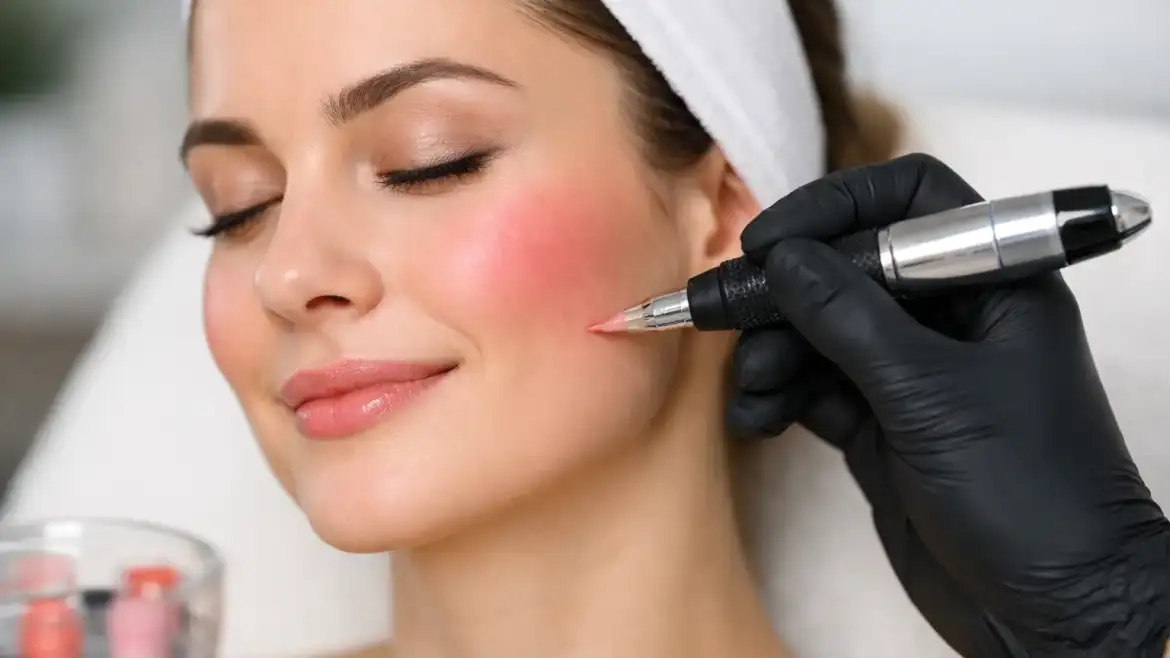
Cheek blush tattooing is a cosmetic tattoo technique that places diluted pigment into the upper cheek area to create the appearance of a gentle flush. Rather than producing the stronger finish of conventional blush, the aim is usually a sheer, diffused tint that appears as though it belongs naturally to the skin.
The treatment can be designed in warm peach, soft rose, muted berry or neutral pink tones, depending on the client’s natural colouring and the result they are hoping to achieve. Placement matters just as much as colour. A flush positioned too low, too wide or too close to the centre of the face can alter facial proportions rather than enhance them.
The most elegant approach is subtle. It should complement the person’s natural cheek structure, lip tone and overall complexion, without creating a noticeable block of colour. This is precision work, not a one-shade-fits-all service.
Why a soft result matters more on the cheeks
Cosmetic tattooing is often appreciated for simplifying a daily routine. Soft brows can restore structure, lip blush can bring back gentle definition, and a discreet eyeliner enhancement can make the eyes appear more awake. Cheek colour has a different role. It adds warmth and vitality, but it must remain believable across changing light, seasons and makeup preferences.
Cheeks also move constantly. Smiling, facial expression, skin texture and natural changes in the complexion all influence how pigment is perceived. Colour that appears beautifully placed in one moment may look stronger or sit differently when the face is animated.
This is why cheek tattooing calls for a particularly conservative design approach. A delicate veil of colour may offer a flattering result, while a stronger pigment deposit can feel harder to adapt to as personal style, skin tone or makeup habits change. The goal should be enhancement that is difficult to identify, not colour that announces itself.
The consultation should guide the treatment
A premium cosmetic tattoo experience begins well before pigment is placed. During a careful consultation, the artist should discuss the client’s desired finish, current skincare habits, usual sun exposure, complexion, facial shape and tolerance for visible colour during healing.
Cheek blush tattooing is not automatically suitable for every person or every skin type. Skin that is prone to uneven tone, frequent sensitivity, pronounced texture or unpredictable pigment retention may need a more cautious discussion. This does not mean a client cannot seek a fresh, healthy-looking appearance. It means the chosen approach should respect the skin rather than force a trend onto it.
The artist should also consider how the cheek colour relates to the rest of the face. A warm peach can look luminous on one complexion and overly orange on another. A cool pink may appear fresh and refined for some clients but can settle in a way that feels too obvious for others. Looking at undertone, existing natural flush and the colours a client feels most comfortable wearing gives the design a far better foundation.
At ELKA Clinic, the philosophy behind cosmetic tattooing is centred on soft, balanced and naturally flattering healed results. That level of individual planning is especially valuable for a treatment where subtlety is the entire point.
Understanding healing and colour changes
Fresh cosmetic tattoo colour does not represent the final healed result. In the days after treatment, the area may appear deeper or warmer than expected, before the skin settles and the pigment softens. This healing phase requires patience and realistic expectations.
With cheek pigment, the change can feel particularly noticeable because the area is so visible and because a blush tone is intended to be delicate. Early colour intensity, mild surface dryness and temporary unevenness can be part of the healing process. Following the aftercare guidance provided by the treating artist gives the skin the best opportunity to settle evenly.
Healed retention varies from person to person. Skin type, lifestyle, pigment selection, natural skin renewal and exposure to the elements can all influence how the colour fades. Cosmetic tattooing is semi-permanent, not fixed forever, and a thoughtful client understands that maintenance may be needed if they wish to preserve the effect over time.
The same point applies to colour choice. It is wise to begin with a conservative tone and assess the healed result before considering any additional intensity. Building colour gradually is usually more refined than beginning too boldly.
Is cheek blush tattooing a practical choice?
For the right client, a soft cheek tint may suit a low-maintenance beauty routine. It can be appealing to someone who prefers to look polished without relying on a full face of makeup, or to a mature client who wants to restore the appearance of gentle warmth without a heavily made-up finish.
However, practicality depends on lifestyle and personal preference. If you enjoy changing your blush placement or experimenting with seasonal colours, a semi-permanent cheek tint may feel limiting. If your ideal look changes from a barely-there peach to a dramatic berry flush from one month to the next, traditional makeup offers greater flexibility.
It is also worth considering how often your complexion changes through the year. A shade chosen during one season should still feel harmonious when your skin is lighter, warmer or more tanned at another time. The safest aesthetic choice is usually a tone that supports the natural complexion rather than attempts to transform it.
For many people, the best cosmetic tattoo result is one that creates a polished base while leaving room for personal expression. A whisper of enhancement can work alongside everyday skincare and optional makeup, rather than replacing every part of a beauty routine.
Questions to ask before you book
Before choosing cheek blush tattooing, ask to see healed work, not only freshly completed treatment images. Fresh pigment can look smooth and vibrant immediately after an appointment, but healed results reveal how an artist handles diffusion, colour restraint and long-term softness.
Ask how the proposed shade and placement will be selected for your facial features. A personalised answer should take account of your complexion, cheek structure and preferred level of visibility. It is also reasonable to ask about the expected healing stages, aftercare requirements and whether a lighter initial approach is appropriate for your goals.
Most importantly, give yourself permission to decide that another enhancement may suit you better. Cosmetic tattooing should make life feel easier and more confident. It should never create pressure to follow a look that does not reflect your own style.
A beautiful cheek flush is less about adding more colour and more about choosing the right amount. When treatment planning is careful, pigment is selected with restraint and the healed result is prioritised, the effect can feel soft, harmonious and entirely your own.