Oily skin can make beautifully fresh cosmetic brows look different once they have healed. Pigment may soften sooner, individual hair strokes can blur more readily, and the final result may need a more considered approach than it would on dry or balanced skin. Finding the best brow tattoo for oily skin is therefore less about choosing the latest technique and more about selecting a style that works with your skin, lifestyle and desired healed result.
For many oily-skinned clients, a soft powder effect – often created with ombré brows or a carefully designed combination brow – offers greater visual consistency over time than a brow made entirely from crisp hair strokes. That does not mean nano brows are automatically off the table. It means an experienced artist should assess your skin closely before recommending a technique.
Why oily skin changes cosmetic tattoo results
Sebum is the skin’s natural oil. When there is more of it through the brow area, it can affect how clearly pigment settles and how sharply fine strokes remain visible after healing. This is especially relevant with techniques designed to mimic individual hairs, where the goal is delicate, precise definition.
On oily skin, very fine strokes may heal softer, expand slightly or lose some of their separation. A result that looks light and beautifully detailed immediately after treatment can appear less distinct once fully healed. This is not a sign that something has gone wrong. It is simply one of the factors that should shape the treatment plan from the beginning.
Pigment retention also varies from person to person. Skin type is only one consideration. Sun exposure, skincare habits, regular exercise, previous cosmetic tattooing and individual healing response can all influence how a brow tattoo settles and fades. No reputable artist should promise identical retention or a particular result for every client.
Best brow tattoo for oily skin: the techniques to consider
The most suitable technique depends on whether you want a subtle enhancement, a fuller brow appearance, or a balance between hair-like detail and soft shading. At ELKA Clinic, this decision is guided by the condition of the skin, your natural brow hair, facial structure and the look you would like to maintain after healing.
Ombré brows for soft, lasting definition
Ombré brows use gentle pixelated shading, usually lighter at the front and gradually more defined through the arch and tail. The effect can be very soft and natural, not heavy or overly made-up. When designed with restraint, ombré brows create the appearance of a fuller, more even brow rather than a solid block of colour.
For oily skin, this technique is often a strong choice because the shaded result does not rely on the sharpness of individual hair strokes. As the brows heal, the diffusion of pigment can look intentional and polished. Ombré brows can be particularly flattering for clients who fill their brows lightly most mornings, have sparse areas, or want dependable definition without a harsh outline.
The trade-off is aesthetic preference. If your ideal brow is entirely hair-like with no powdery softness at all, ombré may not reflect your vision. However, an experienced artist can keep the density light and the front airy, creating a finish that remains refined and age-appropriate.
Combination brows for dimension and balance
Combination brows blend hair-like strokes with soft shading. Usually, the strokes are placed where they will have the best chance of healing clearly, while shading adds depth through areas that need more support. This can create a natural, dimensional brow with greater stability than strokes alone.
For clients with moderately oily skin, combination brows can be an excellent middle ground. The shading helps preserve the overall brow shape if the fine strokes soften over time, while the carefully placed strokes keep the result from appearing too uniform.
This style needs thoughtful restraint. Adding more strokes is not always the answer, particularly if the skin is very oily or textured. A tailored combination brow may use fewer, strategically positioned strokes and rely on delicate shading to do the rest of the work.
Nano brows: possible, but suitability matters
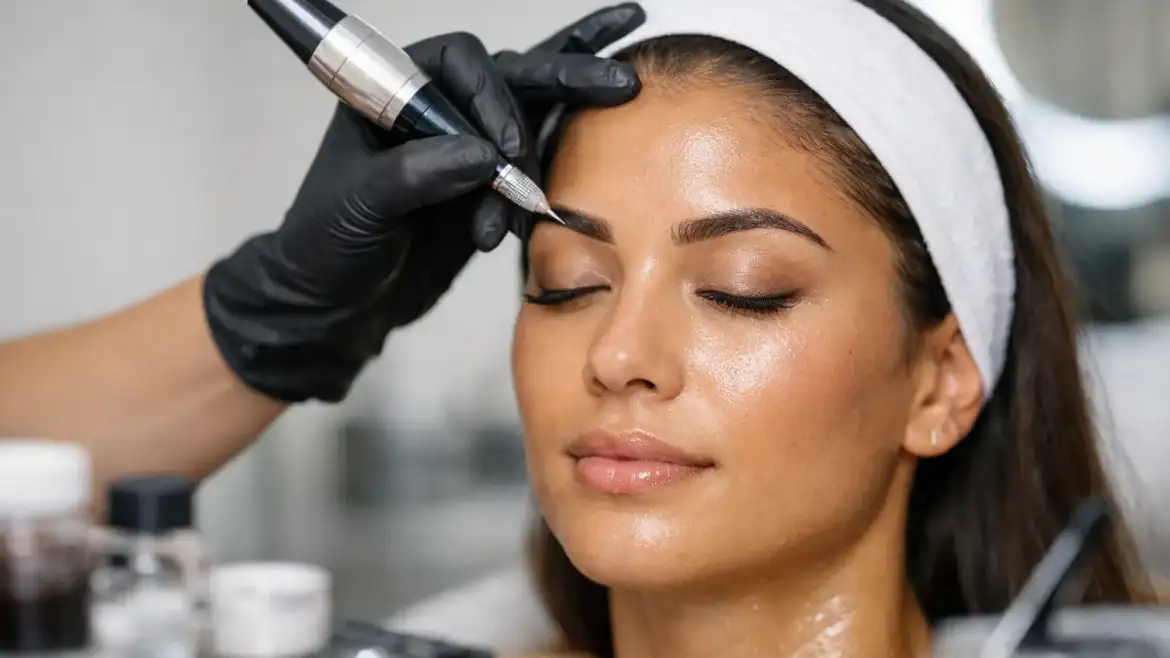
Nano brows are created using a cosmetic tattoo machine to implant fine, hair-like strokes. They can give a beautifully realistic effect when the skin and natural brow pattern are suitable. Compared with traditional microblading, nano brows can offer more flexibility in technique and can be a gentler option for many clients.
However, oily skin remains an important consideration. On very oily skin, even machine-created strokes may heal less crisp than intended. If your priority is fine hair detail, your artist may recommend a conservative design, explain that healed strokes will look softer, or suggest incorporating subtle shading for a more reliable overall result.
Nano brows are often best for oily-skinned clients who have a reasonable amount of natural brow hair, are comfortable with a delicate enhancement rather than dense reconstruction, and understand that softness is part of the healed aesthetic.
Why microblading may be less predictable
Microblading creates strokes manually with a handheld blade. On some skin types, it can produce a lovely hair-stroke effect. Yet oily skin can make the healed outcome more unpredictable, especially where the skin is enlarged in pore appearance, thickened or highly active through the T-zone.
This does not mean every person with oily skin is unsuitable for microblading. It does mean a consultation should be honest about the possibility of softer, less defined healed strokes and the potential need for a different technique to achieve a more elegant long-term result. Choosing a method based on what is likely to heal well is always wiser than choosing solely from a photograph taken immediately after treatment.
Your brow shape matters as much as the technique
The best technique cannot compensate for a poorly considered shape. Cosmetic tattooing should enhance your natural facial harmony, not impose a trend-driven brow that may feel too strong over time.
A personalised design considers the placement of your natural brow, facial balance, bone structure, brow hair direction and everyday style. For mature clients, this often means avoiding overly dark fronts, heavy arches or a sharp tail that can make the face appear stern. For younger clients, it may mean adding fullness while keeping enough softness that the brows still look believable without makeup.
With oily skin, a slightly softer and more diffused design is often the more sophisticated choice. It gives the pigment room to heal naturally while still providing the definition you want.
How to prepare for a more reliable healed result
Your consultation is the right place to discuss products you use around the brow area, previous tattoo work, your usual level of oiliness and how you prefer to wear your brows. Clear information helps your artist plan placement, colour and density appropriately.
Before your appointment, follow the preparation guidance provided by your clinic. After treatment, careful aftercare matters because the brow area needs time to settle without unnecessary friction, moisture or product interference. Avoid picking, rubbing or trying to speed up the flaking stage. Letting the skin heal naturally supports the most even result possible.
It is also helpful to plan for the colour to appear stronger initially. Cosmetic brows soften considerably through the healing process, and the true outcome should be assessed only once the skin has settled. A perfect-looking brow on treatment day is not the goal. A soft, balanced healed brow is.
Questions worth asking at your consultation
A quality consultation should feel considered rather than rushed. Ask which technique is most suitable for your skin type, whether individual hair strokes are likely to remain defined, and how the artist would adapt the design if your skin is particularly oily. You can also ask to see healed work on clients with similar skin characteristics, not only freshly completed brows.
It is reasonable to ask about the planned colour, the expected level of softness after healing and whether a touch-up appointment will be needed to refine the result. Cosmetic tattooing is a process, not a one-size-fits-all procedure. The most natural results come from allowing time for assessment, healing and thoughtful adjustment.
The right brow tattoo for oily skin should never be selected from a trend alone. When the technique respects your skin and the design respects your face, the result can look quietly polished each day – defined enough to make a difference, yet soft enough to still feel entirely like you.