
Cosmetic tattoo knowledge · Subiaco, Perth
Cosmetic Tattoo for Tan & Olive Skin
Understanding undertones, pigment selection and healed colour—across brows, lips and eyeliner.
Tan and olive skin can suit cosmetic tattooing. The useful question is how your own colouring, skin history and treatment area shape a realistic plan.
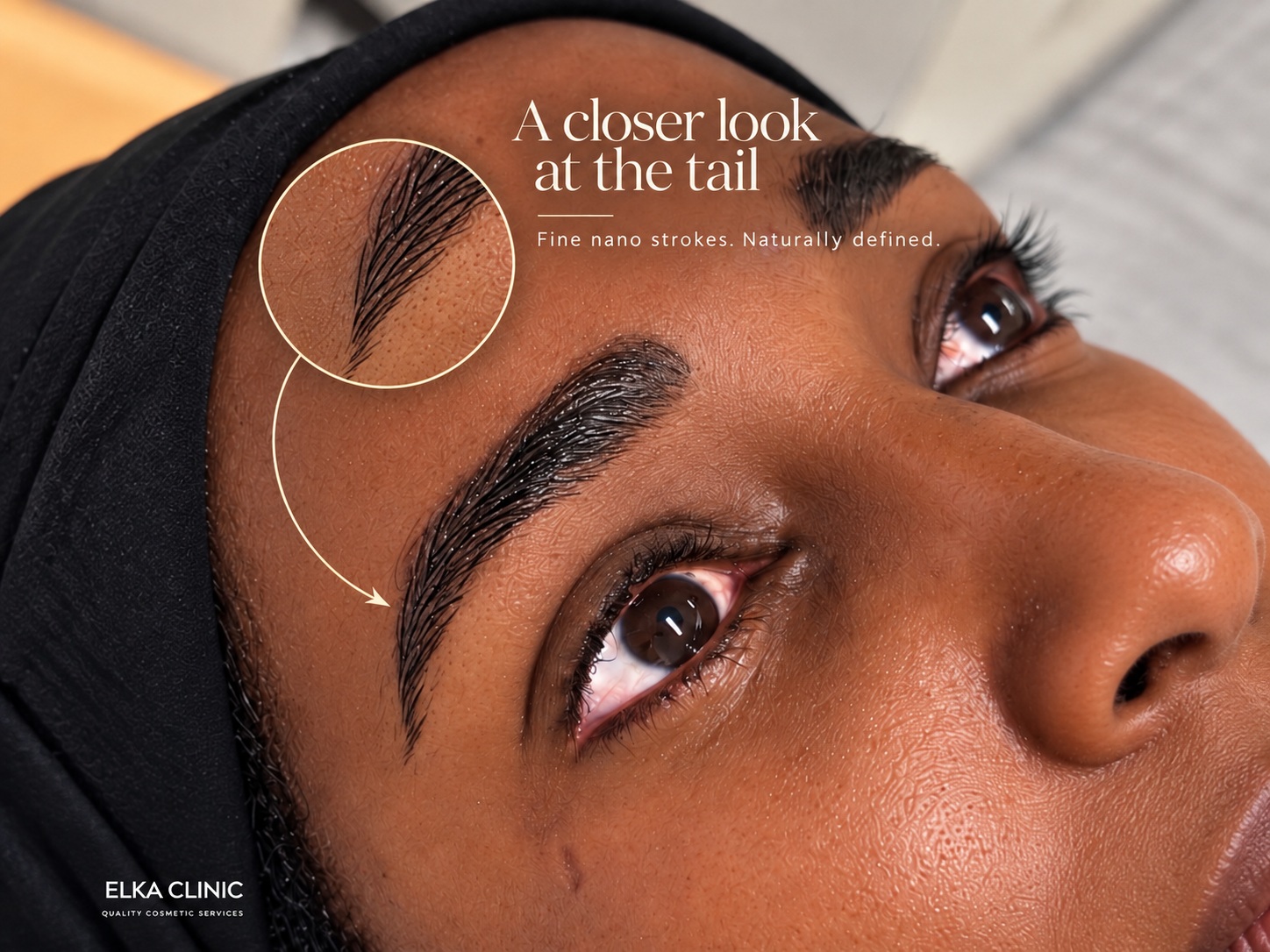
Why your complexion is a starting point, not a formula
“Tan” describes a range of complexions; “olive” is often used to describe an undertone. Neither tells an artist everything about your skin, and neither establishes your ethnicity, oiliness, sensitivity or healing response.
This guide concerns naturally tan and olive complexions. A recent sun tan, sunburn or self-tanner is a separate issue to discuss before treatment. Pigment planning should take your usual colouring into account rather than simply match a temporary change.
At ELKA CLINIC, the aim is to assess the treatment area individually. Brows, lips and eyelids have different starting points, even on the same person.
How undertone influences pigment selection
The colour you see after healing is influenced by the pigment and the skin through which it is seen. A colour shown in a bottle, on a surface swatch or on another client is not a promise of your healed result. The European Academy of Dermatology and Venereology notes that tattoo colours can appear differently according to skin tone.
Undertone assessment helps the artist consider how a proposed shade may read against your complexion: how warm, cool, muted or contrasting the result could look. For brows, existing hair colour also matters; for lips, the natural colour within the lip matters directly.
There is no single “olive skin pigment”. An olive complexion does not automatically require extra warmth, black pigment or a darker brow. Any colour adjustment needs a reason based on the individual area, existing tattoo and intended result—not a fixed recipe attached to a skin-tone label.
Three questions worth asking
- What are you seeing in my natural colouring that influences this pigment choice?
- How could existing colour or previous tattoo affect the result?
- What can we reasonably assess only after the first treatment has healed?
Brow technique: colour and texture need separate decisions
Nano, powder and combination brows are all offered at ELKA CLINIC. Tan or olive skin alone does not make one technique the right choice. The artist also assesses existing hair, skin condition and texture, previous pigment and how defined you want the brows to look.
Nano brows
Hair-like strokes may suit a wish for separated detail. The assessment considers whether that detail is realistic against the skin and any remaining tattoo—not simply whether the complexion is light or deep.
Powder brows
Shading gives a softly filled effect. Colour and density can be discussed independently: a powder finish does not automatically mean very dark brows, and tan skin does not automatically need heavier saturation.
Combination brows
Strokes and shading are used together. The useful question is where each adds definition without creating more density than you want, particularly if there is already pigment in the skin.
For the treatment process and broader suitability information, see Nano Brows and our eyebrow tattoo FAQs.
Lip blush: assess the lips, not just the face
A tan or olive complexion does not automatically mean darker lips or a need for neutralisation. The distribution and depth of natural lip colour, any cooler-looking areas and previous lip tattoo need their own assessment.
Lip neutralisation is a cosmetic colour-planning approach intended to balance the appearance of certain existing tones. It adds pigment; it does not remove natural melanin or treat a medical cause of pigmentation. Not every lip needs a corrective stage, and a specific pink or nude result cannot be promised from a photograph.
Where neutralisation is appropriate, the initial pigment choice may look warmer than the final effect being discussed. A staged plan may be considered, with further decisions based on the healed result. Ask what change is realistic for your starting lips and how any additional appointments would be priced.
Our Lip Blush page explains the service. The existing lip colour correction and neutralisation guide explores this topic in more detail.
Eyeliner: contrast matters, but anatomy leads the design
Skin tone is relevant to how a line contrasts with the eyelid. It does not determine which eyeliner shape is suitable or mean that the darkest, thickest line will look best.
Lid space, movement, lash density, skin condition and any existing eyeliner tattoo remain central to planning. An artist should assess the eyes open and closed and discuss the desired level of definition rather than transfer a brow or lip colour rule to the eye area.
See Eyeliner Tattoo for styles and suitability, and the eyeliner FAQs for treatment-specific questions.
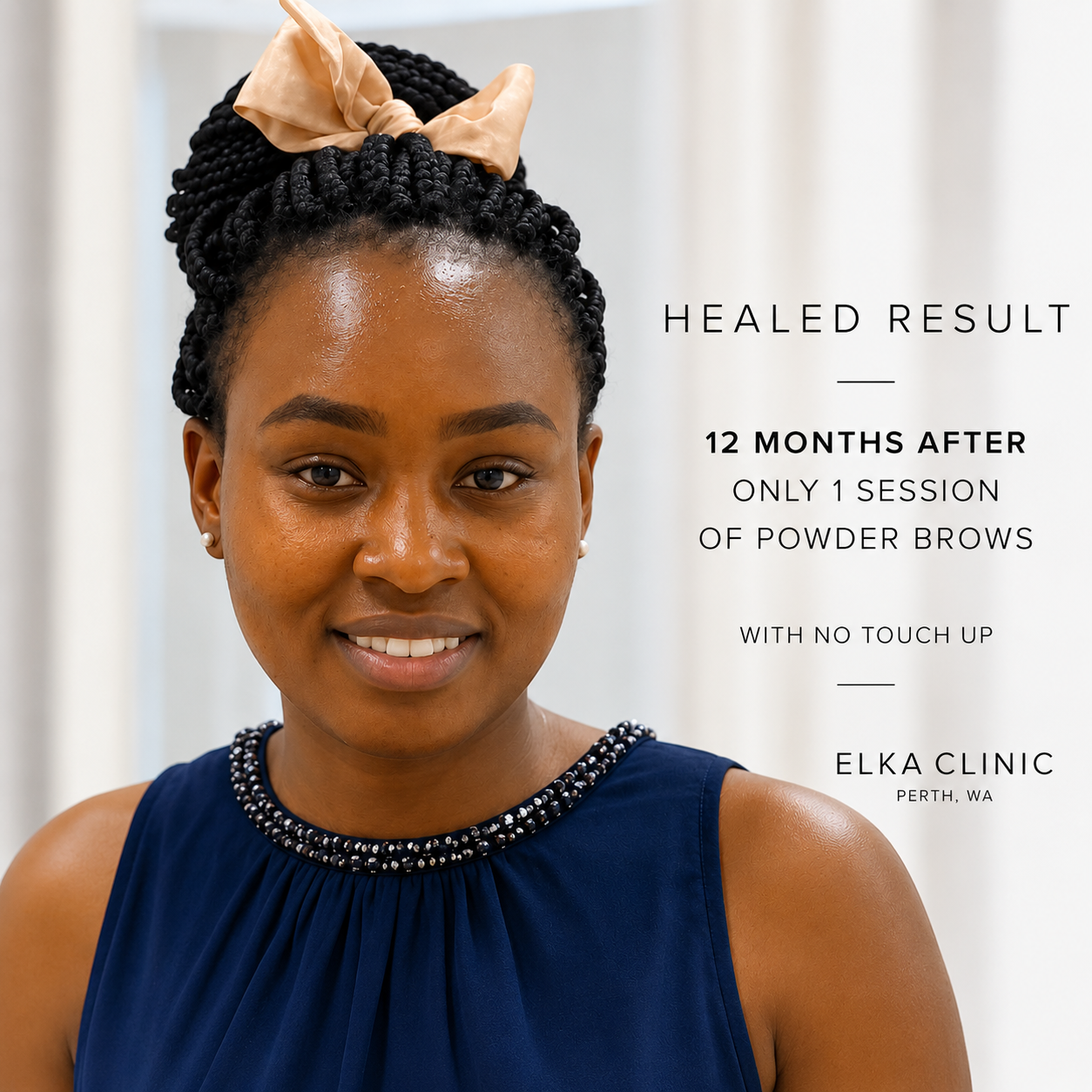
Fresh colour and healed colour tell different stories
Fresh work can look stronger or brighter than the settled result. Temporary redness or swelling and changes at the skin surface during healing can also affect what you see. The first-day photograph is therefore a record of that stage, not a reliable colour match for the final outcome.
There is no fixed fading percentage or healing timetable that can be assigned to everyone with tan or olive skin. Review colour when the area has healed, using comparable lighting, and assess any remaining pigment before deciding whether more is needed. Colour can also change over time; complete disappearance by a particular date should not be assumed.
Explore our genuine client results gallery, including its Tan Skin brow filter. Ask for relevant healed examples where available, rather than assuming a similar-looking complexion predicts your result.
Pigmentation changes and your skin history
Some people notice darker marks after skin irritation or injury, known as post-inflammatory hyperpigmentation. If this has happened to you before, tell your artist so it can be considered when assessing your skin and planning treatment. Tan or olive colouring alone does not tell us how your skin will respond.
Previous pigmentation changes, reactions and healing experiences are part of your individual assessment. If you notice new, changing or unexplained pigmentation, seek advice from an appropriate healthcare professional before considering cosmetic tattooing.
For broader treatment risks and precautions, visit our Standards & Safety page, and follow the aftercare guidance for your treatment.
What an individual assessment should resolve
- Starting colour: the natural tone in the treatment area, surrounding complexion and any existing tattoo.
- Skin history: previous healing, pigmentation changes, scars, reactions, medications and recent treatments.
- Technique and intensity: the effect you want and what can reasonably be achieved without assuming more pigment is better.
- Limits and review: what remains uncertain, when to assess the healed result and whether postponement or medical advice is appropriate.
Ellie is ELKA CLINIC’s founder and lead cosmetic tattoo practitioner and continues to perform treatments. Meet the team. A separate consultation is optional; assessment and design discussion can take place within the treatment appointment. Contact us first if you have previous work or concerns you would like to discuss.
Still have questions?
Use our treatment FAQ hub for detailed answers, or contact ELKA CLINIC about your own colouring, previous treatment and desired result.
View current pricing & appointmentsFurther reading
These sources provide general information on tattoo colour and skin risks. They do not validate a specific ELKA pigment formula or predict an individual cosmetic tattoo result.