A natural-looking lip tattoo begins with an honest assessment of the lip’s existing tone, not a one-size-fits-all shade choice. This guide to lip neutralisation treatment explains how carefully selected pigments can soften the appearance of cool, dark or uneven tones before a balanced lip colour is introduced. The goal is never to create a bright, artificial finish. It is to achieve a healed result that looks harmonious with your complexion and still feels like you.
What is lip neutralisation treatment?
Lip neutralisation is a specialised form of cosmetic tattooing designed for lips with stronger cool, purple, blue-grey or deeper brown undertones. Rather than placing a preferred lip-blush colour straight over these tones, the artist first uses colour theory to visually balance them.
Depending on the starting tone, this may involve warm corrective pigments with soft peach, orange or coral influence. These pigments are not chosen to leave the lips looking orange. They are selected because warm tones can help counterbalance coolness as the colour heals within the skin.
The final objective is a more even, healthy-looking lip tone with soft definition. Some clients are seeking a subtle correction only, while others want to work towards a natural lip-blush result after neutralisation. The right plan depends on the lips, not on a trend or a single appointment result.
Why natural correction requires careful colour planning
Lip skin is delicate, translucent and highly individual. Its appearance is influenced by natural pigment, undertones, previous cosmetic tattooing, lifestyle and the way each person heals. This is why two clients with similarly dark-looking lips may need completely different colour choices.
A skilled artist assesses whether the dominant undertone appears cool, warm or neutral, as well as where variation occurs across the lip. The border may look deeper than the centre, for example, or the lower lip may carry a different tone to the upper lip. Colour planning needs to respect these details rather than trying to cover them with a single opaque shade.
At ELKA Clinic, treatment design is centred on healed results. Fresh pigment can appear stronger, warmer or more defined than the final outcome, so the artist must work with patience and restraint. A soft, well-considered approach gives the lips room to heal gradually and naturally.
Neutralisation is not the same as a standard lip blush
A standard lip blush treatment is often suited to lips with relatively even, light-to-medium natural colour. The focus may be on enhancing the existing shade, restoring definition or creating a polished wash of colour.
Neutralisation has a different starting point. It is a correction-focused process that aims to balance underlying tone first. For clients with more pigment in the lips, attempting to place a nude, pink or rosy shade directly over cool darkness can lead to an unpredictable healed colour. A neutralisation plan provides a more considered foundation.
That does not mean every client will require several stages, nor does it mean a particular result can be promised. Some lips respond beautifully after one session, while others need gradual layering over additional appointments. The treatment is best viewed as a tailored colour journey rather than an instant colour change.
Who may be suitable for lip neutralisation?
Lip neutralisation may suit women and men who feel their lips appear darker, cooler or less even than they would like. It can be especially appealing for clients who want subtle colour balance without the look of daily lipstick, and for those who prefer a refined enhancement that remains appropriate from workday to weekend.
Suitability is determined in consultation. An experienced artist will look at natural lip tone, skin tone, lip texture, previous cosmetic tattoo work and the desired outcome. They will also discuss whether your goal is to keep the lips understated or eventually introduce a gentle blush tone once the base has balanced.
Realistic expectations matter. Cosmetic tattoo pigment is placed into the skin to enhance the appearance of colour, but it cannot make every lip tone behave identically or create an opaque lipstick finish. Mature lips, lips with significant tonal variation and previously tattooed lips may require a particularly measured approach. A transparent consultation allows enough time to decide whether the treatment is appropriate and what pathway is likely to be most flattering.
What happens during the appointment?
The process begins long before pigment is applied. Your artist will discuss your preferred level of definition, the tones you feel comfortable wearing and the kind of healed result that suits your features. For many clients, the most beautiful result is one that makes the face appear fresher without inviting questions about what has changed.
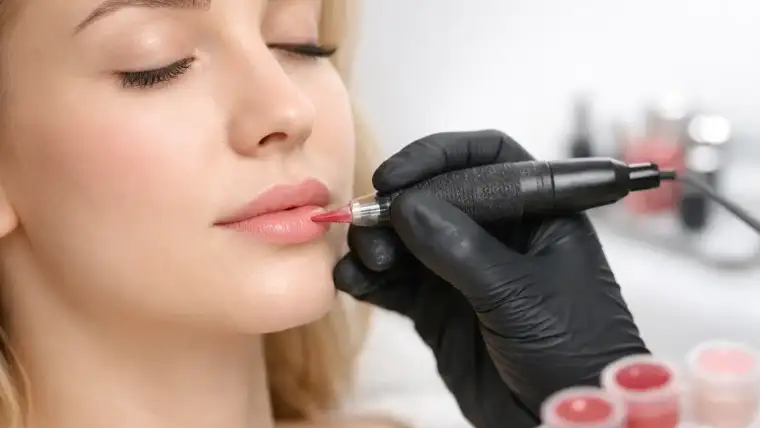
The lip shape is assessed with care. Cosmetic tattooing should follow and refine the natural lip line rather than create a harsh outline. Once the treatment plan and colour direction are agreed, the pigment is applied in fine, controlled layers. This measured application helps build soft coverage while respecting the lip’s natural texture and movement.
Appointment experiences vary, but comfort, hygiene and clear communication should always be priorities. You should feel able to ask questions throughout the treatment and understand why a particular colour strategy has been recommended. Premium work is not simply about the appointment itself. It is about the judgement behind every decision.
Healing: what the colour journey can look like
Healing is where patience becomes essential. Immediately after treatment, the lips may look more vivid, warm or saturated than expected. This early appearance is temporary and should not be treated as the final colour.
As the lips recover, the pigment commonly softens and can appear lighter or less visible for a period before the settled tone develops. This can feel surprising if it is your first cosmetic lip tattoo, particularly after a neutralisation session where the fresh corrective colour may look quite warm. The healed result takes time to reveal itself.
Every client heals differently, and pigment retention can vary across areas of the lips. A follow-up appointment may be recommended to refine any unevenness, add further balance or continue the colour-building process. This is not a sign that something has gone wrong. For many neutralisation clients, careful layering is simply the most natural-looking way forward.
Aftercare supports the quality of the healed result
Your artist will provide personalised aftercare instructions based on your treatment and skin response. Following these instructions carefully is part of protecting the work during its most delicate stage. Keep the lip area clean as directed, avoid picking or disturbing any natural flaking, and allow the healing process to unfold without trying to rush it.
It is also wise to plan your appointment around occasions where you may prefer not to have freshly treated lips. The initial colour and healing stages are temporary, but giving yourself a little space can make the experience more comfortable.
Choosing an artist for lip neutralisation in Perth
This treatment requires more than selecting a pretty pigment. Look for an artist with a strong understanding of healed cosmetic tattoo results, colour correction and natural facial harmony. Before-and-after images should show healed work where possible, with results that appear soft and believable rather than heavily outlined.
A quality consultation should feel unhurried and honest. You should leave with clarity about what the treatment can reasonably achieve, whether more than one session may be suitable, and why your plan has been designed specifically for you. Be cautious of anyone who suggests every dark lip can be transformed into the same pale nude shade in a single visit.
For clients who value understated beauty, the best lip neutralisation is often the kind that does not look like a dramatic cosmetic change. It simply brings the lips into better balance with the rest of the face, so you can feel polished, comfortable and confidently yourself.