
Benign Skin Lesion Removal Perth
Remove selected benign skin lesions using Plasma Pen with precise, non-surgical treatment at ELKA CLINIC Perth.
We treat selected benign lesions only — skin tags, milia and certain small superficial growths and pigmented spots that have already been established as harmless. Each lesion is assessed individually, and anything suspicious, changing, or that cannot be identified with confidence is referred for medical assessment before cosmetic treatment is considered.
ELKA CLINIC does not diagnose skin cancer. If you are unsure about a lesion, see your GP or a dermatologist first. A mole is removed only once a doctor has assessed it and confirmed it is benign. Afterpay is available at ELKA CLINIC. Eligibility and approval are determined by Afterpay.
Why choose ELKA CLINIC for Plasma Pen lesion removal? Treatments are performed by experienced practitioners using professional PHI-ION plasma technology in a dedicated cosmetic clinic. Every lesion is assessed individually, and we only treat cosmetic concerns that are suitable for Plasma Pen treatment. If there is any uncertainty about a lesion, we will recommend assessment by your GP or dermatologist before proceeding.
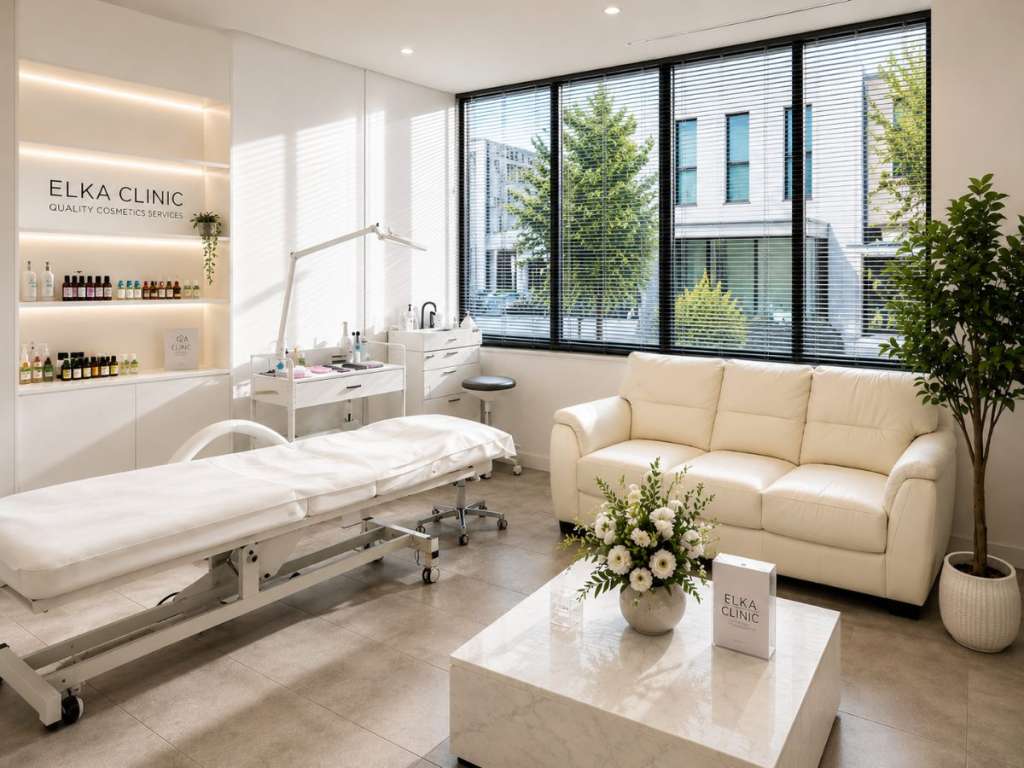
What benign skin lesions are, and why people ask about removal
Benign skin lesion removal at ELKA CLINIC treats selected lesions that have already been established as harmless — most often skin tags, milia and some superficial pigmented spots — using a PHI-ION Plasma Pen at our Subiaco clinic in Perth. Treatment is non-surgical, each lesion is assessed individually, and anything suspicious, changing or unexplained is referred to a GP or dermatologist rather than treated.
A small crust forms over each treated point within hours and separates on its own within about four to ten days, depending on lesion size, depth and location, with the area continuing to settle for four to six weeks. Redness after the crust has separated is expected rather than a complication.
A benign skin lesion is a growth or a patch of pigment that is not cancerous. Most are the result of friction, blocked keratin, ageing skin or accumulated sun exposure, and most are harmless if left alone.
Skin tags, milia and small sun-related spots are the ones we are asked about most. They tend to appear where skin rubs against skin or clothing, around the eyes, on the neck, and on areas that have had years of Perth sun. They are usually painless. They are also, for many people, the thing they notice first in a photograph.
People ask about removal for straightforward reasons. A skin tag catches on a collar or a necklace. Milia sit under concealer and stay visible. A cluster of small spots makes an otherwise even complexion look patchy. None of that is a medical problem, and none of it needs to be treated — which is exactly why it belongs in the cosmetic category rather than the medical one.
Cosmetic concern or medical concern
The distinction matters more than anything else on this page. A cosmetic concern is a lesion that has already been established as benign and is being removed because of how it looks or feels. A medical concern is a lesion whose nature is not settled — something new, something changing, something that bleeds without being knocked, something with an irregular border or uneven colour, or something you simply cannot account for.
Cosmetic clinics are not the right place for the second group. ELKA CLINIC does not diagnose skin cancer and does not screen moles. Where there is any doubt about a lesion, the honest answer is a referral, not a treatment, and we would rather say so at the start than after your appointment has begun.
Why assessment comes first
Assessment is not a formality. Looking at a lesion in good light tells us whether it is likely to respond, whether the surrounding skin can be worked on safely, how the area is likely to heal, and whether pigmentation is likely to darken afterwards. It also tells us when to say no. Some lesions are better suited to microneedling, some to nothing at all, and some to a doctor.
Plasma Pen treatments at ELKA CLINIC are performed by experienced practitioners trained in advanced plasma fibroblast procedures. You can read more about the ELKA CLINIC team. This page was last reviewed by the clinic in August 2026.
What We Can Treat
Selected benign lesions, assessed one at a time. Nothing on this list is treated automatically — suitability is decided for the individual lesion, on the individual person, on the day.
Skin tags
Soft, harmless growths that form where skin folds or rubs, commonly on the neck, eyelids, underarms and under the bra line. Usually straightforward to treat when they are small and clearly benign. Known clinically as acrochordons.
Milia
Tiny firm white bumps caused by keratin trapped beneath the surface, most often around the eyes and on the cheeks. They do not respond to squeezing and need the surface opened precisely.
Selected benign skin lesions
Other superficial lesions that have been established as benign and sit in a position where controlled treatment is sensible. Each one is judged on depth, size and location.
Small benign skin growths
Small raised growths that are cosmetically bothersome rather than medically significant. Larger or deeper growths are generally referred rather than treated here.
Selected sun spots
Flat, sun-related marks on the face, hands or décolletage that have been assessed as benign. Not every sun spot is suitable, and pigment can respond unpredictably. Sometimes called solar lentigines.
Selected age spots
Long-standing pigmented marks associated with cumulative sun exposure and skin ageing, where the border is regular and the appearance is stable.
Selected pigmented lesions
Superficial pigmented marks with a settled, unchanging appearance. Anything with irregular colour, an uneven border or a history of change is referred for medical assessment instead.
Suitability is assessed individually. Two people can present with what looks like the same lesion and receive different advice, because skin type, healing history, medication, sun exposure and the position of the lesion all change the answer. Where a lesion is better suited to another treatment — or to no treatment — we will say so.
Ideal candidates
As a short guide, treatment here is usually appropriate for adults with:
- Skin tags on the neck, underarms, eyelids, chest or body, including small clusters.
- Milia around the eyes or on the cheeks that have not settled with a change of skincare.
- Selected sun spots and age spots with a settled, unchanging appearance.
- Flat, superficial pigmented marks rather than raised, firm or deep lesions.
- Benign lesions on the neck, where collars and jewellery cause ongoing friction.
- Benign lesions near the eyelid margin, where precise and conservative treatment matters.
- A lesion a GP or dermatologist has already assessed and confirmed as benign.
- A preference for a specific mark to be addressed rather than a whole-face treatment.
Other specific lesion types, including sebaceous hyperplasia and xanthelasma, are considered on assessment rather than assumed to be treatable. If you are not certain which group your concern falls into, a consultation is the quickest way to find out.
What We Do Not Treat
Some lesions are outside the scope of a cosmetic clinic. Treating them would remove the very thing a doctor needs to look at, so we do not treat them — we refer them.
- Suspicious lesions. Anything that looks unusual, sits oddly against the surrounding skin, or does not fit a recognisable benign pattern.
- Changing moles. Any mole that has grown or changed rapidly, altered in shape or colour, developed an uneven border, become raised, started to itch or bleed, or simply looks different from how you remember it.
- Possible skin cancers. Lesions with features that could indicate skin cancer, including melanoma: non-healing spots, scaly or crusted patches that keep returning, and pigmented lesions with mixed colours.
- Unexplained pigmented lesions. New pigmentation that has appeared without an obvious cause, or pigmentation you cannot account for at all.
- Lesions you have been told to monitor. If a GP, dermatologist or skin check clinic has asked to keep an eye on something, it stays under their care.
- Infected or inflamed lesions. Anything weeping, painful, or surrounded by spreading redness needs to settle, or be treated medically, before cosmetic treatment is considered.
- Sebaceous and epidermoid cysts. These sit within or beneath the skin and have a wall that has to be removed in full, which is a minor surgical procedure rather than a surface treatment.
If you are not sure whether a spot needs medical attention, Cancer Council Australia and healthdirect both set out what to look for in a changing lesion. Neither replaces an in-person examination by your GP or a dermatologist.
Why we take this position
Plasma Pen removes tissue. Once a lesion has been treated, it can no longer be examined or biopsied, and its history is gone. If that lesion needed a diagnosis, removing it cosmetically delays the diagnosis rather than providing one. That is the whole reason for the boundary.
None of this is meant to discourage you from asking. Most enquiries we receive are about ordinary skin tags and milia, and most go ahead without any difficulty. Being told which of your concerns can be treated here, and which one warrants a doctor first, is a useful outcome in itself.
What happens if we cannot treat a lesion
We will tell you plainly at your appointment, explain what we have observed and why we are not comfortable treating it, and recommend that you see your GP, a dermatologist or a skin cancer clinic for assessment. If other lesions in the same area are clearly benign, those can often still be treated on the day.
If a lesion is later cleared as benign by a doctor, you are welcome to come back and have it treated cosmetically. Bringing that written advice with you makes the appointment simpler.
Not sure which category yours falls into?
That is a normal position to be in, and it is not something to work out on your own from photographs on the internet. Book a consultation and we will look at it in good light, or see your GP first if you would rather start there.
How Plasma Pen Works
Plasma Pen works without a blade and without cutting into the skin. A fine tip is held just above the surface, and a small arc of energy passes across the gap to treat a precise point of tissue.
A small plasma arc
The tip never touches you. Energy jumps the tiny gap between the tip and the skin as a controlled arc, and only the point directly beneath it is affected. Because the arc is so small, the surrounding skin is left alone.
Precise removal of tissue
At the point of contact the unwanted surface tissue is vaporised rather than cut, which is what makes the technique suited to small lesions in awkward positions. Depth is controlled by the setting used and by how long the arc is applied, and both are kept conservative on delicate areas.
A controlled healing response
Treating a defined point prompts the skin to begin repairing that point. The response is deliberately kept local and shallow, which is why several small lesions can often be handled in one visit while the skin overall stays intact.
A protective crust forms
Within hours, each treated point develops a small dark crust. This crust is not a scab from an injury so much as a temporary dressing the skin makes for itself, and it is doing the job of keeping the area covered while new surface skin forms underneath.
Natural separation
The crust lifts and falls away on its own, usually within about four to ten days depending on the area and the size of the lesion. Picking it off early is the single most common cause of a mark that lasts longer than it needed to.
Collagen remodelling underneath
Beneath the surface, the repair continues for several weeks after the crust has gone. New collagen is laid down gradually, which is why the final appearance of a treated area is better judged at four to six weeks than at day ten.
Plasma Pen, cryotherapy or surgical removal
Three of the common ways a benign lesion can be removed, and where each one tends to be used. Which is appropriate depends on the lesion itself rather than on preference alone.
| Consideration | Plasma Pen | Cryotherapy | Surgical removal |
|---|---|---|---|
| How it works | A fine arc of energy vaporises a precise point of surface tissue without the tip touching the skin. | Liquid nitrogen freezes the lesion, which then blisters and lifts away over the following days. | A doctor cuts or shaves the lesion away, sometimes closing the site with sutures. |
| Commonly used for | Small, superficial benign lesions, including delicate areas such as the eyelid and the lip. | Skin tags, warts and some sun-related spots, usually in a general practice setting. | Larger, deeper or suspicious lesions, and anything that needs to be examined in a laboratory. |
| Working near the eye | The treated point is very small and the energy can be reduced, so close work is possible with care. | Freezing spreads into the surrounding skin, so work close to the eyelid needs particular caution. | Possible, but generally reserved for lesions that genuinely warrant it. |
| Anaesthetic | A topical numbing product is applied before treatment. | Usually none, and the freeze itself is briefly uncomfortable. | A local anaesthetic injection. |
| Healing | A small crust forms and separates within about four to ten days depending on lesion size and site, with pinkness for a few weeks afterwards. | A blister often forms first, then a crust, generally over one to two weeks. | Wound care, and stitch removal where sutures are used. A small scar is expected. |
| Effect on pigment | Temporary darkening of the treated point can occur, more so in skin that pigments readily. | Loss of pigment leaving a pale mark is a recognised outcome, particularly in deeper skin tones. | A line scar rather than pigment loss, although pigment change can still occur. |
| Tissue kept for testing | No. The treated tissue is vaporised and cannot be examined afterwards. | No. The lesion is destroyed rather than removed intact. | Yes, which is why anything suspicious belongs with a doctor. |
| Available at ELKA CLINIC | Yes, for selected lesions already established as benign. | No. | No. These are referred to a GP or dermatologist. |
This is a general comparison rather than advice about any particular lesion. Plasma Pen is a cosmetic surface treatment, so where a lesion needs to be examined in a laboratory, removal should be carried out by a doctor and the tissue sent for testing.
Every before and after photograph on this page is a genuine ELKA CLINIC client result. We do not use simulated, stock or AI-generated outcome images. Individual healing and results vary.
Genuine ELKA CLINIC Client Results
Browse the concerns below to explore genuine ELKA CLINIC client results and to see how Plasma Pen may help different benign skin lesions.
Six tiles, one for each of the lesion types we are asked about most often. Each one opens into its own section further down the page, where the client photographs for that concern are kept together.
- 01Skin tag removalSoft benign growths on the neck, eyelids and areas exposed to friction.View client results
- 02Milia removalSmall keratin-filled cysts, most often around the eyes and on the cheeks.View client results
- 03Benign lip lesion removalA small benign lesion on the lip, treated conservatively on delicate tissue.How we assess this
- 04Pigmented lesion removalSelected freckles, sun spots and age spots, where assessment supports treatment.View client results
- 05Benign lesions around the eyesPrecise work close to the lash line and eyelid, where margins are small.View client results
- 06Multiple benign skin lesionsSeveral lesions addressed in one appointment, depending on assessment.View client results
Skin Tag Removal
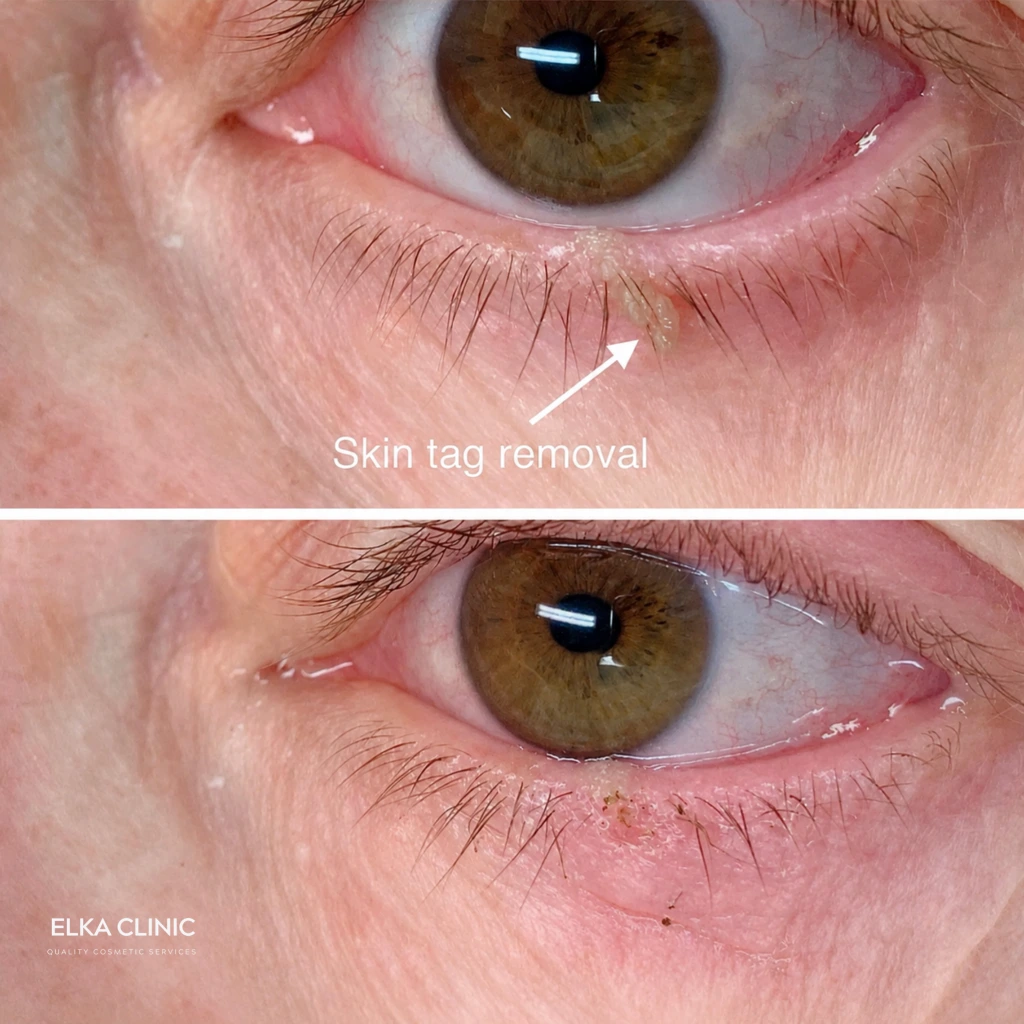
Skin tags are harmless growths that commonly occur on the neck, eyelids, underarms and areas exposed to friction.
They are made of ordinary skin tissue rather than anything sinister, and they tend to appear in clusters where a collar, a strap, a necklace or skin itself rubs repeatedly over the same spot. Warmth, friction and body weight all make them more likely, and some people simply form them more readily than others regardless of how they live.
Most tags cause no symptoms. The ones people ask to have removed are usually the ones that catch — on jewellery, on razors, on clothing — or the ones sitting somewhere obvious enough to be distracting, such as the eyelid margin or the front of the neck.
Small, narrow-based tags are generally the most straightforward to treat with Plasma Pen, because very little tissue needs to be addressed and the point of treatment is easy to isolate. Broader or thicker growths, and anything with unusual colour or a firm base, are assessed more cautiously and may be referred instead.
A tag that has been fully removed does not usually grow back in that same spot. That is not the same as preventing new tags: if your skin is inclined to form them, new ones can appear nearby over the following months or years, and that is a matter of tendency rather than of treatment failing.
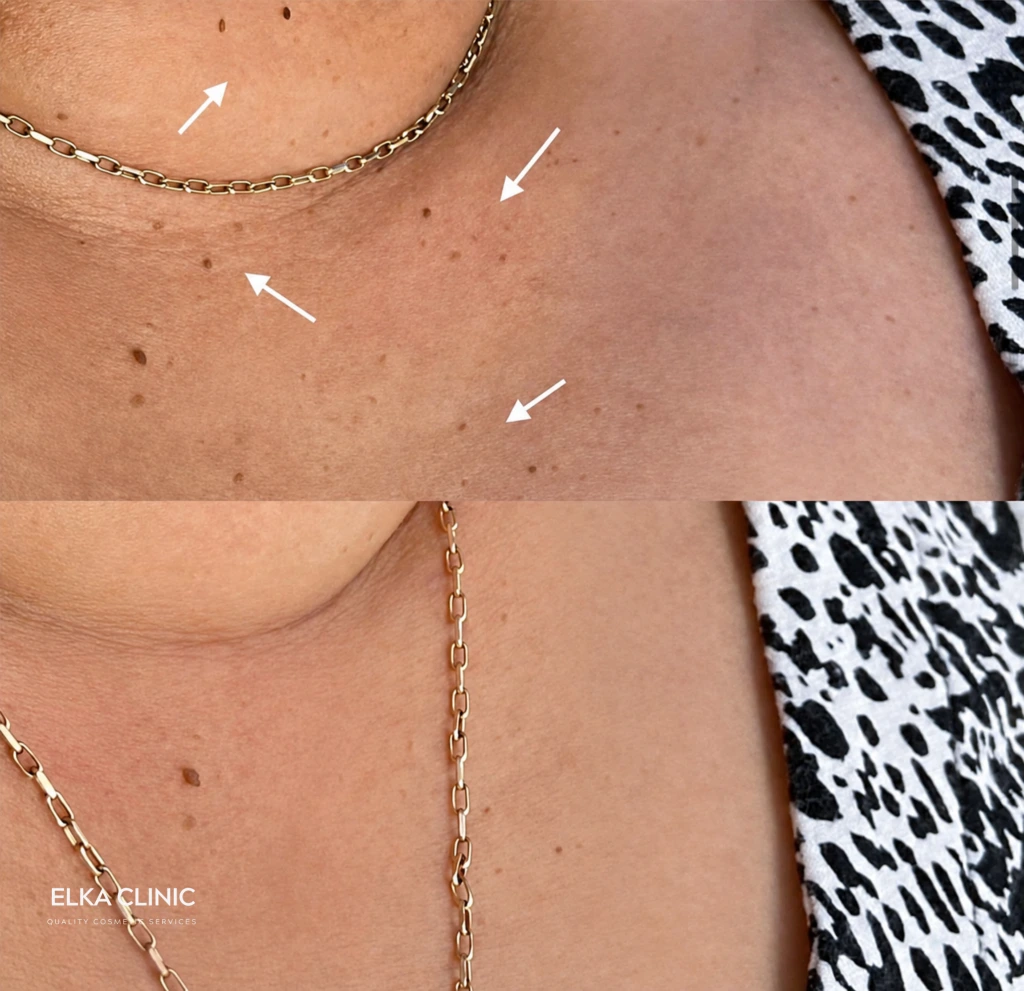
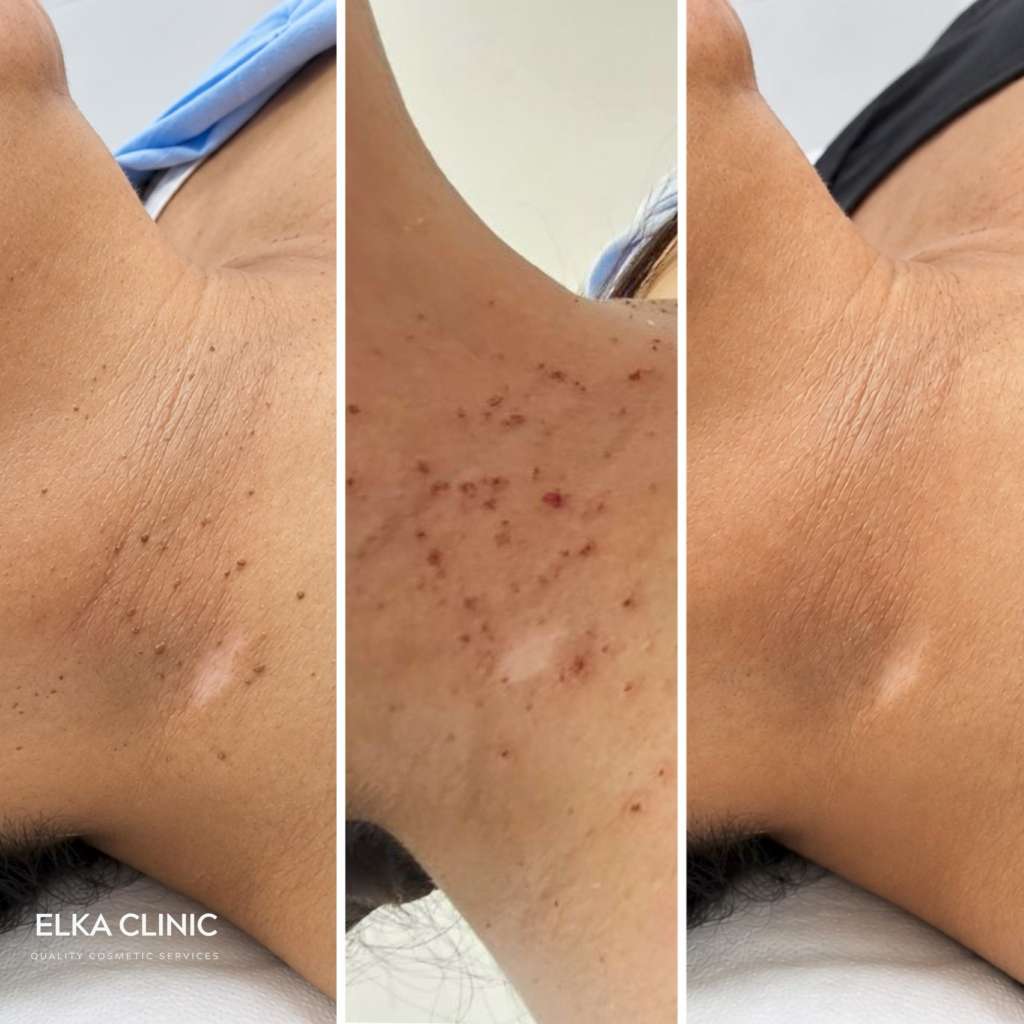
Where a cluster sits close together, more than one tag is often addressed within the same visit, provided the assessment supports it. The sequence below also shows why the photograph taken at the end of an appointment is not the finished picture: the surface keeps remodelling and evening out over the weeks that follow.
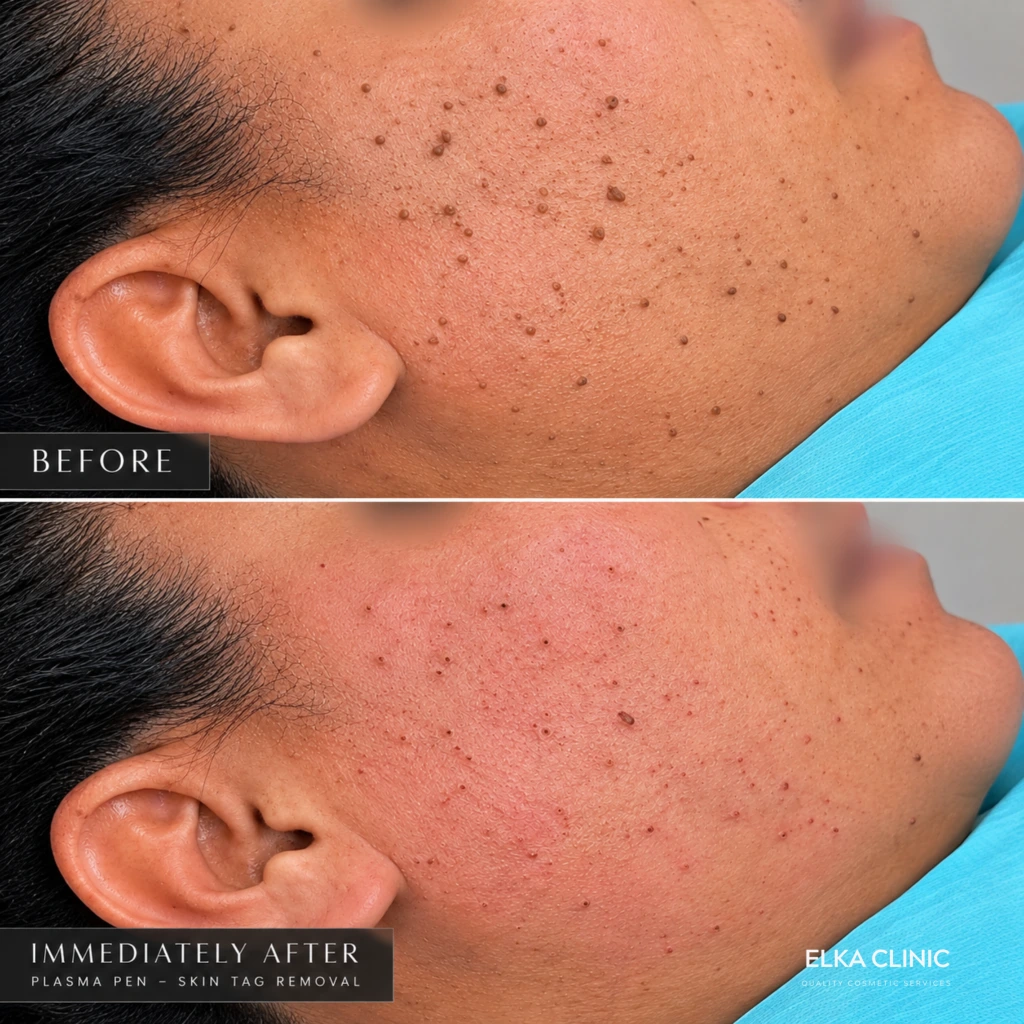
A different client, recorded before treatment and again at the end of the same appointment, gives a closer sense of how contained each treated point is while it is still fresh.
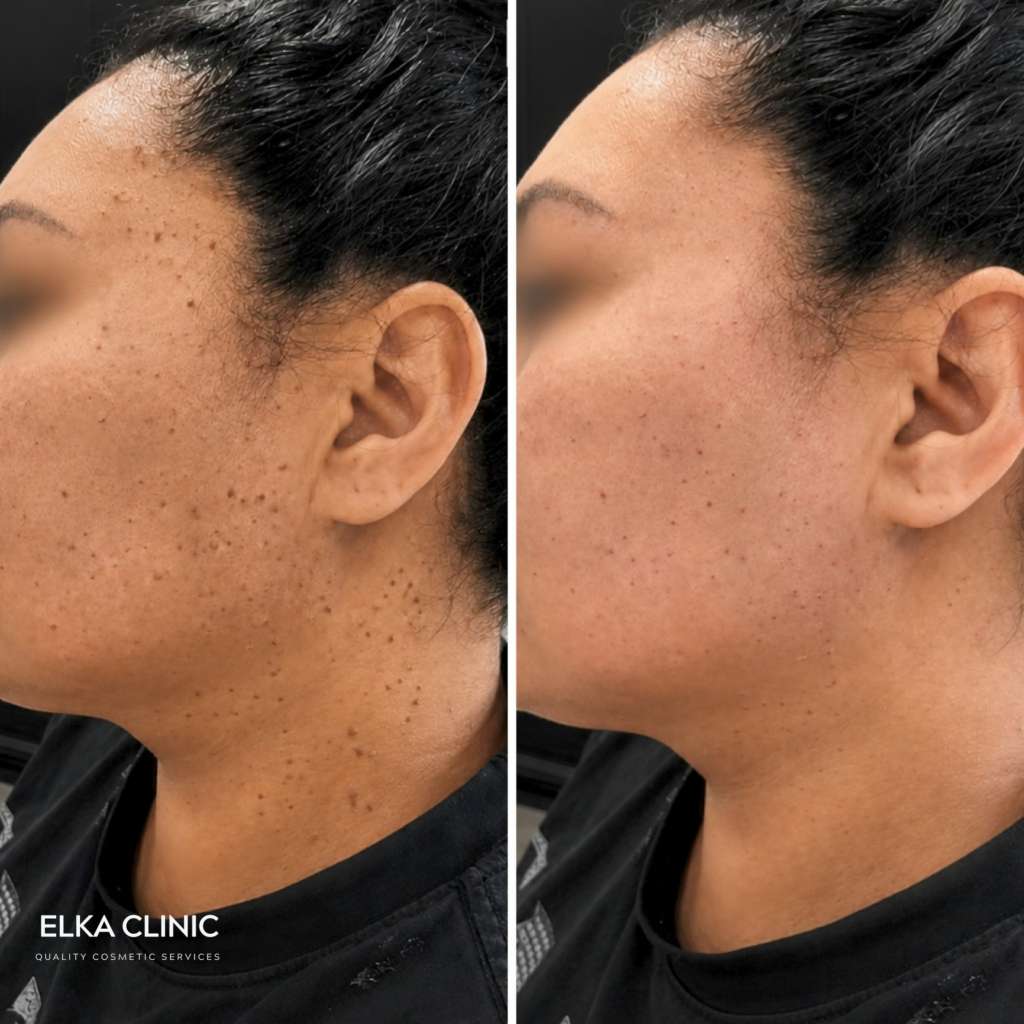
Neck Skin Tag Removal
Collars, necklaces and shirt seams all travel across the same narrow band of skin, which is why the neck is the area clients ask about most often.
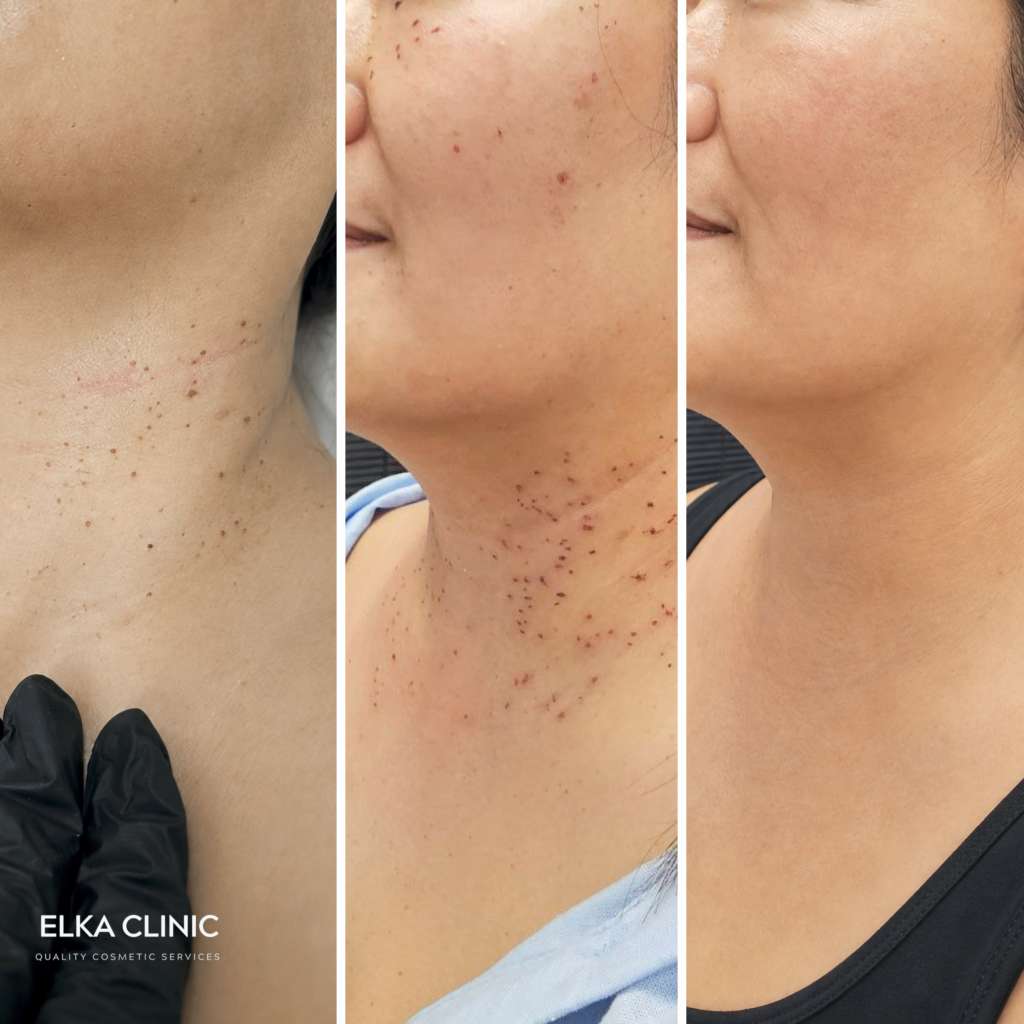
Straight after treatment each treated point is covered by a tiny carbon crust. Those crusts are an expected part of the process and look busier than the end result, so the healed frame is the fairer guide to the final cosmetic outcome.
The same three stages were recorded for a further client, which shows how consistently the pattern repeats when several points along the neck are treated in one sitting.
Milia Removal
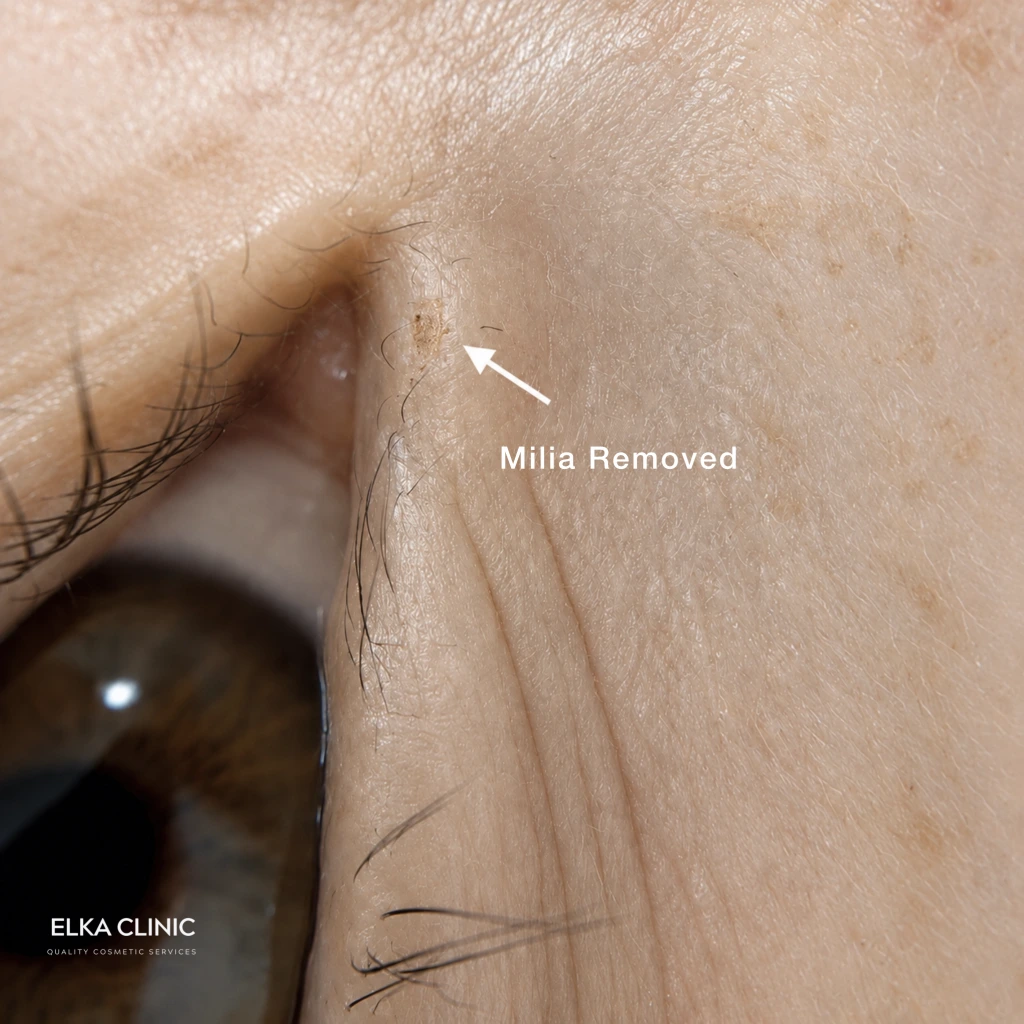
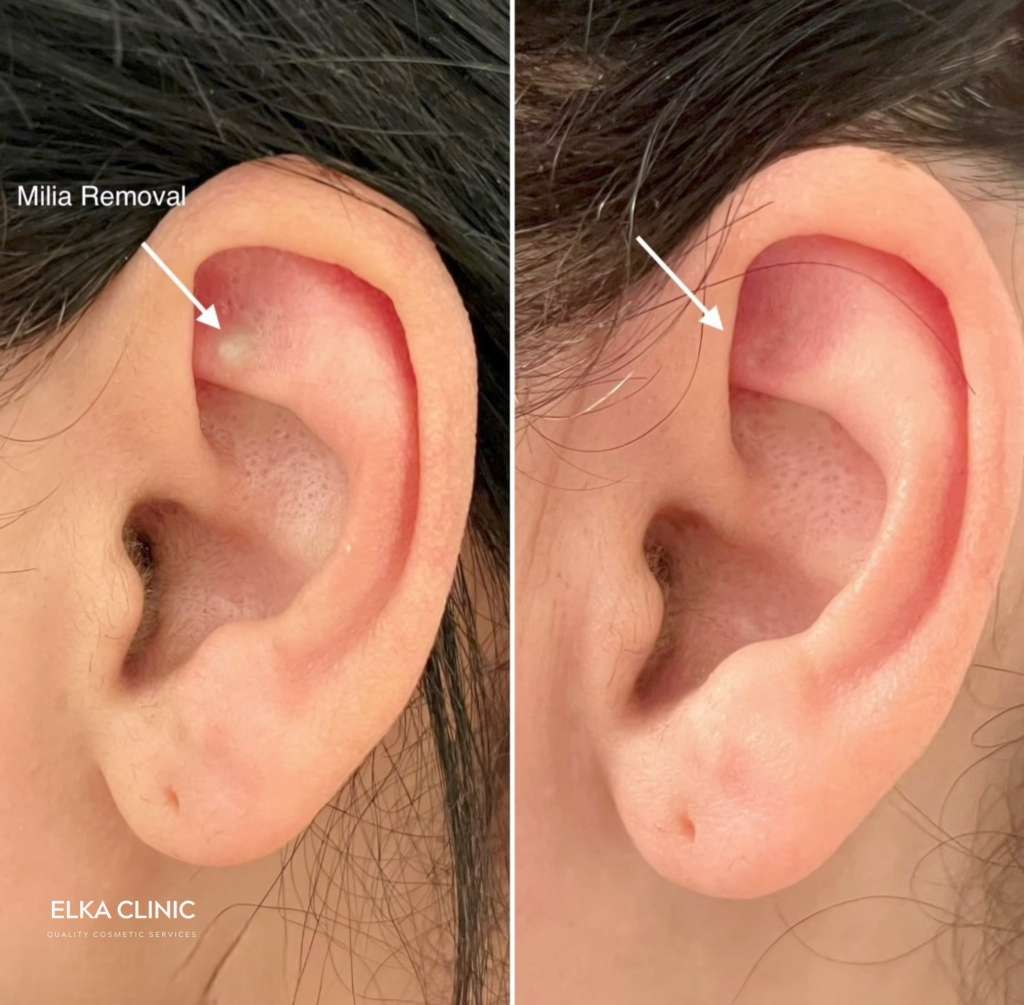
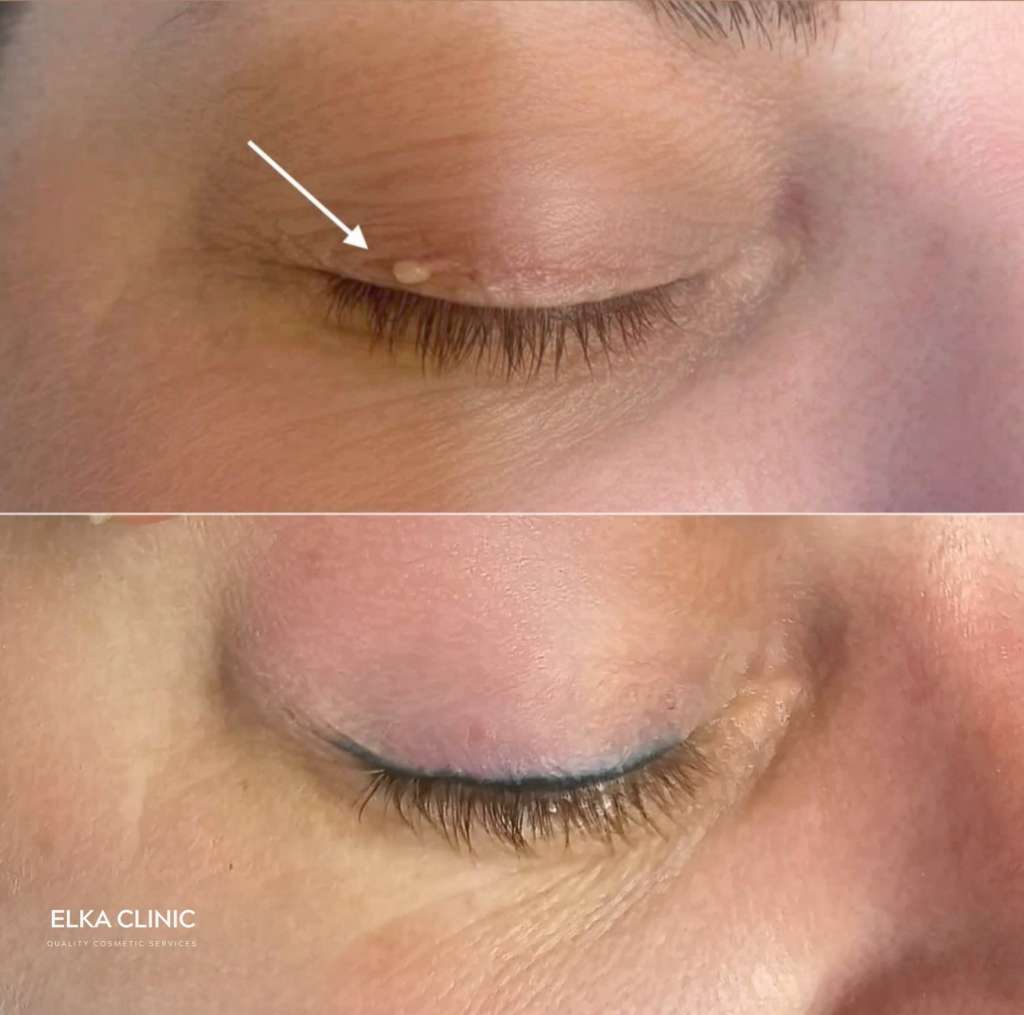
Milia are tiny keratin-filled cysts that often develop around the eyes and cheeks.
Each one is a small pocket of keratin trapped just beneath the surface with no opening to the outside. That is why they behave so differently from a blocked pore: there is nothing to draw out through an existing opening, and squeezing achieves very little apart from irritating the surrounding skin.
They are common on thin skin around the eyes, along the upper cheeks and occasionally on the forehead. Rich eye creams, heavy occlusive products, sun damage and previous skin injury are all associated with them, although plenty of people develop milia with no obvious reason at all.
Treatment involves opening the surface over the cyst very precisely so the contents can be released, using the smallest amount of energy that will do the job. Around the eyes the settings are kept deliberately conservative, and it is common to treat a few at a time rather than clearing a large area in one visit.
Milia can return. Removing an individual milium deals with that milium, but if your skin forms keratin cysts easily, new ones may appear later — sometimes in the same general area. Adjusting the products used around the eyes often helps to reduce how often that happens.
Benign Lip Lesion Removal
A small benign lip lesion can be treated conservatively once it has been established that removal is appropriate.
The lip and the border around it are unlike the rest of the face. The tissue is thin, it is mobile, it is constantly in use, and the vermilion border is one of the few lines on a face that the eye notices immediately if it is disturbed. Work here is therefore deliberately restrained.
We describe what is treated on the lip only as a selected benign lip lesion. We do not name or diagnose lip lesions, and we do not treat anything on the lip that is new, enlarging, bleeding, ulcerated, rough to the touch or otherwise unexplained. Lesions of that kind belong with a GP or dermatologist, and that advice is not negotiable regardless of how small the lesion is.
Where treatment does go ahead, expect a smaller amount of work than you might imagine, with the option of a review rather than pushing for complete clearance in a single sitting. Healing on the lip is generally quick, but the area is easily disturbed by eating, drinking and talking, so aftercare matters more here than almost anywhere else.
Pigmented Lesion Removal
Not every pigmented lesion is suitable for Plasma Pen. Assessment is always required.
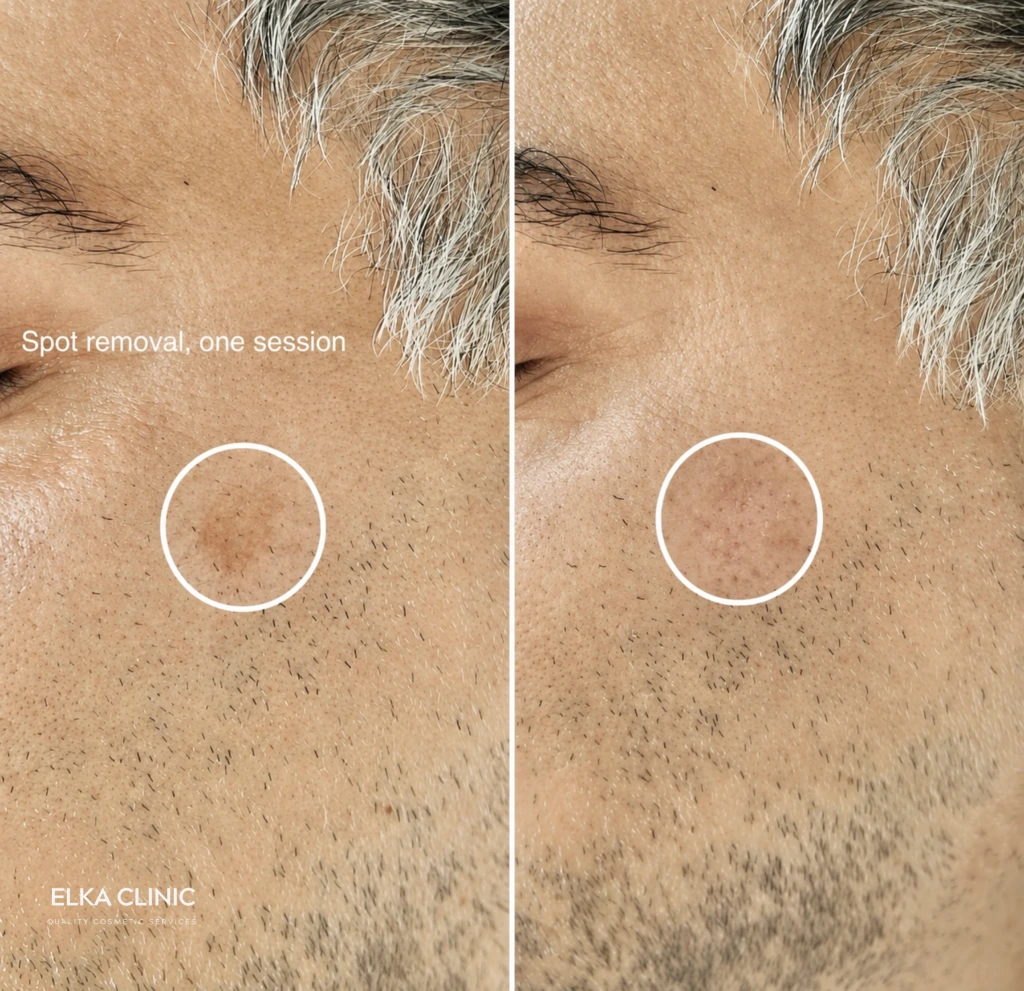
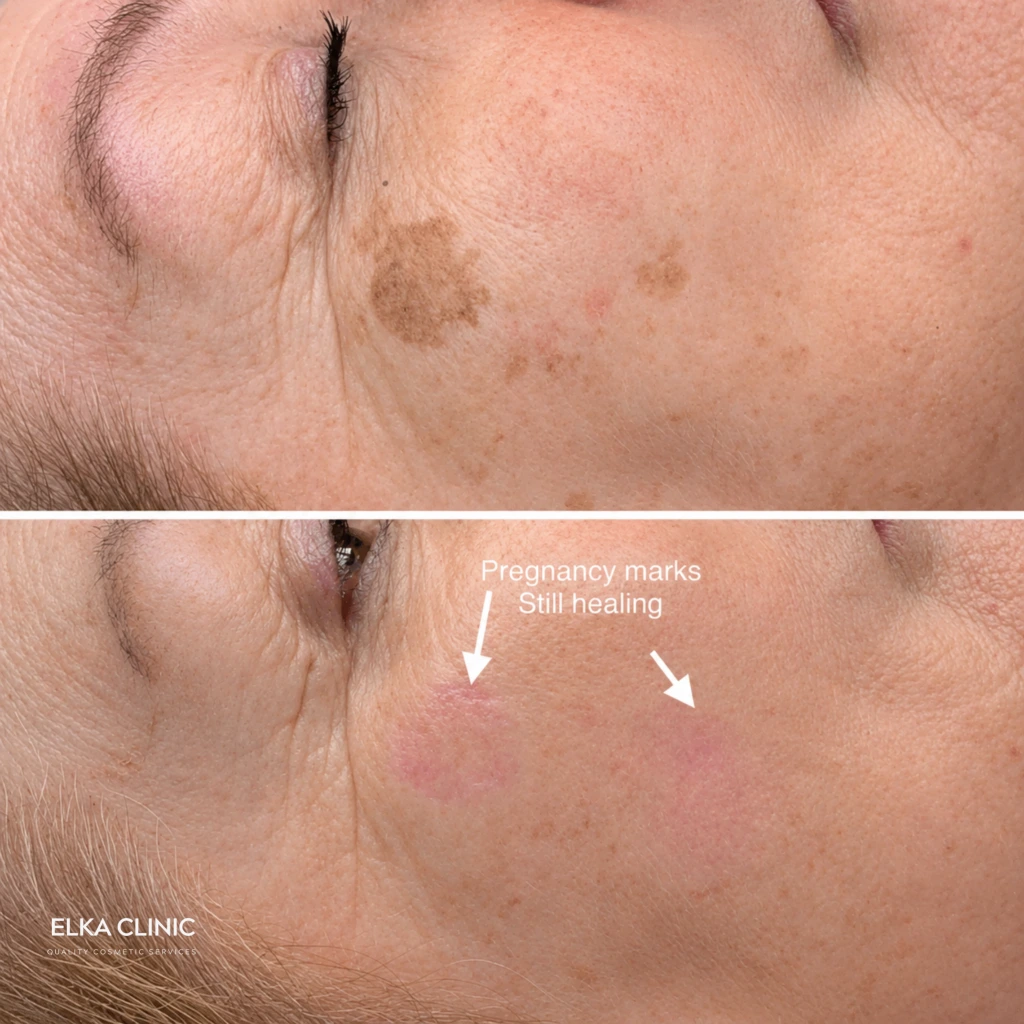
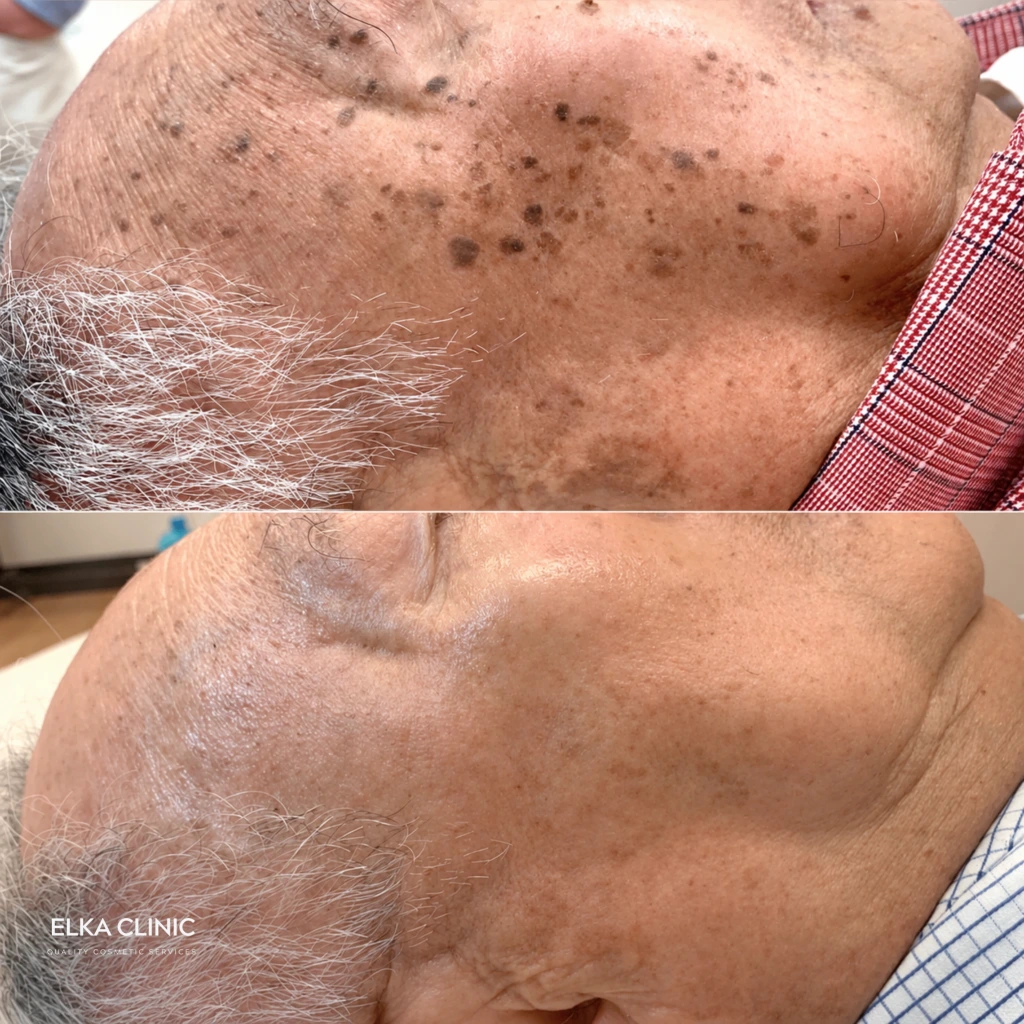
Freckles, sun spots and age spots all sit under the same broad heading, but they do not behave the same way. Some are shallow and respond predictably. Some are deeper than they look. Some are part of a wider pattern of sun-related pigmentation, in which case treating one spot in isolation can leave the surrounding skin looking more uneven than before.
Skin type matters as well. Skin that pigments readily can respond to treatment by producing more pigment during healing, not less, and that risk has to be weighed honestly before anything is treated. Recent sun exposure, pregnancy, hormonal pigmentation and certain medications all change the answer too.
For widespread or diffuse pigmentation, Plasma Pen is often the wrong tool. In those cases we would usually discuss microneedling or a course of skin treatments aimed at overall tone rather than removing individual marks. Where a single defined lesion is the concern and the assessment supports it, precise treatment can be considered.
Anything with an irregular border, more than one colour within it, a raised or firm section, or a history of change is not treated here. Pigmented lesions are exactly the group where a cosmetic clinic must be most careful, because appearance alone cannot settle the question.
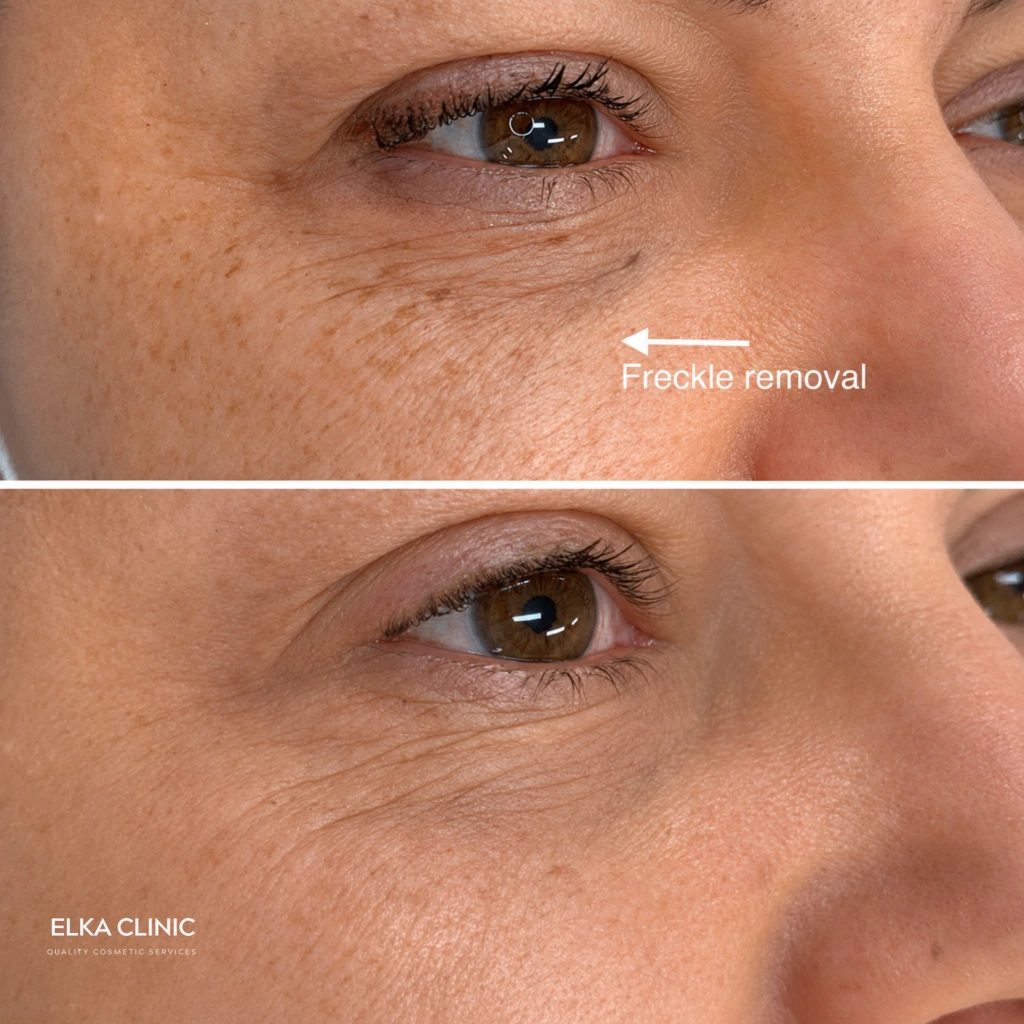
Sun-related spots are the other group we are asked about most. The photographs below show treated sun spots, and the same qualification applies to all of them: the lesions were assessed as benign first, and skin that pigments readily can respond differently.
Lesions Around The Eyes
The eye area allows the least margin for error of anywhere on the face, which is why it calls for precision and experience rather than speed.
Eyelid skin is the thinnest on the body. There is very little beneath it, it creases with every blink, and it heals in full view. A setting that would be unremarkable on the cheek can be too much here, so energy is reduced, contact time is shortened, and lesions are approached in stages rather than all at once.
Position adds a second constraint. Lesions sitting close to the lash line, at the inner corner or on the eyelid margin sit millimetres from the eye itself. Treatment is carried out with the eye protected and closed, with the practitioner working from an angle that keeps the tip directed away from the eye at all times.
Experience matters because the decision not to treat is made more often in this area than anywhere else. Some eyelid lesions are best left alone, some are better managed by an ophthalmologist or dermatologist, and some can be treated safely with modest expectations and a review afterwards. Being told which of those applies to you is part of the assessment.
Healing around the eyes is usually quick, but mild swelling on the day and for a day or two afterwards is common and expected, particularly on the upper lid.
Multiple Benign Skin Lesions
Several lesions may often be treated during one appointment, depending on assessment.
Because each point of treatment is small and self-contained, it is frequently practical to address a group of skin tags or a cluster of milia in a single visit rather than returning repeatedly for one at a time. That is usually the more comfortable approach and the more economical one.
How many can be treated at once is decided at the appointment rather than in advance. The considerations are how much total healing you are being asked to manage, how close together the lesions sit, whether they are in exposed areas such as the face and neck, and what you have on in the following fortnight. Spreading treatment across two visits is sometimes the better plan, particularly for the face.
Where a group of lesions is treated together, each point crusts and separates on its own schedule, so the area will look slightly uneven for several days. That is normal, and it settles as the last of the crusts lift.
Every lesion in a group is still assessed on its own merits. It is entirely possible for most of a cluster to be treated while one is set aside for medical assessment, and that is a good outcome rather than an inconvenience.
Recovery Timeline
Small treated points follow a fairly predictable sequence. The times below are a general guide rather than a promise, and larger lesions or delicate areas can run a little slower. The full day-by-day wound care is set out in our skin lesion removal aftercare guide.
| Stage | What you can expect | What helps |
|---|---|---|
| Treatment day | Small dark points appear where the lesions were treated, with redness around them and a warm, tingling sensation. Eyelid and lip areas may swell mildly. | Keep the area clean and dry, avoid heat and makeup, and leave everything alone. |
| Days 1–3 | Crusts are firmly in place and at their most obvious. Any swelling generally peaks in the first day or two and then eases. | No picking, no scrubbing, no active skincare over the points. A cool compress is fine for swelling. |
| Days 4–10 | Crusts begin to loosen and lift on their own, usually a few at a time rather than all together. The area can look patchy while this happens. | Let them separate naturally. Removing one early is the main cause of a mark that lingers. |
| Week 2 | Most crusts have gone and new surface skin is exposed. This skin is commonly pink or slightly red, and that can be more noticeable than the crust was. | Daily sunscreen without exception. Gentle products only, and makeup once the skin is fully closed. |
| Weeks 4–8 | Redness continues to fade and the treated points settle into the surrounding skin. Collagen repair underneath is still finishing during this period. | Continue sun protection, and book a review if you would like the area reassessed. |
Redness commonly remains after the crust has separated, and this is the part people are least prepared for. The crust is the short phase; the pink stage that follows it can last a few weeks, and longer on the face than on the body. In skin that pigments readily, temporary darkening of the treated point can also occur before it fades. Daily sun protection is the single most useful thing you can do during this time.
When to contact us. Healing problems are uncommon, but get in touch, or see your GP, if redness spreads outward instead of fading, if pain increases after the first few days, if there is swelling with heat or discharge, if a treated point begins to bleed, or if a crust has not separated after about two weeks. Early advice is always better than waiting. Call 1300 216 456 or use the contact page.
Does It Hurt?
Most clients tolerate treatment well, and it is usually described as brief and sharp at each point rather than sustained pain.
A topical numbing product is applied to the area first and given time to take effect before anything begins. Because each point of treatment lasts only a moment, the sensation is short-lived even when several lesions are being addressed in one visit.
Sensitivity varies by area. Skin around the eyes, on the lip and on the neck tends to be more sensitive than the cheeks, forehead or body, and sensitivity also differs from person to person for reasons that have little to do with how much treatment is being done. If an area is uncomfortable, we stop, pause, or reduce what we do rather than pressing on.
Afterwards, the treated points can feel tight or slightly tender for a day or so, similar to a small graze. Ongoing pain is not expected, and if you experienced it we would want to know.
Who It Suits, And Who Should Wait
Suitable for
- Adults with skin tags that are small, clearly benign and cosmetically bothersome.
- Adults with milia, particularly around the eyes and on the cheeks, that have not responded to skincare changes.
- Adults with selected benign lesions in a position where controlled, precise treatment is sensible.
- Adults with cosmetic skin concerns who want a specific mark addressed rather than a whole-face treatment.
- Anyone who would like an honest assessment of whether a lesion should be treated cosmetically at all.
Who should wait
- Pregnancy and breastfeeding. Elective cosmetic treatment is postponed as a matter of course.
- Active infection. Cold sores, broken or infected skin, or any infection in or near the treatment area needs to settle first.
- Poor wound healing. Conditions or medications that impair healing, a history of keloid scarring, or uncontrolled diabetes require medical advice before treatment.
- Suspicious lesions. Anything unexplained or changing goes to a GP or dermatologist first, without exception.
- Recent isotretinoin use, where clinically appropriate. A waiting period is commonly advised after finishing a course, and we follow the advice of your prescriber.
- Recent sunburn or a fresh tan over the area, which increases the risk of pigment changes during healing.
Tell us about medications, skin conditions, previous reactions and healing history at your appointment, even where they seem unrelated. It is common for these details to change the plan, the settings used, or the timing — and occasionally to be the reason we postpone.
Benign Skin Lesion Removal FAQs
The questions asked most often before a first appointment, answered plainly.
Can Plasma Pen remove skin tags permanently?
A skin tag that has been fully treated does not usually return in that same place, because the tissue itself has been removed rather than reduced. In that sense the individual tag is dealt with permanently.
What treatment cannot do is stop new tags forming. Skin tags develop where skin rubs, and if your skin is inclined to produce them, new ones may appear nearby over the following months or years. Larger or thicker tags occasionally need a second, lighter session to finish the base.
Can milia return after removal?
Yes. Removing a milium deals with that particular cyst, but milia are a tendency as much as an event. If your skin traps keratin easily, new ones can appear later, sometimes in the same general area around the eyes or cheeks.
Reviewing what you use around the eyes often reduces how frequently they come back. Heavy occlusive creams and rich eye products are commonly involved, and switching to lighter formulations can make a noticeable difference over time.
Does Plasma Pen leave a scar?
Scarring is uncommon after treatment of small superficial lesions, but it is not impossible and it would be dishonest to promise otherwise. Risk rises with the size and depth of the lesion, with how much energy an area needs, and with how the crust is managed at home.
Picking or scrubbing a crust off before it separates is the most avoidable cause of a lasting mark. In skin that pigments readily, temporary darkening of the treated point is more likely than a true scar, and it usually fades over weeks to months with consistent sun protection. If you have a history of keloid or hypertrophic scarring, tell us at assessment.
How long is recovery?
A small dark crust forms on the day of treatment and generally separates on its own within about four to ten days, depending on lesion size, depth and treatment location. Small superficial points on the face may shed around days four to seven, while larger or deeper lesions and areas such as the neck or body may take seven to ten days or occasionally longer. Allow the crust to separate naturally and never pick, peel or deliberately remove it. Most people are comfortable in normal daily life throughout that period.
Recovery does not end when the crust goes. The new skin underneath is commonly pink for a further one to three weeks, and the deeper repair continues for around four to six weeks. Redness after the crust has separated is expected rather than a sign that something has gone wrong.
Can multiple lesions be removed during one appointment?
Often, yes. Because each treated point is small and separate, a group of skin tags or a cluster of milia can frequently be addressed in one visit rather than one at a time.
The number treated is decided at the appointment. We consider how much healing you are being asked to manage at once, whether the area is exposed, how close the lesions sit together, and what you have coming up socially or at work. For the face, spreading treatment across two visits is sometimes the better plan.
Can lesions around the eyes be treated?
Selected benign lesions near the eyes, including milia and small skin tags, can be treated, and it is one of the more common requests we receive. The eye itself is protected and kept closed throughout, and the tip is always directed away from it.
Because eyelid skin is the thinnest on the body, settings are kept conservative and lesions are often treated in stages rather than all at once. Mild swelling for a day or two is common, particularly on the upper lid. Some eyelid lesions are better managed by an ophthalmologist or dermatologist, and if that applies to you we will say so.
How many sessions will I need?
Many small lesions are dealt with in a single session. Larger tags, deeper lesions and pigmented marks are more likely to need a second, lighter treatment, usually after the area has fully healed and been reassessed at about four to six weeks.
We prefer to treat conservatively and review rather than treat aggressively in one sitting, because the cost of going too deep on delicate skin is greater than the inconvenience of a second visit. Outcomes vary between individuals.
Can you remove moles?
Only after a doctor has assessed it. ELKA CLINIC does not diagnose skin lesions, so a mole is not removed here on the strength of how it looks to us. Where your GP or dermatologist has examined the mole and confirmed that it is benign, cosmetic removal can then be considered and planned at your appointment.
Bring that written confirmation with you if you have it. If a mole has grown, changed shape, colour or texture, or has started to itch or bleed, it needs medical assessment rather than cosmetic treatment. Where a doctor wants the tissue examined in a laboratory, removal should be carried out by them so it can be sent for testing.
Can Plasma Pen remove sebaceous cysts?
No. Sebaceous and epidermoid cysts sit within or beneath the skin and have a wall that needs to be removed in full, which is a minor surgical procedure rather than a surface treatment. Treating the surface would not resolve the cyst and it would be likely to refill.
These are best assessed by a GP, who can arrange appropriate management. Milia are sometimes confused with cysts of this kind because both look like small white bumps, and part of the assessment is establishing which one you actually have.
Does treatment hurt?
Most clients tolerate treatment well. A topical numbing product is applied first and given time to work, and because each point of treatment lasts only a moment, the sensation is brief rather than sustained.
Sensitivity varies by area and between people. The eyes, lip and neck are generally more sensitive than the cheeks or body. Afterwards the treated points can feel tight or slightly tender for a day or so, similar to a small graze.
When can I wear makeup again?
Not while a crust is present, and not until the new skin underneath has fully closed. As a general guide that means waiting until after the crust has separated naturally, which is commonly around five to seven days, and often a little longer on the face.
Applying makeup over a crust, and removing it afterwards, is exactly the kind of friction that lifts a crust early and increases the risk of a lasting mark. Once the skin is closed, mineral makeup and sunscreen are usually the first things reintroduced.
How long does an appointment take?
Appointments typically take between 1 and 3 hours, depending on the number of lesions, the treatment area and the time required for assessment and numbing. The appointment covers assessment, then time for the topical numbing product to take effect, and then the treatment itself, so the booked time is longer than the treatment alone.
The length of each appointment type is shown on the online booking page when you choose a time. If you are having several lesions treated, or an area such as the eyelids where we work in stages, allow a little more time and we will confirm what is realistic at your assessment.
How much does benign skin lesion removal cost?
Treatment prices start from $150, depending on the type, size, number and location of the lesion. A personalised quote is provided after assessment. Current pricing and available appointment times are shown on our online booking page.
Where several lesions are treated in one visit, that is usually more economical than returning for one at a time. Afterpay is available at ELKA CLINIC if you would prefer to spread the cost, with eligibility and approval determined by Afterpay.
Cosmetic removal of a benign lesion is not covered by Medicare or by private health insurance extras. Where a lesion needs to be removed for medical reasons, that is a matter for your GP or dermatologist, and any rebate would be arranged through them.
Where To Go Next
Benign lesion removal is one part of the skin work done at ELKA CLINIC. If you are weighing up options, these pages cover the ground around it.
- Plasma Pen Perth — the wider use of Plasma Pen at the clinic, including non-surgical eyelid tightening, lines and skin tightening.
- Microneedling Perth — the better option where the concern is overall tone, texture, scarring or diffuse pigmentation rather than one defined lesion.
- Benign Skin Lesion Removal FAQs — questions about suitability, the treatment itself, healing and results for lesion removal.
- About ELKA CLINIC — the team, their training and how the clinic works.
- Contact and location — where to find us in Subiaco and how to reach the clinic.
- Frequently asked questions — general questions about appointments, aftercare and how treatments are planned at ELKA CLINIC.
- Booking and current pricing — live availability and up-to-date pricing for treatment and consultation appointments.
- Afterpay available — how the cost of treatment can be spread if you would prefer that.
Still not certain whether to book treatment or a consultation?
Book a consultation if you want the lesion looked at and the options explained before committing to anything. Book treatment if you have had the area assessed already and know what you want addressed.
Book Benign Skin Lesion Removal In Perth
Selected benign lesions only, assessed individually, with an honest answer about whether treatment here is the right course. Suspicious or changing lesions are referred to a GP or dermatologist rather than treated.
3/29 Hood Street, Subiaco WA 6008 · 1300 216 456 · contact@elkaclinic.com.au