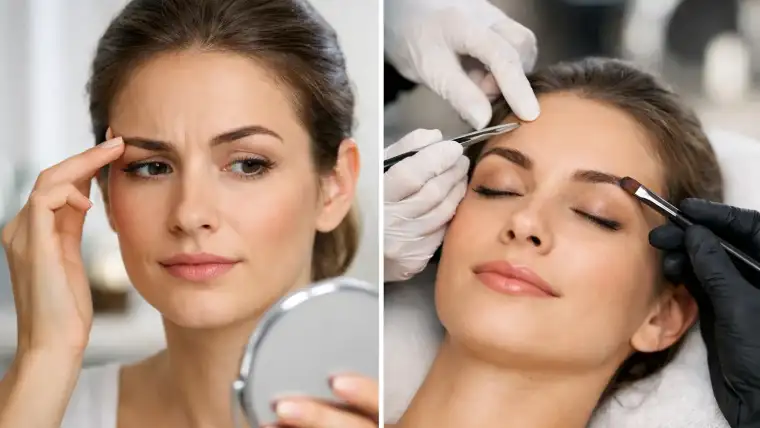
Hooded eyelids can make the upper eye area appear heavier, soften the natural crease and leave eye makeup sitting differently than it once did. A plasma pen for hooded eyelids may be an appealing option for people seeking a subtle, non-surgical approach to improving the appearance of mild upper-lid hooding. The key is knowing what the treatment is designed to achieve, how the area heals and whether it suits your individual skin and facial structure.
At ELKA Clinic, treatment planning is never based on a one-size-fits-all idea of a lifted eye area. The most flattering result respects your natural features, brow position, skin quality and the way your eyes move when you smile, speak and rest.
What a plasma pen treatment does
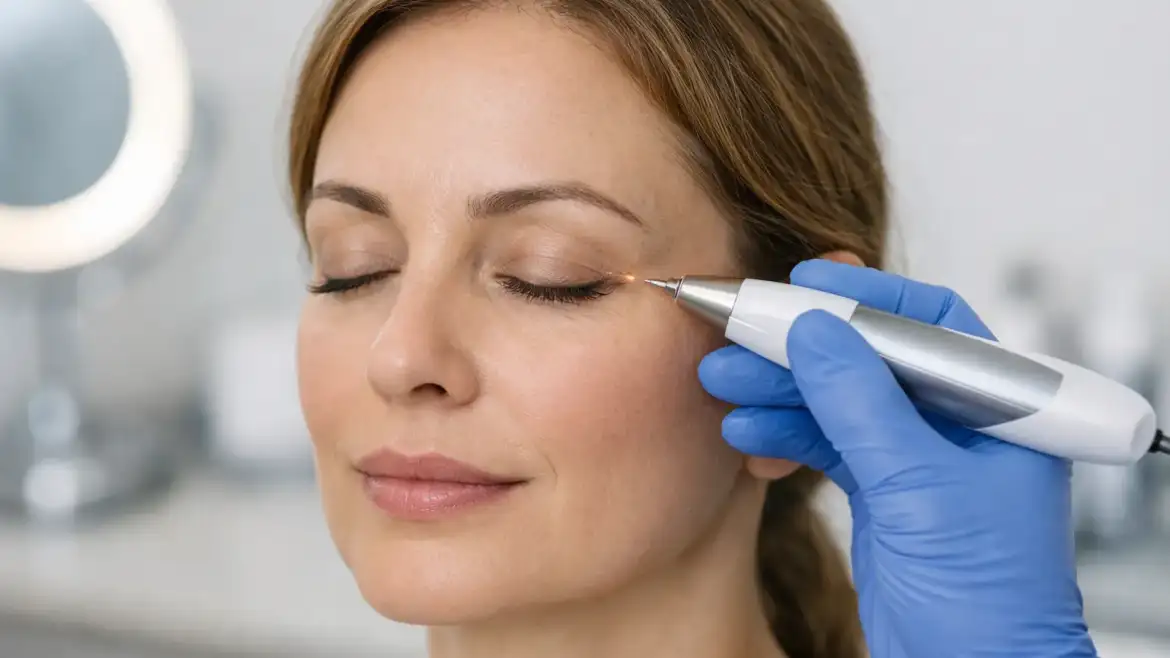
A plasma pen is an advanced skin treatment that uses a controlled plasma arc above the skin’s surface to create very small treatment points. These points are placed in a carefully planned pattern, encouraging the skin’s natural renewal response over time. For the upper eyelid area, the aim is to support a smoother, firmer-looking appearance where there is mild laxity or fine creasing.
It is a precision treatment, particularly around the eyes. The eyelid skin is delicate, mobile and highly visible, so technique, conservative planning and appropriate aftercare matter as much as the treatment itself. A refined result should look rested and natural, not tight or overdone.
Plasma pen treatments are often considered by clients who notice a gradual change around the upper eye area but still want to look like themselves. Results develop progressively as the skin settles and renews, rather than appearing as a sudden dramatic change.
Is a plasma pen for hooded eyelids suitable?
The word “hooded” can describe several different concerns. For some people, the upper lid has mild loose-looking skin that softens the crease. For others, the appearance may be influenced more by brow position, natural eye shape, pronounced skin folds or a greater degree of heaviness. These distinctions affect whether plasma pen treatment is likely to be worthwhile.
When it may be a thoughtful option
Plasma pen treatment can be suited to clients with mild to moderate skin laxity around the upper eyelid who want a subtle improvement in skin texture and tightness. It can also appeal to those who value gradual, natural-looking refinement and are prepared to follow the healing process carefully.
Skin condition plays a significant role. During a consultation, the practitioner should look at skin thickness, texture, pigmentation tendencies, sensitivity, previous treatments and the way the upper eye area sits in relation to the brows. Lifestyle and timing matter too. If you have an event approaching, it is wise to allow enough time for visible healing and settling rather than booking too close to an important date.
When expectations need a different conversation
A plasma pen is not designed to create a completely new eye shape or remove a significant amount of excess-looking skin. It is also not the right answer for every type of hooding. If the concern is mainly structural, related to brow placement or more pronounced than the treatment can reasonably address, an honest practitioner will explain the limitation rather than overpromise.
This is where a personalised consultation is valuable. The best treatment is not simply the newest option or the strongest treatment available. It is the one that suits your features, skin and desired level of change.
The consultation comes before the treatment
The eye area deserves a considered approach. Before proceeding, a quality consultation should establish what you are hoping to see in the mirror: a more open-looking eye area, softer creasing, smoother texture, or a subtle refreshed appearance. Those goals may sound similar, but they require careful treatment design.
Your practitioner will assess the eyelids with the eyes open and relaxed, not just with the brows lifted. This helps avoid planning a result around an expression that is not your natural resting position. They should also discuss your skin history, current skin condition and the healing commitment required.
At ELKA Clinic in Perth, this planning is treated as an essential part of the service. Clients are encouraged to ask direct questions about suitability, expected downtime and the degree of change that is realistic for their individual eye area.
What happens during a plasma pen eyelid treatment?
On the day, the treatment area is prepared and a topical numbing product may be used to support comfort. The practitioner then works methodically across the planned area, placing small, controlled points with enough spacing to respect the skin’s healing process.
Treatment time varies according to the area and the plan. Around the eyelids, patience is a feature of good work. The practitioner needs to work with precision and restraint, rather than trying to pursue an overly aggressive result in one appointment.
Immediately afterwards, the treated area may look red and feel warm. Small carbon crusts form at each treatment point. This is an expected part of the surface healing process and should not be picked, rubbed or covered with products that have not been approved for your aftercare plan.
Healing around the upper eyelids
The visible healing stage is one of the most important practical considerations for anyone considering plasma pen treatment. Swelling is common in the upper eye area, particularly in the first few days, and can be more noticeable on the morning after treatment. The tiny crusts then dry and shed naturally over the following days.
For many clients, this means planning some quiet time away from social commitments, work meetings or occasions where they would prefer not to have visible healing. Exact healing varies from person to person, so it is better to allow a comfortable buffer than rely on a fixed timetable.
Your aftercare instructions will be tailored to the treatment area and your skin. In general, the focus is on keeping the area protected, allowing crusts to release naturally and avoiding friction, heat and unnecessary product use while the skin is healing. Sun protection after the surface has healed is particularly important for maintaining an even-looking result.
Do not attempt plasma pen treatment at home or allow the delicate eye area to be treated by someone without appropriate training, hygiene standards and experience. The apparent simplicity of a small device does not reflect the level of judgement required to plan and perform this treatment responsibly.
Results are gradual, and subtlety is a strength
It is natural to want to know how much lift a plasma pen can provide. The honest answer is that results depend on the degree of hooding, the condition of the skin, the treatment plan and your individual healing response. Some clients see a worthwhile softening of fine creasing and a firmer-looking upper lid, while others may need a more measured expectation or a staged plan.
The initial healing period is not the final result. Skin renewal continues after the crusts have shed, so the area needs time to settle. A review appointment, where appropriate, allows the practitioner to assess the healed response before discussing whether further treatment would add value.
For a premium result, subtlety is not a compromise. A gently refreshed upper eye area can make brows appear more defined, eyeliner sit more cleanly and the whole face look more rested, while preserving the expressions that make your features your own.
Choosing the right practitioner for the eye area
When researching plasma pen treatments, look beyond before-and-after images taken immediately after a session. Ask about healed outcomes, consultation standards, hygiene protocols, practitioner experience with the eyelid area and how suitability is determined. You should feel comfortable receiving a recommendation not to proceed if the treatment is unlikely to meet your goals.
A trustworthy practitioner will also explain that treatment plans may differ between the two eyes. Natural facial asymmetry is common, and balanced work is about responding to your features rather than forcing perfect symmetry.
Common questions about plasma pen for hooded eyelids
Does the treatment hurt?
Comfort is supported with topical numbing, although sensations vary. Most clients describe the treatment as manageable when it is performed carefully and with appropriate preparation.
How long do the marks take to disappear?
The small crusts generally shed during the early healing phase, while redness and the skin’s settled appearance can take longer. Your individual healing response and aftercare both influence the timeline.
Will one session be enough?
It depends on the condition of the skin and the degree of change you would like to achieve. A conservative approach may be preferable, especially in such a delicate area, and any further treatment should be considered only after the skin has fully settled.
The most satisfying eyelid treatments begin with realistic expectations and a practitioner who values your natural features. When the plan is right, a plasma pen can be a considered way to refresh the upper eye area while keeping the result soft, elegant and recognisably you.