Fresh microblading rarely looks the way it will look long term. That is the part many first-time clients find surprising. If you are searching for microblading healing stages day by day, what you usually want is simple – when will the brows soften, when will the colour settle, and what is normal versus a sign to check in with your artist.
Healing is not identical for everyone, but there is a reliable pattern. Skin type, lifestyle, aftercare, immune response, and even how much pigment your skin retains can all affect the timeline. The good news is that most changes are expected, temporary, and part of the process that leads to a more natural-looking result.
Microblading healing stages day by day
Microblading places pigment into the upper layers of the skin using fine hair-like strokes. Because the skin has been opened, your brows go through the same broad wound-healing process as any superficial cosmetic treatment. That means the appearance will shift more than once before the final colour reveals itself.
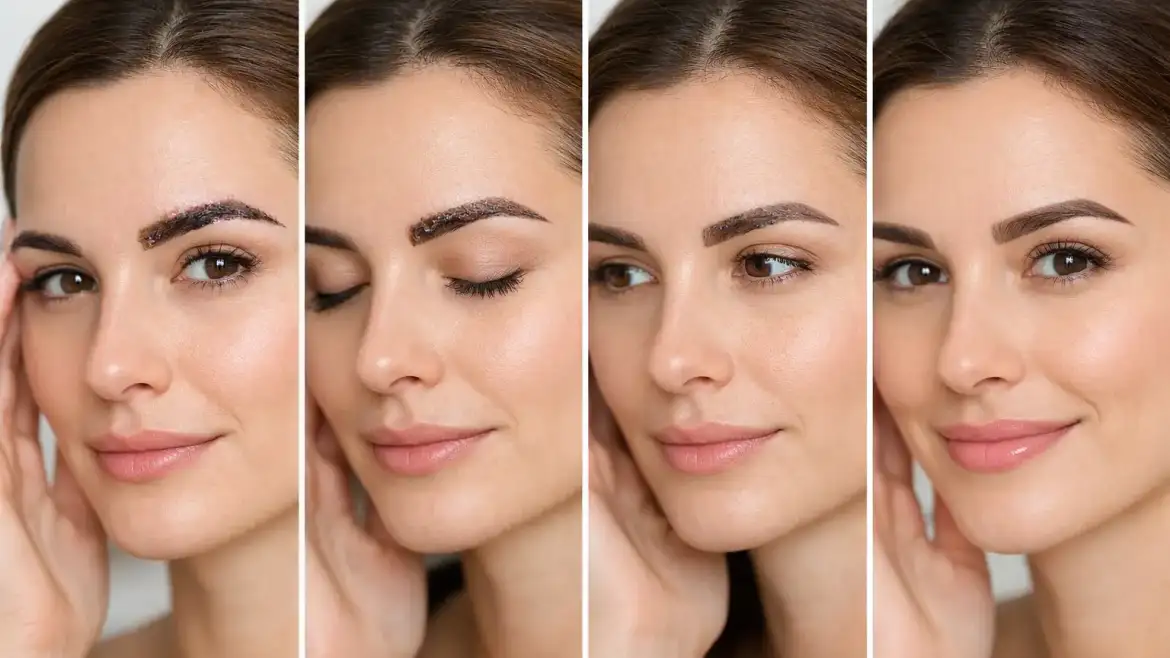
Day 1 – fresh, defined, and darker than expected
Straight after treatment, brows usually look crisp, bold, and more intense than the healed result. This is normal. The pigment is sitting fresh in the skin, and there may also be a little redness around the brow area.
For some clients, the strokes look almost too sharp on day one. That can feel confronting if you asked for soft, natural brows. Try not to judge the result too early. Fresh microblading can look 30 to 40 per cent darker than the final healed colour.
Days 2 to 3 – darker, tighter, and slightly dry
This is often the stage where clients wonder if their brows have gone too dark. The pigment oxidises slightly as healing begins, and the skin may feel tight or a little tender. The surface can start to look dry, almost as though the brows have been lightly dusted over.
Mild sensitivity is common. Heavy swelling is not. If you are following aftercare correctly, this period is more about patience than intervention.
Days 4 to 7 – flaking and scabbing begin
This is the stage most people are warned about, and for good reason. The brows can start to flake, and small scabs may form over parts of the strokes. As those dry patches lift away, the brows can look uneven, patchy, or suddenly much lighter in certain sections.
This does not mean the treatment has failed. It usually means the outer healing layer is shedding. The key here is not to pick, scratch, or peel. Removing flakes too early can pull pigment from the skin and create patchy retention.
Days 7 to 10 – the brows can look too light
Once the scabbing stage passes, many clients feel briefly disappointed. The brows often appear faded, pale, or slightly ashy. Some strokes may seem to have disappeared altogether.
This is often called the ghosting phase. A thin layer of healing skin is still sitting over the pigment, muting the colour. It can make the brows look softer than expected, sometimes to the point where clients think they need an urgent correction. In most cases, they do not.
Days 10 to 14 – colour starts to return
As the skin continues to repair, the pigment begins to reappear with more clarity. The brows usually look softer than they did in the first few days, but more visible than during the ghosting stage. This is when the shape starts to make more sense and the healed result begins to emerge.
The colour may still be a little cooler or flatter than the final tone. That can settle further over the next couple of weeks.
Weeks 3 to 4 – a more realistic preview of the healed result
By this point, most of the obvious surface healing is over. The brows generally look more natural, more settled, and closer to what you will live with day to day. Fine gaps, lighter tails, or areas of uneven retention may be easier to notice now, which can be discussed if you would like optional refinement after healing.
A second microblading appointment is optional, not compulsory. The initial appointment creates the shape and base strokes. If chosen, a touch-up can refine symmetry, reinforce areas where pigment healed lighter, and adjust colour if needed.
What is normal during healing and what is not
A little redness, tightness, dryness, flaking, and temporary patchiness are all expected. So is a shift from dark to light and then back to a softer healed colour. That sequence often worries new clients, but it is very common.
What is less typical is severe swelling, spreading redness, strong pain, hot skin, or discharge. Those signs deserve prompt advice from your treating clinic. A professional artist will always prefer you to ask rather than sit at home unsure.
Why microblading can heal differently from person to person
If you compare your healing to someone else online, the timelines can seem inconsistent. That is because skin does not behave identically. Oily skin may soften strokes faster and retain pigment differently. Dry or mature skin may show another pattern altogether. Active lifestyles, sun exposure, skincare ingredients, and how carefully aftercare is followed all play a part.
There is also the technique itself. Brow shape, pressure, pigment choice, and whether your artist is aiming for very soft natural enhancement or a more defined finish can influence how the early days look. This is why consultation matters. The best results are designed around your features and your skin, not copied from a photo.
Aftercare matters more than most clients realise
When people think about brow results, they often focus on shape and colour selection. Healing care deserves just as much attention. The cleaner and calmer the skin remains, the better chance your pigment has to settle evenly.
Follow your brow tattoo aftercare instructions closely in those early days: avoid heavy sweating, and stay away from makeup, active skincare and unnecessary touching. It can be tempting to inspect the brows closely in every mirror, but over-handling tends to create problems rather than solve them.
Sun exposure is another one to take seriously. Freshly treated skin is vulnerable, and too much sun can interfere with colour stability. Once healed, ongoing sun protection helps preserve the crispness and tone of your brows over time.
When to consider an optional touch-up
A short-term perfecting appointment is optional, costs $250 where applicable and is charged separately from the initial treatment. It is not automatically included. If you are happy with your healed result, you do not have to return. Further refinement can be considered once the skin has healed enough to assess retention properly. That is where lighter areas can be reinforced, symmetry can be fine-tuned, and the final result can be balanced.
Allow the initial treatment to heal before judging the result or deciding whether further refinement is wanted. At ELKA CLINIC, any optional perfecting work is planned around your healed skin, pigment retention and preferences.
The most common mistakes during microblading healing stages day by day
The biggest mistake is picking at flakes or scabs. Even if they look ready to lift, let them come away naturally. Another common issue is over-cleansing or applying products that were not recommended. More product does not mean better healing.
Some clients also panic during the ghosting phase and assume all the pigment is gone. Others return to gym sessions, saunas, swimming, or strong skincare too soon. None of this helps the skin settle beautifully. Gentle restraint usually gives the best cosmetic result.
How long until microblading looks natural?
For most people, brows start looking socially presentable within a week or two, but the more refined healed look usually appears after around three to four weeks. If you choose an optional touch-up, allow for its healing time as well.
That timing matters if you are booking around a holiday, wedding, photo shoot, or other special event. The smartest approach is to give yourself breathing room rather than squeezing treatment into the week before. Beautiful brows are worth planning properly.
A realistic expectation leads to a better experience
Microblading healing is not a straight line from treatment chair to perfect brows. It is a staged process, and every stage tells you something different. Early boldness is normal. Mid-healing patchiness is normal. Softer, more natural brows at the end are usually the goal.
If you go into the appointment expecting those shifts, the experience feels far less stressful. Trust the timeline, protect the skin, and give your brows the quiet healing period they need. The settled result is usually much more elegant than the first few dramatic days suggest.