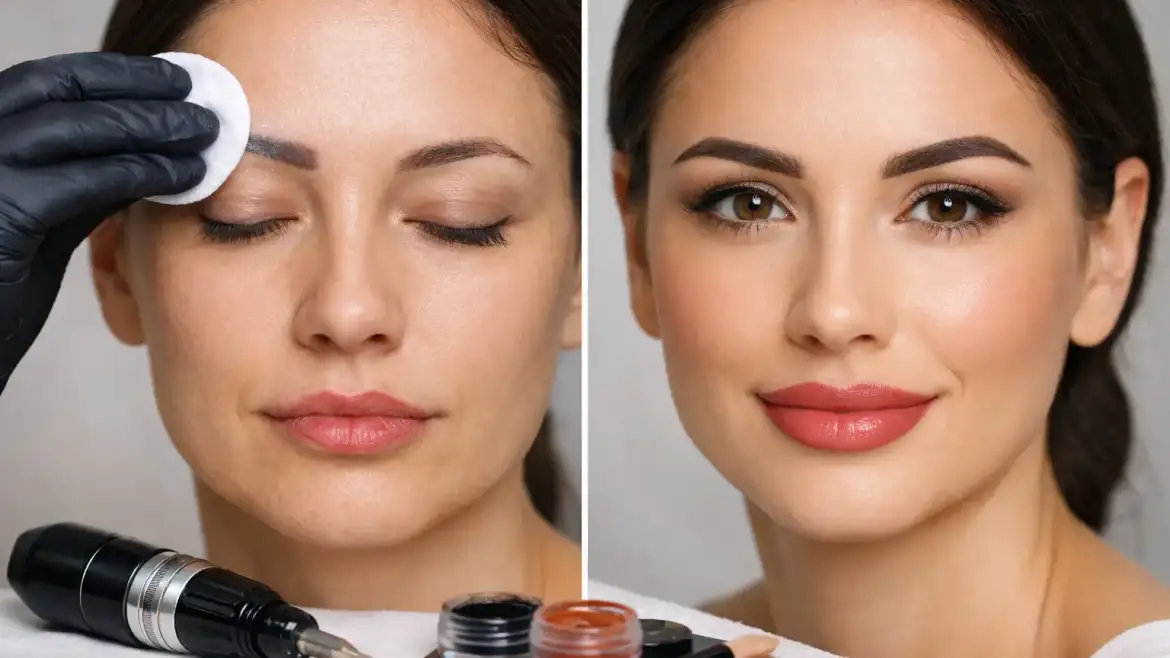
Some corrections are obvious the moment you see them – harsh blocky brows softened into a natural shape, uneven lip pigment balanced, old eyeliner refined so the eyes look lifted rather than heavy. Others are more subtle, and that is often where the best cosmetic tattoo correction before after examples tell the real story. Good correction work is not about making a tattoo look freshly done. It is about making it look more flattering, more balanced, and far more wearable once healed.
For many clients, correction begins with frustration. The shape may sit too low, the colour may have healed ashy, grey, blue or overly warm, or the result may simply feel too strong for their features. In some cases, the previous work was technically poor. In others, the original tattoo may have been acceptable at first, then changed over time as pigment faded, skin aged, or styling preferences shifted. Either way, correction is rarely one-size-fits-all.
What cosmetic tattoo correction before after examples really show
Before-and-after images can be incredibly reassuring, but they need to be read properly. A strong correction example is not only about the immediate visual difference. It should show improvement in symmetry, softness, colour balance and suitability for the client’s face. The best result is not always the boldest transformation. Often, it is the one that looks as though nothing is trying too hard.
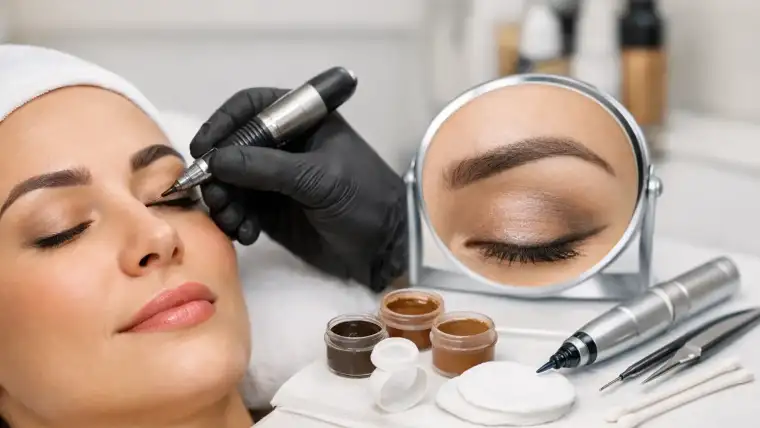
In brow corrections, the before image may show uneven tails, poor placement, oversaturated pigment or an overly dense front. The after image should ideally show cleaner structure and a more natural intensity. Sometimes that comes from reshaping and colour correcting. Sometimes it requires partial fading first, then a fresh design placed with much more care.
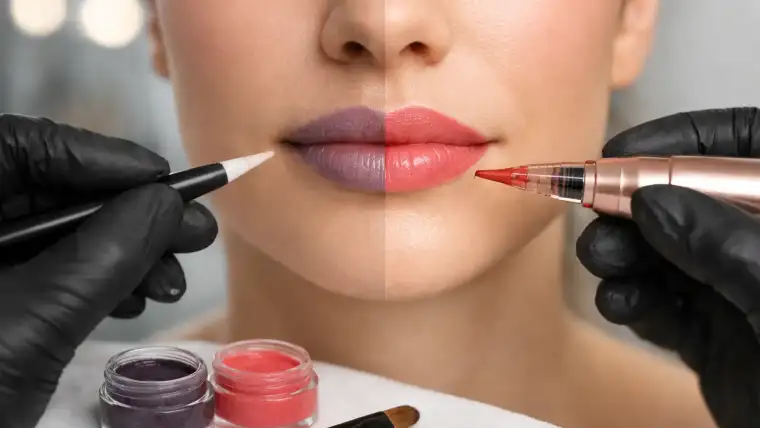
With lip corrections, examples may show cool or dark areas that have been neutralised, patchiness improved, or a previous shape refined so the lips appear healthier and more even. For eyeliner, correction might mean softening a heavy line, improving symmetry, or restoring elegance where old pigment has blurred the lash line.
Not every correction starts with more tattooing
This is one of the most important things before-and-after galleries do not always explain. Some clients are suitable for direct correction with new pigment. Others need lightening first — saline or glycolic acid removal at ELKA CLINIC, or laser removal elsewhere — or simply more time for old work to fade before adding anything new.
That depends on several factors – the depth of the old pigment, how saturated it is, how much scar tissue is present, the undertone in the skin, and whether there is enough space to create a better shape. If brows have been tattooed too large or too low, adding more pigment without reducing the old design can make the problem worse. A responsible correction plan sometimes starts by saying not yet.
This is where experience matters. Correction is less about covering and more about strategy. The artist needs to assess what can realistically be improved, what limitations the old tattoo creates, and how the skin is likely to respond over time.
Brows are the most common correction request
Most clients looking at cosmetic tattoo correction before after examples are researching brows first. That is understandable. Brows frame the face, and when shape, depth or colour is off, it can affect the entire expression.
A typical brow correction might involve changing a heavy squared front into a softer gradient, warming a cool grey tone into a more natural healed shade, or restoring better balance where one brow sits higher or longer than the other. Mature clients often want old tattooing softened so the face looks fresher and less severe. Younger clients may want to move away from an outdated style that no longer suits how they wear their make-up.
The trade-off is that correction brow work is usually more complex than a fresh set. There may be limits to how much symmetry can be improved if the previous tattoo was placed incorrectly. Skin texture can also influence the final result. Oily skin, enlarged pores, previous trauma and scar tissue all affect retention and healed softness.
Good examples will show this honestly. The after should look improved, not artificially perfect.
What a strong brow correction result looks like
A successful brow correction usually looks lighter in feel, even when pigment has been added. That may sound contradictory, but it comes down to placement and balance. Cleaner mapping, more suitable colour selection and refined technique can make the brow appear softer while still giving better definition.
The most flattering corrected brows respect bone structure, age, skin type and natural brow hair. They do not force a trendy shape onto a face that needs something gentler.
Lip and eyeliner corrections require even more precision
Lips and eyes are delicate areas, so correction work here needs a cautious, tailored approach. Before-and-after examples can be very helpful, especially for clients who worry that previous tattooing has permanently limited their options.
With lip tattoo correction, the goal may be colour neutralisation, border refinement or creating a more harmonious tone across uneven pigment. If the lips have areas of darkness or old work that healed patchy, the after image should show more consistency and a healthier overall appearance. It is worth knowing that lip correction often happens in stages. A beautiful healed result may require patience.
Eyeliner correction can be especially nuanced. A line that is too thick, too low, or slightly uneven can change the visual shape of the eye. In some cases, correction can refresh and refine it. In others, removal or fading may be the safer path before any redesign. The skin on the eyelids is thin, so conservative treatment planning is essential.
Why healed results matter more than fresh results
Fresh cosmetic tattoo work can look crisp, bright and very polished in photos. But correction should always be judged by how it heals, not how it looks on the day. That is particularly true when correcting old pigment, where the skin may already have a history of trauma or uneven retention.
Healed results reveal whether the colour settled well, whether the shape still appears balanced once the skin calms, and whether the final look sits naturally on the face. A premium clinic will prioritise this stage because long-term wearability matters far more than a dramatic immediately-after image.
This is also why consultation is so important. An honest practitioner will explain that some before-and-after transformations happen over multiple appointments. That is not a drawback. It is often the safest way to achieve a refined result.
What to look for if you are comparing clinics
When reviewing cosmetic tattoo correction before after examples, look beyond the headline transformation. Ask yourself whether the after image suits the client’s facial features, whether the colour looks believable, and whether the result feels softer, cleaner and more intentional.
It also helps to see examples across different ages and skin types. Correction for a mature client should not be approached the same way as correction for someone with firm, youthful skin. Likewise, clients with previous microblading, machine shading or old-style cosmetic tattooing may need very different plans.
If a gallery only shows fresh, heavily filtered images, that is not especially useful. A trustworthy correction provider educates as well as impresses. They explain what was improved, what required caution, and why the chosen approach suited that individual client.
At a clinic such as ELKA Clinic, that level of planning is central to the correction process. The goal is not to push every client into the same treatment. It is to restore confidence with work that feels elegant, balanced and realistic for the long term.
Setting realistic expectations before you book
The most helpful before-and-after examples do not promise perfection. They show possibility within real skin, real pigment history and real healing behaviour. Some corrections can be completed beautifully in one or two sessions. Others need a slower approach. Occasionally, the best outcome is significant improvement rather than complete reinvention.
That does not mean you are stuck with work you dislike. It means the safest and most flattering path depends on what is already in the skin. A skilled correction artist will tell you what can be achieved, what may need fading first, and what kind of healed finish is realistic for your features.
If you are considering correction, choose examples that feel refined rather than flashy. The most successful transformations are usually the ones that make people look rested, polished and naturally well presented – without anyone noticing where the problem used to be.
A thoughtful correction can do more than improve old tattooing. It can restore ease each time you look in the mirror, and that is where the value really sits.