If you’ve just had your lips tattooed, the first few days can feel a little confronting. The lip blush tattoo healing process rarely looks the way clients expect on day one, and that is completely normal. Colour often appears brighter at first, the lips can feel tender, and the shade may shift before it settles into its final soft finish.
That temporary unpredictability is often the part that causes the most anxiety, especially for first-time cosmetic tattoo clients. The good news is that lip blush healing follows a fairly familiar pattern when the treatment has been performed well and aftercare is followed properly. Knowing what happens at each stage makes it much easier to stay calm, protect your result, and enjoy the final outcome.
What happens during the lip blush tattoo healing process
Lip blush is a cosmetic tattoo treatment designed to enhance the natural lip tone, improve symmetry, and create a fresher, more polished look without the need for daily lipstick. Depending on your goals, it can softly restore lost definition, neutralise cool or uneven tones, or add a healthy wash of colour.
Because the lips are vascular and delicate, they tend to heal differently from brows or eyeliner tattooing. Swelling is more common, colour changes can look more dramatic, and the surface of the lips often feels dry or tight in the days after treatment. That does not mean something has gone wrong. It usually means the skin is doing exactly what it should.
Most clients move through healing in stages rather than a straight line. The lips may appear bold, then lighter than expected, then more balanced again as the pigment settles. Final results are not judged in the first week. In most cases, the true healed colour becomes clearer over several weeks, with a perfecting appointment helping refine the result if needed.
Lip blush tattoo healing process day by day
Day 1
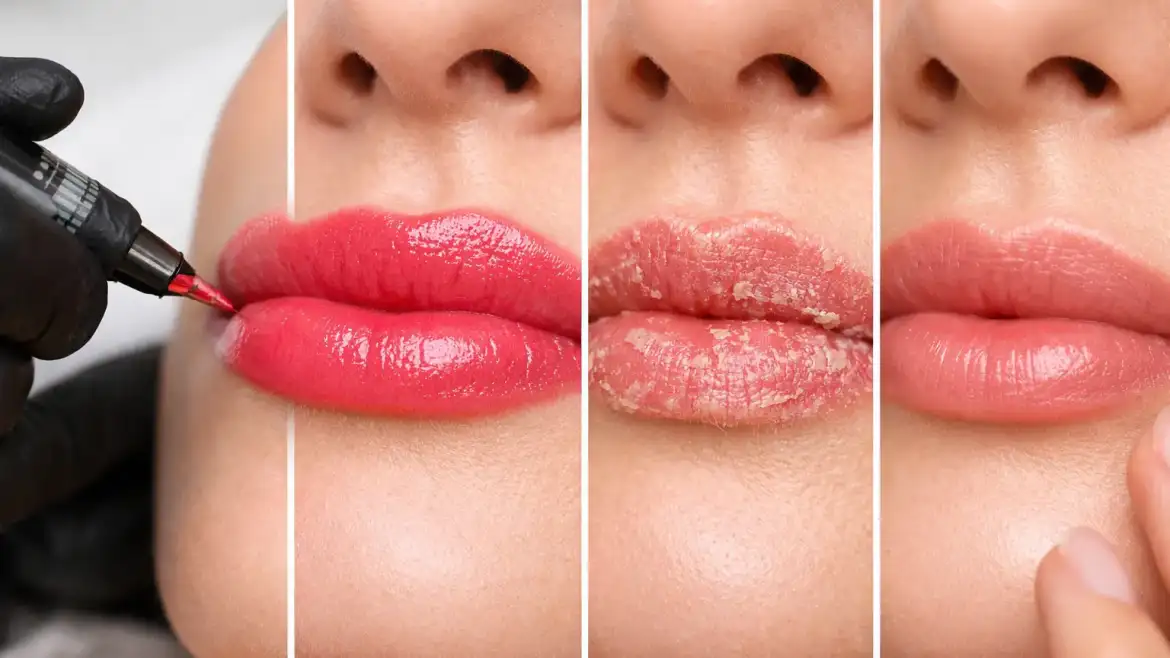
Immediately after treatment, lips usually look brighter, deeper and more defined than the final healed result. Mild to moderate swelling is common, and it is typically greatest in the first twenty-four to forty-eight hours. Some clients describe the sensation as similar to windburn or dry, chapped lips.
This early intensity can be a surprise, but it is temporary. Fresh pigment sits more visibly in the skin, and swelling can make the lips look fuller and stronger in colour than they will be once healed.
Days 2 to 4
Swelling generally settles over these few days while the colour stays deep. Light dryness or a feeling of tightness is common, and mild bruising is possible although not typical.
Nothing about this stage indicates the final result. The lips are simply still carrying fresh pigment and the last of the swelling.
Days 5 to 7
This is often the awkward phase. The surface of the lips may begin to feel very dry or flaky, light peeling commonly starts, and the colour can look patchy as the top layer naturally sheds. Heavy scabbing is less usual.
Prematurely lifting dry skin can interfere with pigment retention and increase irritation, which is why the peeling is best left to happen on its own. In most cases the lips are simply moving through the expected repair process.
Week 2
By the second week, peeling has usually settled and the lips often look much lighter than they did initially. This is the stage that causes the most second-guessing. Many clients worry the pigment has disappeared, but what you are usually seeing is fresh healed skin temporarily softening the appearance of the colour.
This lighter phase, sometimes called ghosting, is part of the normal settling period. The pigment has not necessarily been lost. It is sitting beneath the skin while healing continues.
Weeks 3 to 4
Over these weeks the tone generally starts to return in a softer, more natural-looking way. The colour becomes more even, less bright, and better integrated with your natural lip tone. Shape and definition also begin to look more refined.
Weeks 6 to 8
By this point you can usually get a much better sense of the healed result, although the final colour still varies depending on your skin, your natural lip undertone, your lifestyle and the shade chosen. Clients who would like a slightly stronger finish often achieve that through an optional perfecting appointment rather than the initial treatment alone.
These day ranges are approximate. Healing varies from person to person, and your lips may move through these stages slightly earlier or later than described here.
What is normal during healing and what is not
A normal lip blush tattoo healing process can include swelling, tenderness, dryness, flaking, temporary patchiness, and noticeable colour shifts. These changes are part of the skin’s recovery and are especially common in the first one to two weeks.
What is not considered normal is escalating pain, unusual discharge, spreading redness, or signs of infection. If the lips become increasingly hot, very inflamed, or develop symptoms that feel outside the usual healing pattern, it is best to contact your treating clinic promptly for advice. Professional support matters, and it is always better to ask early than sit with unnecessary worry.
Why healed lip blush looks softer than day one
One of the biggest misconceptions about lip blush is that the fresh result is the finished result. It is not. Cosmetic tattoo pigment always softens as the skin heals, and with lips this change can be quite noticeable.
There are a few reasons for this. The outermost layer of skin initially holds pigment more visibly, inflammation can intensify the appearance of colour, and once the surface renews, the shade naturally looks more diffused. That softer finish is often exactly what clients want – polished, fresh and natural rather than heavy or lipstick-like.
This is also why experienced treatment planning matters. A well-chosen colour is selected not only for how it looks on the day, but for how it is expected to heal against your natural lip tone.
Aftercare makes a visible difference
Good aftercare does not just support healing comfort. It can influence how evenly the lips recover and how well pigment retains. Your Lip Blush aftercare instructions set out exactly what to do, and the general goal is always the same: protect the lips while the skin barrier repairs.
In the early days, clients are usually advised to avoid spicy foods, excessive heat, heavy exercise, prolonged sun exposure, swimming, and anything that causes friction across the lips. You will also want to avoid picking at dry skin or applying products that have not been recommended by your practitioner.
Hydration matters too, but this does not mean layering random lip products. Use only the aftercare provided or approved by your clinician. Lips are sensitive after tattooing, and less is often better when it comes to avoiding irritation.
Factors that can affect your healing result
Not every client heals at exactly the same speed, and that is where realistic expectations are important. Your final result can be influenced by your natural lip colour, skin condition, immune response, lifestyle habits, and how closely aftercare is followed.
If you are prone to dryness or have previously sun-damaged lips, healing may feel a little more uneven. If you have a cool or dark natural lip tone and are undergoing colour correction, the healed result may take more than one session to refine. If you are someone who exercises heavily, spends lots of time outdoors, or struggles not to touch the area, healing can be more complicated.
This is why a personalised consultation matters so much. The best outcomes come from treatment plans that are tailored rather than rushed.
When to consider an optional touch-up
A short-term perfecting appointment is optional, costs $250 where applicable and is charged separately from the initial treatment. If you are happy with your healed result, you do not have to return. The initial session lays down shape and base colour, while the follow-up allows your practitioner to assess retention, refine any uneven areas, and adjust depth or tone where appropriate.
Most clients are reviewed once healing is complete, often around four to six weeks after the first session. That timing gives the lips enough opportunity to settle properly. Booking too early can make it harder to assess the true healed result.
Patience is part of the process
Lip blush rewards restraint. The clients who feel happiest with their results are often the ones who understand that healing is not perfectly linear and that day-one lips are never the benchmark. There is a settling period, there are colour changes, and yes, there is usually a brief stage where the lips look less impressive before they look beautifully balanced.
At a clinic level, that is why education matters just as much as artistry. At ELKA Clinic, treatment planning and aftercare guidance are designed to help clients feel informed, comfortable, and confident from the first appointment through to the healed result.
If your lips are currently in the flaky, faded, or slightly strange-looking stage, give them time. Healing lips can be deceptive, but with the right care and realistic expectations, they usually settle into exactly what you booked the treatment for – an effortless wash of colour that makes your whole routine feel easier.