A beautiful lip tattoo at 25 and a beautiful lip tattoo at 55 are not necessarily designed in the same way. When choosing lip tattoo colours mature skin responds best to thoughtful pigment selection, soft borders and a result that works with the face rather than competing with it. The goal is rarely a bold lipstick effect. More often, it is to restore the gentle definition and healthy-looking colour that may have softened over time.
At ELKA Clinic, lip blush treatments are planned around the individual lip, skin tone, natural colouring and desired healed result. A colour that looks lovely in a pigment bottle, or even immediately after treatment, is only one part of the picture. The most flattering choice is the one that settles into a refined, believable enhancement.
Why lip colour selection changes with mature skin
As we age, the natural outline of the lips can become less distinct and the lip tone may appear lighter or less even. Fine vertical lines around the mouth can also affect how a strong border or dense colour is perceived. This does not mean mature lips are unsuitable for cosmetic tattooing. It means the treatment design needs more restraint, precision and a clear understanding of how pigment will heal.
A heavily outlined lip or opaque-looking colour can draw attention to texture and make the result feel separate from the rest of the face. A softly layered lip blush, on the other hand, can bring back gentle definition while retaining the natural movement and character of the lips.
The best result is not about making the lips look dramatically different. It is about making them look fresher, more balanced and easier to recognise as your own.
Lip tattoo colours for mature skin: start with undertone
Natural lip colour is the starting point for every pigment decision. No cosmetic tattoo colour sits over the lips like traditional lipstick. It heals within the skin and combines visually with the existing lip tone. This is why the same pigment can heal differently from one client to another.
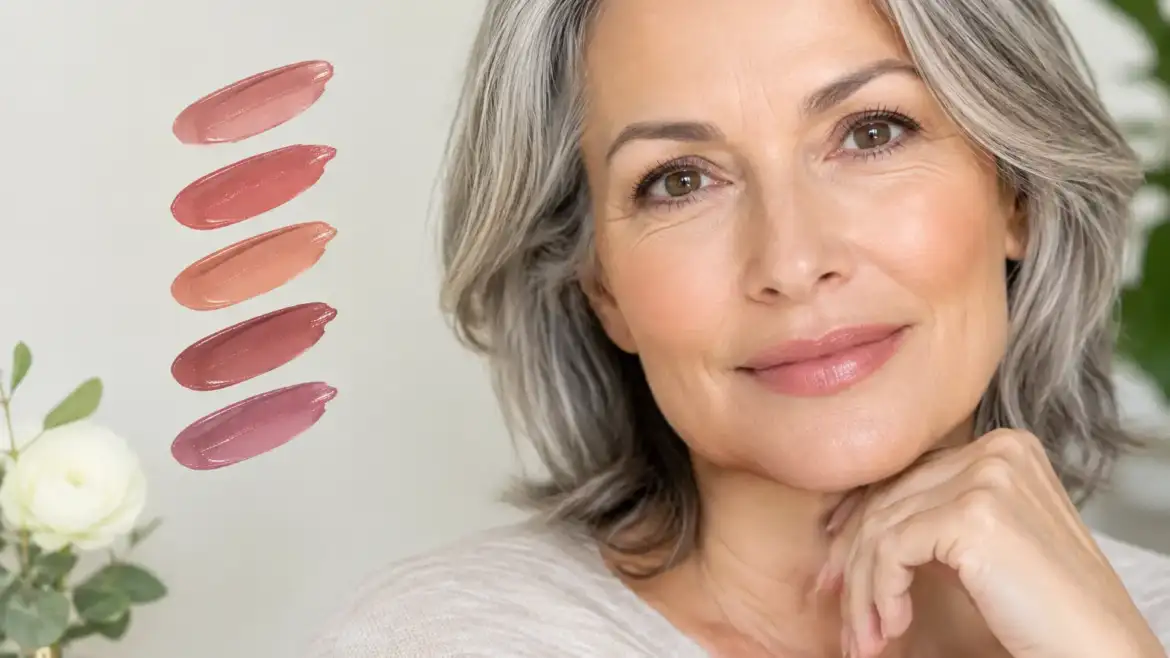
Warm undertones often suit soft peach, warm rose, muted coral or terracotta-inspired tones. These shades can bring life to lips that appear pale or slightly cool without looking overly bright. Neutral undertones may suit balanced rose, pink-beige or soft berry shades, depending on the client’s natural lip depth and overall colouring.
For lips with a cooler, mauve or deeper natural base, a warmer pigment approach may be required to create a balanced healed result. This is not about forcing the lips into a particular colour family. It is about choosing tones that complement, rather than exaggerate, the existing undertone.
A skilled artist will also consider the complexion, hair colour, natural brow depth and the client’s usual style. A colour can be technically suitable for the lips yet still feel too cool, too bright or too dark for the face as a whole.
Soft rose remains a classic for good reason
Soft rose is often a beautiful option for mature clients because it can restore a healthy-looking flush without becoming too sweet or too obvious. It has enough warmth to lift the appearance of the lips while remaining elegant and versatile in everyday life.
That said, “soft rose” is a broad description, not one universal shade. A pale pink-rose may be too light for some lips, while a dusty rose may suit someone who prefers a little more depth. The final choice should be adjusted to the natural lip colour and the level of enhancement desired.
Nude does not have to mean beige
Many clients ask for a nude lip tattoo, but a beige or pale nude pigment is not always the most flattering direction. On mature lips, a colour that is too light or too neutral can heal with insufficient warmth and may not provide the freshening effect the client hoped for.
A more successful nude is often a personalised version of the client’s natural lip tone – perhaps a warm pink-beige, muted rose-brown or peachy neutral. It should look like a rested, healthy version of the lips, not like colour has been removed from them.
Berry tones need a lighter hand
Muted berry and plum-rose shades can be strikingly elegant on the right client. They can add definition to naturally deeper lips and suit those who enjoy a more polished look. However, mature skin usually benefits from keeping these shades sheer and softly diffused.
The trade-off is simple: deeper colour offers more visible definition, but it can also appear stronger as it heals. A carefully built berry wash often gives more refinement than a dense, dark application.
Why the healed result matters more than the fresh colour
Immediately after a lip tattoo appointment, the colour will look brighter, deeper and more defined than the final healed result. This is a normal part of the process. As the lips settle, the colour softens and becomes more integrated with the natural lip tone.
For mature clients, planning for this softening is especially important. Choosing a shade solely because it looks subtle on the day can leave too little visible colour once healed. Conversely, selecting an overly intense shade in the hope that it will fade dramatically can make the early healing period unnecessarily bold and less comfortable emotionally.
An experienced cosmetic tattoo artist plans for both stages. The aim is a colour that feels appropriate during healing and settles into an enhancement with enough presence to restore definition over time.
Technique is just as important as pigment
Even the most carefully selected colour can look too strong if it is applied with the wrong approach. Mature lips generally benefit from soft, even pixelation and a gentle transition at the lip edge. The border should be refined, not sharply drawn like a liner.
This approach can help create the appearance of a smoother, more balanced lip shape without trying to redraw the lips beyond their natural structure. Where definition has softened, the artist works respectfully with the existing lip line rather than creating a hard, artificial outline.
Colour density should also be tailored. Some clients want only a whisper of colour to reduce the washed-out look of bare lips. Others would like a little more coverage so they can feel polished with minimal effort each morning. Both can be beautiful when the design remains balanced.
What to bring to your colour consultation
A consultation is the right place to be honest about how you want to feel after the treatment. Rather than arriving with a single shade in mind, consider whether you want your lips to look warmer, rosier, more defined or simply less pale.
It can also help to bring a photo of yourself on a day when you felt particularly well presented. This gives your artist a useful sense of the colours you naturally gravitate towards. The final pigment should still be chosen in person, under proper lighting and against your natural lip tone.
During consultation, your artist should assess the lip shape, symmetry, existing colour, texture and the likely healed direction. They should also explain that cosmetic tattooing enhances rather than replaces the flexibility of traditional lip colour. If you enjoy changing from nude to red to berry every week, a soft base enhancement may be more suitable than trying to recreate a dramatic lipstick shade permanently.
A timeless choice feels like you
Trends can make very pale nudes, strong outlines or highly saturated lips tempting, but mature lip tattooing is most successful when it is designed to stay elegant beyond the moment. Soft warm rose, balanced pink-beige and sheer berry tones tend to endure because they support natural facial harmony.
The right lip tattoo colour should allow you to look rested at breakfast, polished at work and confident in photographs without announcing itself first. A personalised consultation with an experienced artist is where that quiet, lasting result begins.