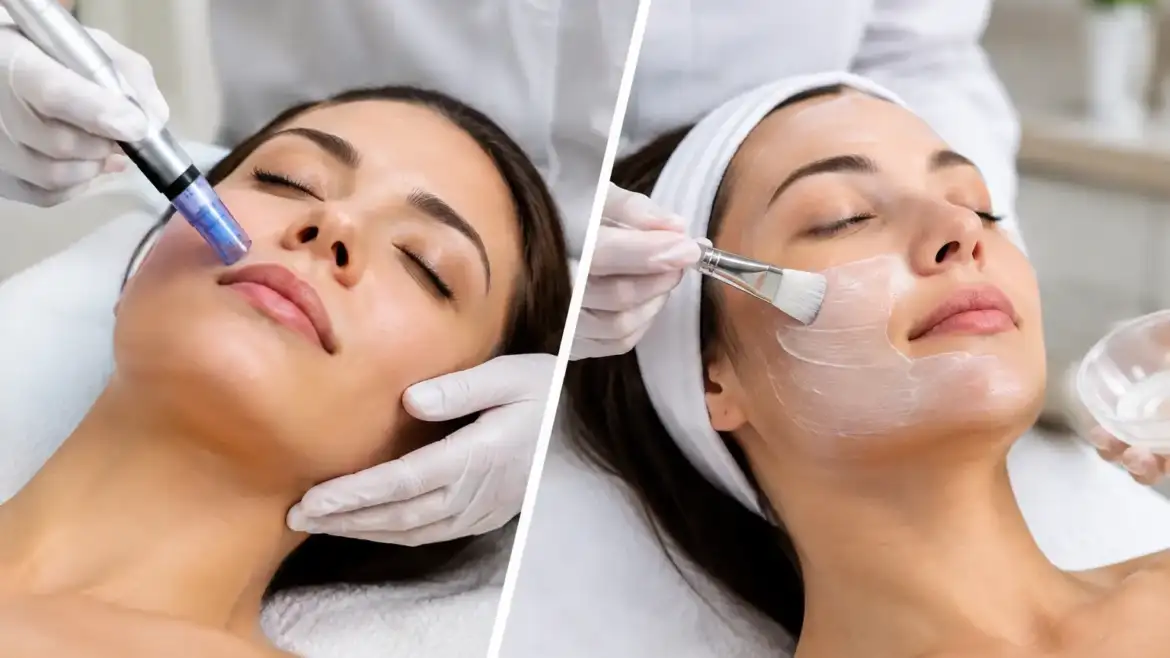
A treatment can sound ideal on paper, yet feel quite different once you consider your skin, your schedule and the result you hope to see in the mirror. When weighing up microneedling versus chemical peels, the best choice is rarely about which treatment is considered stronger. It is about selecting an approach that respects your skin and supports the concerns that matter most to you.
Both treatments are designed to refresh the appearance of the skin, but they work in very different ways. One focuses on controlled collagen stimulation beneath the surface, while the other uses carefully selected exfoliating solutions to encourage renewal at the surface. Understanding that distinction can make the decision feel far less confusing.
Microneedling versus chemical peels: the key difference
Microneedling uses a professional device with very fine needles to create controlled micro-channels in the skin. This process is designed to stimulate the skin’s natural renewal response and support collagen production over time. It is often chosen by clients who would like to improve the appearance of uneven texture, visible pores, fine lines or the look of post-acne scarring.
A chemical peel works differently. A professional exfoliating solution is applied to the skin to lift away varying levels of surface skin cells, depending on the peel selected. This can help improve the appearance of dullness, uneven tone and surface congestion, while creating a fresher, smoother-looking finish as the skin renews.
Neither approach is automatically better. Microneedling is generally more focused on supporting the skin’s structure and texture over a series of treatments. Chemical peels are often selected when surface brightness, tone and a more polished appearance are the main priority. Some clients may be suited to both treatments at different times, but this should always be planned carefully rather than treated as a one-size-fits-all solution.
When microneedling may be the more suitable choice
Microneedling can be an excellent option for clients who feel their skin lacks smoothness or resilience rather than simply radiance. It is particularly popular for concerns that sit within the skin’s texture, such as the appearance of enlarged pores, fine lines and uneven areas left after breakouts.
The results are typically gradual. Rather than expecting a dramatic overnight change, clients often notice their skin looks progressively smoother, firmer and more refined as it moves through its natural renewal cycle. This makes microneedling well suited to people who value a measured, natural-looking improvement.
It can also appeal to mature clients who want to support a fresher-looking complexion without changing their facial character. At ELKA Clinic, treatment planning is centred on natural results that complement the individual, not an overly treated appearance. For skin rejuvenation, that principle matters just as much as it does for cosmetic tattooing.
Recovery can involve temporary redness and sensitivity, with the skin often looking a little flushed immediately afterwards. The exact experience varies with the treatment settings, the area treated and your own skin response. A professional consultation helps set realistic expectations around downtime and treatment spacing.
When a chemical peel may be the better fit
A chemical peel may be more appropriate when the focus is on the skin’s surface. If your complexion appears dull, feels rough or has uneven-looking tone, exfoliation can offer a noticeable refreshed effect as older surface cells shed.
Peels are not all the same. They vary in formulation and intensity, which is why a thoughtful assessment matters. A gentle peel may involve minimal visible peeling and suit someone wanting a subtle refresh. More active options can involve more noticeable flaking and require a greater commitment to recovery and aftercare.
For clients with busy diaries, the timing is worth considering. Visible peeling is not always predictable in precisely the same way from person to person. If you have an important occasion approaching, it is wise to allow enough time for your skin to settle rather than booking a new treatment immediately beforehand.
Chemical peels can be appealing when you are looking for a bright, clean-looking finish. However, they may not be the first choice where textural concerns or the appearance of deeper scarring are the central focus. This is where microneedling’s collagen-stimulating approach may offer a more relevant pathway.
Results, downtime and treatment planning
The most meaningful difference between microneedling and chemical peels is often the type of result you are pursuing. Microneedling is a longer-view treatment. It encourages gradual refinement and is commonly planned as a course, with appointments spaced to allow the skin time to respond.
Chemical peels can provide a more surface-level refresh, although the ideal frequency depends on the specific peel and your skin’s tolerance. Some people prefer a series of lighter treatments; others may be assessed for a more intensive approach. The right plan should never be based on what worked for a friend or what is trending online.
Downtime is another practical consideration. Both treatments can leave the skin temporarily red or sensitive. Chemical peels may involve visible dryness, tightness or flaking in the days that follow, while microneedling commonly creates a flushed appearance that settles as the skin recovers. Your clinician should explain what is normal to expect for your selected treatment and how to plan around work, events and social commitments.
The results also depend on consistency. A single treatment can be a useful starting point, but refined skin changes often come from an appropriate plan, careful aftercare and realistic timing. Skin renewal is not instant, and the most elegant results tend to be built patiently.
Your skin type and history matter
Skin should never be treated as a template. Your natural skin tone, sensitivity, current condition, previous treatments and healing response all influence whether microneedling or a chemical peel is appropriate. The same treatment can look and feel very different from one person to the next.
This is especially relevant for clients concerned about uneven pigmentation or who have experienced sensitivity after treatments in the past. A careful practitioner will assess the skin conservatively, discuss what may be suitable and avoid promising a result that cannot be responsibly predicted.
Be open during your consultation about recent skin treatments, sensitivity, products you are using and any relevant health information requested in your consultation form. These details help guide a safer, more personalised plan. Good treatment design starts well before the appointment itself.
Can you have both treatments?
In some cases, microneedling and chemical peels can play different roles within a broader skin plan. For example, one may be selected to support texture while the other is introduced later for surface brightness. They should not be viewed as treatments to stack together simply for a faster result.
The skin needs appropriate recovery time between procedures. A tailored plan considers the order of treatments, the intensity used and how your skin responds along the way. This measured approach is more likely to support comfortable healing and a naturally refined outcome than doing too much, too soon.
Choosing with confidence
If your priority is smoother-looking texture, gradual collagen support and refinement over time, microneedling may be the more suitable option. If your goal is a brighter, fresher-looking complexion with a focus on surface renewal, a chemical peel may be worth discussing. For many people, the answer sits in the detail of their skin rather than in a simple treatment comparison.
The most reassuring next step is a professional consultation where your goals can be discussed honestly, your skin can be assessed carefully and your treatment plan can be shaped around the result you want to maintain. When your approach is personalised, skin rejuvenation can feel less like chasing perfection and more like helping your skin look rested, balanced and beautifully cared for.