

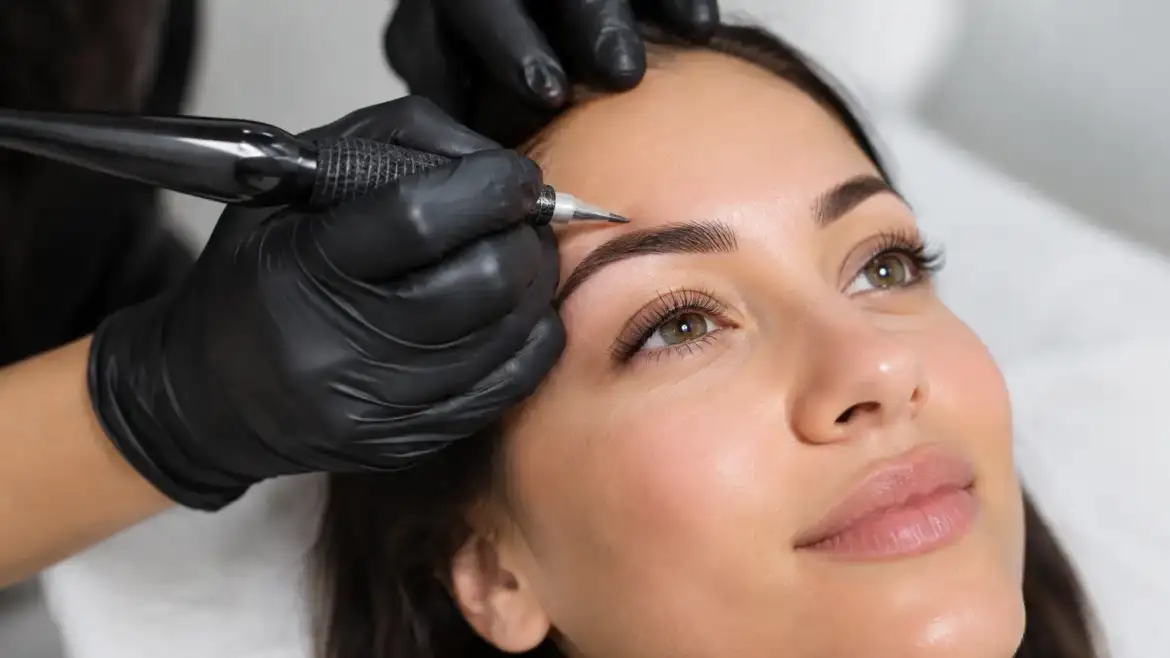
Freshly microbladed brows can look beautifully fine and hair-like, but the healed result is what matters most. For clients with oily skin, that distinction is especially important. Natural oil production can affect how crisp individual strokes remain, how pigment settles and how frequently a brow tattoo may need refreshing.
So, does microblading suit oily skin? Sometimes, yes. However, it is not automatically the most reliable choice for every oily skin type. A thoughtful assessment of your skin, natural brow hair, lifestyle and desired finish will lead to a more elegant result than choosing a technique simply because it is popular.
Why skin type matters in cosmetic tattooing
Microblading creates fine hairstrokes by placing pigment into the skin with a handheld blade. When these strokes heal cleanly, they can create a soft, natural impression of fuller brows. But cosmetic tattooing is never one-size-fits-all. The skin’s texture, oil production, pore size and healing response all influence the final appearance.
Oily skin produces more sebum across the face, often most noticeably through the forehead, nose and brow area. This does not mean the skin is unsuitable for cosmetic tattooing. It does mean pigment can behave differently during healing and over time.
On oilier skin, delicate microbladed strokes may soften, expand or lose definition sooner than they would on balanced or drier skin. Some clients also find that colour appears lighter once healed, which can make a second session particularly important for building a result that is visible yet still natural.
The aim is not to create brows that look sharp for a few days. It is to choose a method that continues to look refined once the skin has healed and settled.
Does microblading suit oily skin in every case?
No. Very oily, textured or enlarged-pore skin is often less suited to a full microbladed brow. The individual strokes can heal less crisply and may blend together over time, reducing the airy hair-like detail that makes microblading so appealing.
That said, oiliness exists on a spectrum. Someone with mild oil production and smooth skin through the brow area may still be a suitable candidate, particularly if they understand that a softer healed result and periodic colour refreshes may be part of the plan.
It also depends on the brow style you prefer. If your goal is an ultra-natural, barely-there enhancement, microblading may be considered where the skin allows. If you prefer a little more definition, or your skin is consistently very oily, another technique may provide greater longevity and a more polished healed appearance.
An experienced artist will be honest about this before treatment. Promising fine, separate strokes on skin that is unlikely to hold them well does not serve the client or the long-term result.
What oily skin can do to healed microblading
The healing process is individual, but oily skin commonly presents a few practical considerations. Pigment may retain more lightly, especially through the front of the brows. Fine strokes can appear softer after healing, and the overall colour may fade sooner as the skin’s natural oil production continues.
This is why an initial treatment should not be judged immediately. Fresh brows are typically darker and more defined than the final healed result. Over the following weeks, colour softens and the skin settles. A perfecting session gives the artist an opportunity to assess retention, refine shape where needed and add density with care.
For oily skin, restraint remains essential. Attempting to compensate for lower retention by creating excessively dark or heavy brows at the first appointment can compromise the soft, timeless look many clients want. A considered approach, built gradually, is usually the more flattering choice.
Techniques that may suit oily skin better
For many clients with oily skin, a machine technique may be more predictable than traditional microblading. This does not mean the brows need to look solid or overly made up. The right technique can still be delicate, balanced and natural-looking.
Nano brows
Nano brows use a cosmetic tattoo machine to create fine hairstroke effects. Depending on the skin and design, these strokes can offer a more controlled alternative to manual microblading. They are often worth considering for clients who love the appearance of hair strokes but need a technique better matched to their skin.
The final look should always be designed around existing brow hair, facial proportions and how much enhancement is genuinely needed. The most convincing brows do not compete with the face. They quietly restore shape, symmetry and definition.
Ombré brows
Ombré brows use soft pixelated shading rather than individual blade strokes. The effect can be subtle and airy, with a lighter front and gentle depth through the arch and tail. On oily skin, this style often heals more consistently because the result does not rely on preserving dozens of very fine, separate lines.
A well-executed ombré brow is not a block brow. It can be exceptionally soft, particularly when the colour and intensity are selected with restraint.
Combination brows
Combination brows blend hairstrokes with gentle shading. This approach can work beautifully when a client has some natural brow hair but would benefit from additional structure or density. For oily skin, shading can support the overall result if any front hairstrokes heal more softly than expected.
Not every oily-skin client needs the same design. In some cases, a powder-style brow may be the better long-term decision. In others, carefully placed nano strokes with soft shading can create the most natural balance.
The consultation should guide the technique
A premium cosmetic tattoo experience begins well before pigment is placed. During a consultation, the artist should look closely at the brow area rather than making a decision based only on a client describing their skin as oily.
Skin can be oily across the T-zone yet relatively balanced through the brows. It can also change with seasons, skincare habits, work conditions and hormonal fluctuations. Texture, visible pores, previous brow tattooing, brow density and the condition of the skin on the day all matter.
The conversation should also cover your preferred brow finish. Some clients want the lightest possible enhancement, while others want to spend less time filling sparse areas each morning. Both goals are valid, but they may call for different techniques.
At ELKA Clinic, treatment planning is centred on what will look refined after healing, not simply what looks dramatic immediately after the appointment. This is particularly valuable for clients with oily skin, where choosing the right method from the beginning can prevent disappointment later.
Preparing for the best possible healed result
Your artist will provide personalised pre-care instructions, and following them carefully helps create the best conditions for treatment. On the day, arrive with the brow area clean and free from brow makeup or heavy skincare products. Avoid applying oils, thick creams or products that leave a film across the forehead and brows.
Aftercare also matters. During the healing period, brows should be protected from unnecessary moisture, perspiration and friction in line with your artist’s instructions. Picking, rubbing or attempting to speed up flaking can disturb the healing process and affect pigment retention.
Once healed, gentle skincare awareness can help preserve the appearance of your brows. If you use active skincare products, take care around the brow area and follow your artist’s guidance. Strong exfoliating products applied directly over cosmetic tattooing may contribute to earlier fading.
Realistic expectations create better brows
Microblading is not a permanent replacement for every pencil stroke, nor should it be expected to look identical on every skin type. Oily skin may require more frequent maintenance than dry skin, and even the best technique will fade gradually over time.
The benefit of a personalised treatment plan is that it respects those realities while still delivering a meaningful enhancement. A softly shaded brow, a carefully designed nano brow or a combination technique may give an oily-skin client more confidence in the mirror than microblading alone.
The most beautiful cosmetic tattoo is not defined by a trend or a treatment name. It is the one that suits your skin, complements your features and continues to look naturally at home on your face long after the first appointment.

