Fine lines often become most noticeable in the areas that move with expression – around the eyes, above the lip and across the forehead. For clients who want a non-surgical approach to improving the look of creasing and skin laxity, a plasma pen for fine lines can be a considered option. The key is not chasing an overly tight or dramatically altered appearance. It is choosing a treatment plan that respects your skin, facial movement and natural features.
At ELKA Clinic, plasma pen treatment is approached with the same care as every advanced aesthetic service: thoughtful assessment, precise technique and realistic expectations around healing and results.
What is a plasma pen for fine lines?
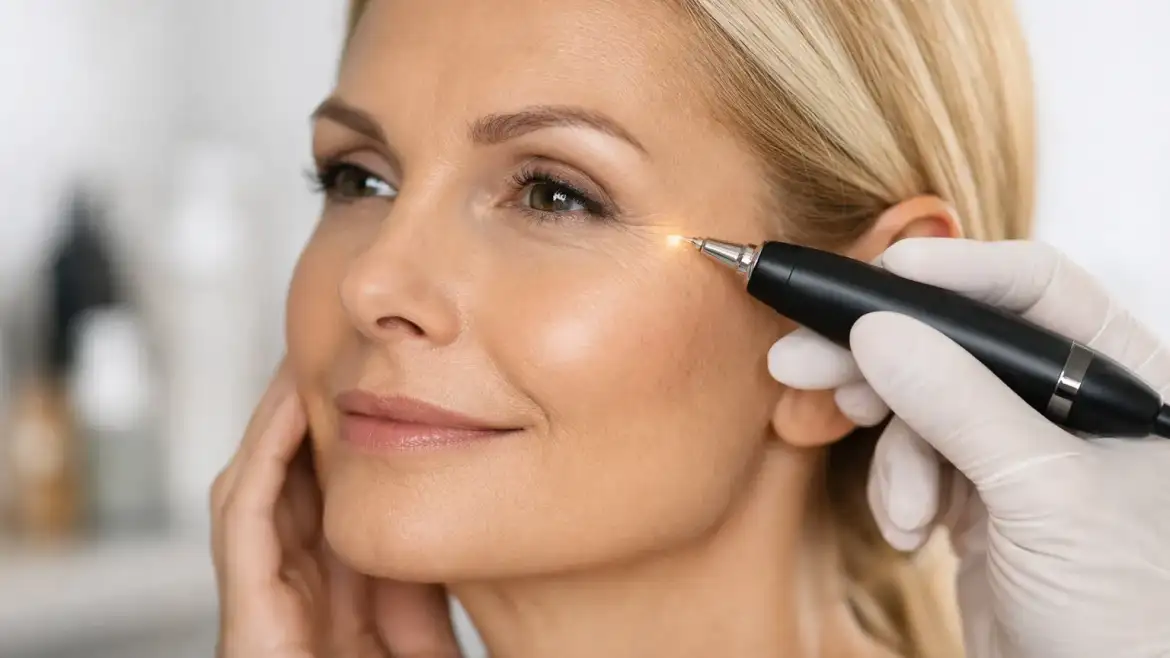
A plasma pen is an advanced skin treatment device that creates a small, controlled electrical arc just above the skin’s surface. This creates tiny treatment points in targeted areas, encouraging the skin’s natural renewal response. As the treated area heals, the skin may appear smoother and firmer, with fine lines looking softened over time.
The treatment is especially suited to carefully selected small areas where fine lines and crepey-looking skin can affect the overall freshness of the face. Common concerns include lines around the eyes, vertical lines above the upper lip and fine lines in other focused facial areas.
Plasma pen treatment is not designed to erase every line or stop natural facial expression. A refined result should still look like you – rested, polished and naturally refreshed rather than treated.
Why fine lines need an individual approach
Fine lines do not all have the same cause or behave the same way. Some are linked to repeated facial movement, while others become more visible as the skin changes in texture, elasticity and hydration. Skin tone, sensitivity, sun exposure, lifestyle and previous treatments can also influence how the area responds and heals.
This is why a one-size-fits-all treatment approach is rarely appropriate. The eye area, for example, requires a very different level of planning and precision from the upper lip or forehead. Treating too broadly, too aggressively or without proper assessment can compromise the subtle result many clients are seeking.
A professional consultation considers the location and depth of the lines, your skin type, your individual healing history and whether plasma pen treatment is suitable for your goals. In some cases, a different approach, such as microneedling for broader texture concerns, may be more appropriate. Sometimes the best decision is to wait, prepare the skin first or not proceed at all.
What happens during treatment?
Your appointment begins with a detailed discussion about the area you would like to improve and the kind of result you consider natural. Your clinician will assess the skin, explain the expected healing process and create a treatment plan that is proportionate to your concern.
During plasma pen treatment, small, precise points are placed across the selected area. Clients commonly describe a sensation of warmth or brief discomfort, although the experience varies depending on the treatment area and individual sensitivity. The skin is treated conservatively and with purpose, rather than attempting to cover more area than necessary.
Immediately afterwards, the treated points will be visible. Mild swelling, warmth and redness can occur, particularly in delicate areas such as around the eyes. These short-term changes are part of the expected treatment process and should be factored into your schedule before booking.
Healing is part of the result
One of the most important things to understand about a plasma pen for fine lines is that the outcome develops gradually. The tiny treatment points form small crusts, which must be left to shed naturally. Picking, scratching or trying to speed up this stage can interfere with healing and affect the appearance of the skin.
The visible recovery period varies between clients and treatment areas. Some swelling and redness may settle relatively quickly, while residual pinkness can last longer as the skin continues to recover. Planning your appointment around work commitments, events and holidays is sensible, particularly if the area being treated is highly visible.
Your aftercare guidance will be specific to your treatment. In general, careful hygiene, keeping the area protected and avoiding unnecessary friction are essential. Sun exposure can affect the appearance of healing skin, so following the clinic’s protection advice is particularly important in Perth’s bright conditions.
It is also worth allowing the skin time. Initial changes may be visible after the surface has healed, but the skin’s renewal response continues beyond the first few weeks. A quality result is judged after appropriate healing, not in the first days after treatment.
Who may be suited to plasma pen treatment?
Plasma pen treatment can appeal to clients who are concerned by targeted fine lines or mild skin laxity and would prefer a non-surgical skin rejuvenation option. It is often chosen by people who value subtle improvement and are comfortable with a visible healing phase in exchange for a more refined long-term result.
Suitability depends on more than the concern itself. Skin type, pigment history, current skin condition, medication use, previous procedures and healing tendencies all matter. Certain skin types and conditions may carry a greater risk of unwanted pigment changes or delayed healing. This is not a treatment to book based on a social media image alone.
An honest consultation should feel reassuring, not rushed. You should understand what can reasonably be improved, what the recovery will involve and where the limits of treatment sit. If plasma pen is not the right option for your skin at that time, clear professional guidance is far more valuable than being promised a result that cannot be achieved safely.
What results can you realistically expect?
The aim of plasma pen treatment is typically a gradual improvement in the appearance of fine lines, skin texture and localised firmness. Some clients notice that makeup sits more smoothly or that the treated area looks less creased once fully healed. The degree of visible change varies, and deeper lines or more advanced laxity may require a different strategy or a series of carefully planned treatments.
Results also depend on the quality of healing and how the skin is cared for afterwards. Skin continues to age naturally, and no aesthetic treatment can permanently prevent that process. However, a well-selected treatment can support a fresher, more rested appearance without changing the character of your face.
Before-and-after images can be useful when they show healed results in consistent lighting and from comparable angles. During your consultation, ask to see examples relevant to your concern and skin type. This helps create a realistic picture of what subtle, professional treatment may achieve.
Choosing experience over trends
Plasma pen is a precision treatment, especially when addressing fine lines in delicate facial areas. The quality of assessment, device handling, treatment placement and aftercare guidance all influence the client experience. It should never be treated as a quick beauty trend or a treatment that is suitable for everyone.
Look for a clinic that takes time to understand your goals, explains the recovery honestly and prioritises conservative, natural-looking outcomes. A careful practitioner will consider your face as a whole, not simply focus on a single line in isolation.
Fine lines are part of a face that has smiled, spoken and lived. The right treatment does not need to remove that story. It can simply help your skin look smoother, softer and more aligned with how refreshed you feel.